
Retirement Living takes an unbiased approach to our reviews. We may earn money when you click a partner link. Learn More
What Is a Silver IRA?
Learn how a silver IRA works, the types available, and the IRS rules that apply to holding physical silver in retirement.


Updated:
At a glance:
- A Silver IRA is a self-directed IRA that lets you hold certain physical silver under IRS rules, rather than owning the metal personally.
- Eligible silver must meet IRS purity and storage rules, and the account involves a custodian, precious metals dealer, and approved depository.
- Silver IRAs offer diversification and potential tax advantages, but they also involve fees, price volatility, storage requirements, and withdrawal rules.
A silver IRA is a self-directed IRA that allows you to hold physical silver as part of your retirement savings. The silver must meet IRS requirements and remain in an approved depository.
This guide explains what a silver IRA is, how it works, the types available, and the rules for holding physical silver in retirement.
What Is a Silver IRA?
A silver IRA is an individual retirement account that lets you hold physical silver inside a tax-advantaged retirement account. IRS regulations govern the account, including which silver you can hold and how you must manage it.
A silver IRA is generally structured as a self-directed IRA (SDIRA). Unlike a standard IRA at a brokerage, a self-directed IRA can accommodate certain alternative assets, including physical precious metals. A silver IRA is a type of precious metals IRA that focuses on qualifying physical silver. Precious metals IRAs can also hold other eligible metals, such as gold, platinum, and palladium.
Silver IRA vs. Silver ETFs and Mining Stocks
A standard IRA at a brokerage can hold silver ETFs or mining stocks. A silver IRA, by contrast, holds qualifying physical silver.
Silver ETFs provide exposure to silver prices without owning physical bullion. Mining stocks represent companies involved in silver production, so their performance can depend on factors beyond silver prices. Both can generally be traded more easily than physical silver and do not require silver storage fees.
If you want to compare how gold IRAs work and how providers structure these accounts, see our guide to the best gold IRA companies.
Types of Silver IRAs
You can open a silver IRA account under three main IRA types, depending on how contributions and withdrawals are taxed.
Traditional Silver IRA
A traditional silver IRA lets you make contributions that may be tax-deductible, depending on your circumstances. Taxes are generally deferred on investment gains until you take a distribution from the account.
Traditional IRAs generally require required minimum distributions starting at age 73. You can meet a required minimum distribution (RMD) by taking cash from the account or, where permitted, taking an in-kind distribution of silver. RMDs from traditional IRAs are generally taxable as ordinary income.
Roth Silver IRA
A Roth silver IRA uses after-tax contributions, so you pay taxes before the money enters the account. Contributions are not tax-deductible. Qualified withdrawals can generally be tax-free if you meet the applicable IRS requirements.
The original owner of a Roth IRA generally does not have to take RMDs during their lifetime. This lets the account keep growing without mandatory withdrawals.
SEP Silver IRA
A SEP silver IRA allows self-employed individuals and small business owners to hold physical silver in a retirement account. The business makes contributions to the account, and contribution rules differ from those of traditional and Roth IRAs.
SEP contributions may be tax-deductible for the business, while withdrawals are generally taxed as income.
Silver IRA Contribution Limits
Silver IRAs do not have separate contribution limits based on the silver they hold. Traditional and Roth Silver IRAs follow the same annual contribution limits as other traditional and Roth IRAs.
For 2026, you can contribute up to $7,500 across your traditional and Roth IRAs, or $8,600 if you are age 50 or older and eligible for the catch-up contribution. SEP IRA contribution rules differ and depend on compensation and business income.
What Types of Silver Are Eligible for an IRA?
The IRS limits what silver you can place in a silver IRA. To qualify, the silver must meet specific purity and classification rules. If the silver does not meet these rules, you cannot hold it in an IRA.
The IRS requires silver to be at least 99.9% pure. When silver meets this standard, the IRS considers it IRA-approved silver. However, purity alone does not make every silver product eligible. The IRS generally excludes collectibles from IRAs, so numismatic or collectible coins may not qualify even when they meet the required purity standards.
You can hold the following types of silver in a silver IRA:
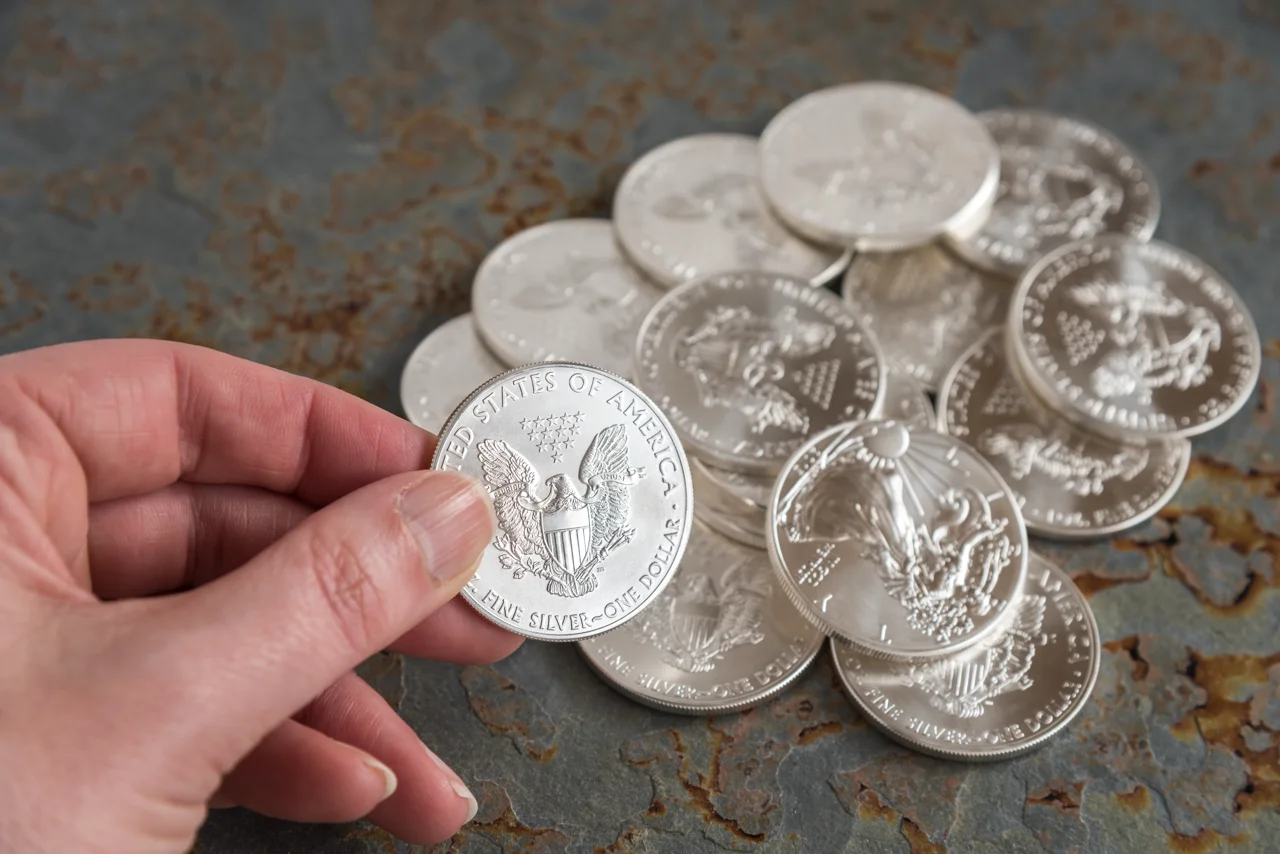
- Silver coins, including the American Silver Eagle and certain qualifying sovereign-mint coins
- Silver bullion and silver bars that meet the 99.9% purity standard
Before silver is added to your IRA, it must be stored in an IRS-approved depository. The approved storage arrangement keeps the silver within the IRA and separate from your personal assets.
How Does a Silver IRA Work?
Opening and managing a silver IRA involves several steps, from setting up the account to storing and eventually withdrawing the silver.
Open a Self-Directed IRA
You first open a self-directed IRA with an IRA custodian. The custodian handles account administration, reporting, and required IRS paperwork. A self-directed IRA can hold certain alternative assets, including physical precious metals.
Fund the Account
You can fund the account through a new contribution, transfer, or eligible rollover. If you are moving money from an existing IRA or retirement plan, you can usually transfer the funds directly between custodians or use a direct rollover.
With a direct trustee-to-trustee transfer, the money moves from one custodian to another without you receiving it. An indirect rollover sends the funds to you first, and you generally have 60 days to deposit them into another eligible retirement account. Missing the 60-day deadline can result in taxes and penalties. The IRS also generally limits IRA-to-IRA rollovers to one per 12-month period.
Choose IRA-Eligible Silver
Once your account is funded, you select silver that meets the IRA’s eligibility requirements. A precious metals dealer typically handles the purchase, while the IRA custodian manages the transaction within your retirement account.
Store the Silver In an Approved Depository
The silver belongs to the IRA, not to you personally. It must remain in an IRS-approved depository. You generally cannot keep IRA-owned silver at home or in a personal safe.
Taking personal possession of IRA-owned silver can cause the transaction to be treated as a taxable distribution. It may also result in additional penalties, depending on the circumstances.
Manage the Silver IRA
You can instruct the custodian to buy or sell eligible silver through the dealer. When you sell silver, the proceeds remain within the IRA unless you take a distribution.
Withdrawals From a Silver IRA
The withdrawal rules depend on the type of IRA you have. Traditional IRA withdrawals are generally taxable as income. A distribution before age 59½ may also trigger an additional 10% tax unless an exception applies.
Roth IRAs have different rules. Qualified Roth distributions can generally be tax-free if you meet the applicable requirements. If you take physical silver as a distribution, its value is generally treated as an IRA distribution for tax purposes.
Benefits of Investing In a Silver IRA
Here are the potential benefits of holding silver in a retirement account:
- Portfolio diversification: Silver can add physical precious metals exposure to a retirement portfolio alongside stocks, bonds, and other retirement assets.
- Inflation hedge: Some investors use silver as a potential hedge against inflation and market volatility.
- Physical asset exposure: Unlike silver ETFs or mining stocks, a silver IRA holds qualifying physical silver.
- Tax advantages: Traditional Silver IRAs can offer tax-deferred growth, while qualified Roth withdrawals can be tax-free.
Potential Drawbacks and Costs to Consider
A silver IRA also comes with costs and limitations, much like the pros and cons of a gold IRA.
- Fees: Silver IRAs can involve custodian, storage, insurance, and dealer fees or premiums.
- Price volatility: Silver prices can fluctuate significantly and do not generate interest or dividend income.
- Liquidity: Physical silver can take longer to sell than stocks, ETFs, or mutual funds.
- Storage requirements: IRA-owned silver must remain in an approved depository, not in your personal possession.
- Portfolio concentration: Allocating too much to silver can reduce diversification across other retirement assets.
Help us improve our guides! If you’ve recently opened a gold or silver IRA, we’d love to hear from you. Share your experience with us at [email protected]. Your personal details will stay completely confidential.