
Retirement Living takes an unbiased approach to our reviews. We may earn money when you click a partner link. Learn More
Dolly Parton, country music legend and philanthropist, dies at 80
From humble beginnings, she became one of America’s most admired entertainers
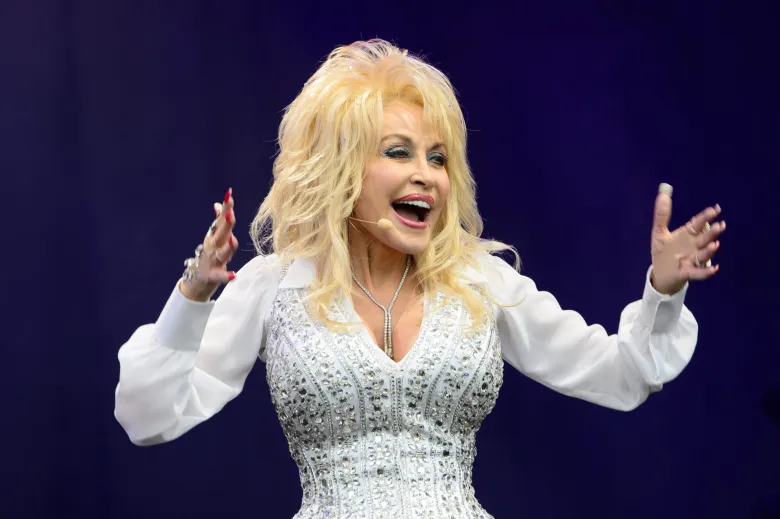

Updated:
key insights:
- Dolly Parton died peacefully Tuesday in Nashville at age 80, according to her publicist.
- The country music legend wrote enduring songs including “Jolene,” “Coat of Many Colors,” and “I Will Always Love You.”
- Beyond music, Parton built a lasting legacy through her Imagination Library, which has provided free books to children around the world.
Dolly Parton, the country music legend whose songs, sparkling costumes, and generous spirit made her one of America’s most recognizable and beloved entertainers, died Tuesday in Nashville. She was 80.
Parton died peacefully, according to a statement from her publicist. A cause of death was not immediately announced. Her family plans to hold a small, private service and has asked that memorial donations benefit Dolly Parton’s Imagination Library.
Parton’s passing closes a remarkable seven-decade career that began in the mountains of East Tennessee and eventually reached nearly every corner of popular culture. She was a singer, songwriter, actress, author, entrepreneur, and philanthropist, but her enduring appeal came from something harder to quantify: She seemed to make people feel that they knew her.
Born Dolly Rebecca Parton on Jan. 19, 1946, near Sevierville, Tennessee, she was one of 12 children raised in a family with little money. Those beginnings became the raw material for some of her most memorable songs, particularly “Coat of Many Colors,” a tender account of childhood poverty, maternal love, and dignity.
Early career
Parton began performing as a child and moved to Nashville after graduating from high school. Her early partnership with country star Porter Wagoner introduced her to a national audience, but Parton was determined to establish an independent career.
She explained her departure from Wagoner in the song “I Will Always Love You,” turning a difficult professional separation into an expression of gratitude. Parton’s recording became a country hit twice. Whitney Houston later transformed it into one of the biggest pop ballads in history, demonstrating the extraordinary reach of Parton’s songwriting.
Her catalog also included “Jolene,” “Here You Come Again,” “Two Doors Down,” “9 to 5,” and “Islands in the Stream,” her chart-topping duet with Kenny Rogers. Beneath the bright arrangements and Parton’s distinctive vibrato were often finely drawn stories about jealousy, hardship, ambition, and survival.
Parton won 10 Grammy Awards and received 55 nominations, as well as the Recording Academy’s Lifetime Achievement Award. “Jolene” and “I Will Always Love You” were both inducted into the Grammy Hall of Fame. The Recording Academy lists her work across country, pop, gospel, bluegrass, and other musical categories.
More than a country singer
Parton successfully crossed into movies with the 1980 workplace comedy “9 to 5,” co-starring Jane Fonda and Lily Tomlin. Its title song became an anthem for working women and earned Parton an Academy Award nomination.
She went on to appear in “The Best Little Whorehouse in Texas,” “Steel Magnolias,” and other films. She also became a formidable businesswoman, most famously through Dollywood, the Tennessee theme park that created jobs and strengthened the tourism economy near her childhood home.
Yet her most consequential work may have happened away from the stage.
Parton founded the Imagination Library in 1995 to mail free books to young children. Initially serving her home county in Tennessee, the literacy program grew into an international undertaking that has distributed hundreds of millions of books.
She also supported disaster relief in Tennessee and donated $1 million to research that helped produce Moderna’s COVID-19 vaccine.
60-year marriage
Parton’s husband, Carl Dean, died in 2025 after nearly 60 years of marriage. Although he largely avoided public attention, she frequently described him as a steady presence behind her very public life.
Parton never concealed the work involved in creating her glamorous image. Instead, she treated the wigs, rhinestones, and cosmetic procedures as part of the joke — and invited the audience to laugh along with her. That self-awareness helped her connect with people across generations and political divisions.
She could appear larger than life without acting superior to anyone. Behind the glitter was a disciplined songwriter who understood poverty, disappointment, and the desire for a better life.
Dolly Parton spent decades singing about where she came from while showing that humble beginnings did not have to limit where someone could go. Her greatest achievement was not simply becoming famous. It was using that fame to give millions of other people music, laughter, jobs, books — and hope.