
Retirement Living takes an unbiased approach to our reviews. We may earn money when you click a partner link. Learn More
From memory lane to TikTok: Classic cars bridge a generational divide
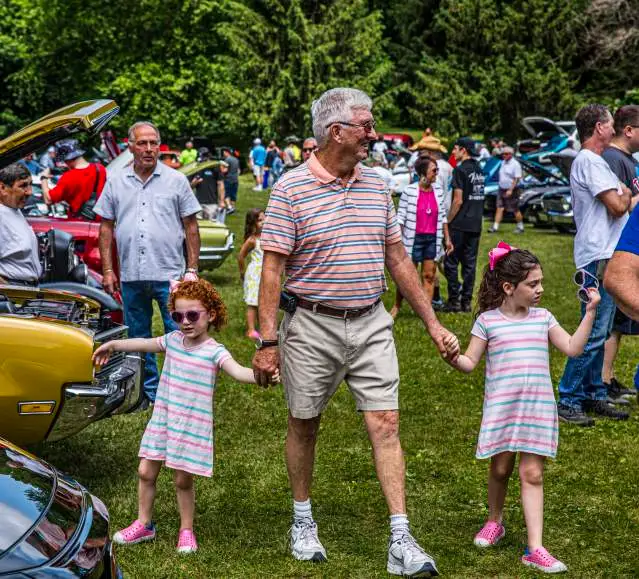
The next time you attend an antique car show, invite your grandchild

Updated:
key insights:
- Baby boomers often prize classic cars as rolling reminders of their youth, freedom and cultural identity.
- Gen Z is emerging as an unexpected force in collector-car culture, with 60% expressing interest in owning a classic vehicle.
- Social media, video games, and online marketplaces are giving younger enthusiasts new routes into a hobby long associated with older drivers.
For many baby boomers, the rumble of a V8 engine or the flash of chrome on a 1960s coupe can summon memories of first dates, family road trips, and newly earned independence.
That emotional connection has helped sustain America’s classic-car culture for decades. Yet the future of the hobby may increasingly belong to drivers who were born long after carburetors, cassette decks, and manual window cranks disappeared from most new vehicles.
A survey highlighted by Kelley Blue Book found that 60% of Generation Z respondents were interested in owning a classic car, compared with 31% of baby boomers. The results challenge the common assumption that younger Americans — raised amid ride-hailing services, electric vehicles, and smartphones — have little attachment to traditional car culture.
The survey was commissioned by collector-car insurer and automotive lifestyle company Hagerty and conducted by OnePoll among more than 2,000 Americans. It found that 77% of Gen Z respondents said they liked or loved driving. Nearly one-third said they had owned or currently owned a classic enthusiast vehicle, although Hagerty did not specify how it defined “classic.”
Different generations, different appeal
For boomers, the appeal is frequently personal. Cars such as the Ford Mustang, Chevrolet Corvette, and Volkswagen Beetle are tied to the music, movies, and social changes of their formative years. Buying one today can be a way to reclaim a piece of the past — and for those with the means, the car they wanted but could not afford when they were young.
Gen Z’s nostalgia is different. Younger enthusiasts may have no firsthand memory of the periods that produced the vehicles they admire. Instead, they encounter older cars through racing games, YouTube restoration channels, films, and short-form social media videos. What begins on a screen can develop into an interest in mechanical work, customization, and in-person car gatherings.
The generation’s definition of a collectible is also expanding the market. Alongside midcentury American muscle cars and European sports cars, younger buyers often seek Japanese performance models, compact pickups, and once-common vehicles from the 1980s, 1990s, and early 2000s. These cars can offer distinctive styling and a more analog driving experience than many newer models, though rising prices have placed some favorites beyond the reach of first-time buyers.
The downside
Affordability is not the only obstacle. Older vehicles can be less reliable, harder to repair, and less safe than modern cars. Insurance, storage, and access to replacement parts may add substantial costs. Still, online communities make technical advice and obscure components easier to find, while local meets give younger owners a social entry point into the hobby.
The survey also suggests that enthusiasm crosses generations even when motivations differ. Boomers may see classic cars as repositories of lived experience; Gen Z may value them as tactile alternatives to increasingly digital products. Both groups, however, can view automobiles as cultural artifacts worth preserving.