
Retirement Living takes an unbiased approach to our reviews. We may earn money when you click a partner link. Learn More
Here’s what bugs boomers about grocery shopping
Self-checkout, digital coupons, and fewer employees are among the frustrating changes

Updated:
key insights:
- Older shoppers are more likely to favor staffed checkout lanes, traditional supermarkets, and familiar products.
- Digital-only coupons, self-checkout machines, and a shortage of employees can make shopping harder for some seniors.
- Stores risk alienating loyal customers when they rearrange merchandise or fail to maintain carts and other basic services.
Grocery stores have embraced automation, smartphone apps, and self-service in an effort to cut costs and appeal to younger consumers. But many of those changes are frustrating older shoppers, who tend to place a higher value on personal service, familiarity, and ease of use.
An analysis by The Takeout identified 10 grocery-store practices that can be particularly unpopular with baby boomers, generally defined as people born from 1946 through 1964.
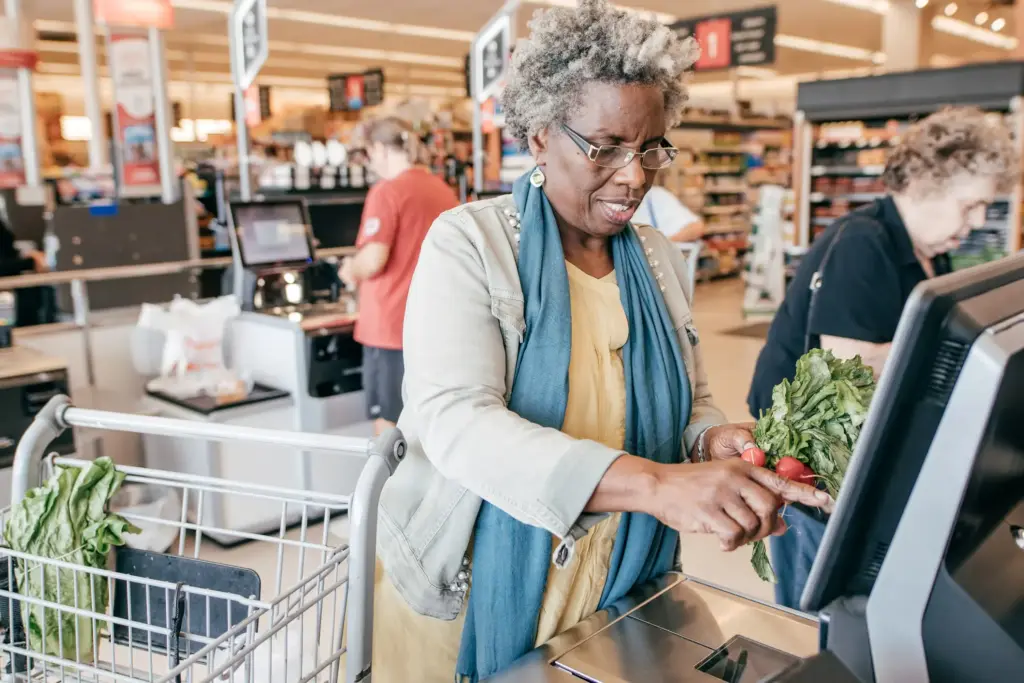
Self-checkout may be the biggest dividing line. A survey cited in the report found that 75% of consumers ages 55 and older prefer a human cashier. By comparison, 46% of shoppers ages 18 to 34 said they would choose self-checkout when given the option.
Older consumers may find the machines confusing, especially when weighing produce or responding to unexpected error messages. Some also object to doing work once performed by store employees and miss the social interaction that comes with a staffed checkout lane.
Digital coupons create another obstacle. Supermarket discounts are increasingly tied to smartphone apps or online loyalty accounts, potentially excluding shoppers who do not own smartphones or are uncomfortable using them.
The report cited research showing that smartphone ownership declines with age. When sale prices require customers to load an electronic coupon, older adults without the necessary device or technical skills may have to pay more for the same item. Some seniors have characterized the practice as unfair or discriminatory.
Traditional supermarkets remain popular
A national supermarket study by The Feedback Group found notable differences in where generations shop. Thirty-two percent of baby boomers said traditional supermarkets were their preferred grocery channel, followed by Walmart at 28%. Only 11% preferred Aldi, while 5% chose dollar stores.
By contrast, Gen Z shoppers showed stronger preferences for Walmart, Aldi, and dollar stores.
The findings suggest younger shoppers may be more focused on price and convenience, while older consumers put more emphasis on service, cleanliness, and product quality.
Boomers nevertheless gave their primary supermarkets a relatively high satisfaction score of 4.43 on the study’s five-point scale. They rated friendliness and store cleanliness particularly favorably, according to The Feedback Group.
That makes the availability of employees especially important. Stores with fewer workers can produce longer checkout lines and make it difficult to find help locating products. The decline of dedicated grocery baggers may also disappoint shoppers who remember when employees routinely packed purchases and sometimes helped carry them to the car.
Familiarity and accessibility matter
Frequently rearranged merchandise is another source of frustration. Stores sometimes move products to expose shoppers to more items, but the practice can create a burden for people with limited mobility. A longer search may cause some shoppers to skip an item rather than walk through several additional aisles.
Shopping carts with stuck or poorly functioning wheels can present a similar problem. Some older adults use carts for stability as well as carrying groceries, making proper maintenance an accessibility issue rather than simply an inconvenience.
The report also found that boomers tend to prefer familiar national brands and are less interested than younger shoppers in pre-made meals. Cited data indicated that 26% of boomers rarely or never consider switching brands. Meanwhile, just 29% of consumers 65 and older said they seek products that reduce meal-preparation time, compared with 45% of shoppers ages 15 to 24.
The findings suggest supermarkets do not necessarily have to abandon new technology. However, keeping staffed lanes open, offering nondigital discounts, and maintaining consistent store layouts could help ensure that modernization does not come at the expense of older customers.