
Retirement Living takes an unbiased approach to our reviews. We may earn money when you click a partner link. Learn More
Can You Add An Elevator To An Existing Home?
We reviewed pricing, installation services, customer support, and expert ratings to find the best home elevators you can add to an existing home.


Updated:
At a glance:
- Most existing homes can accommodate a residential elevator with proper planning.
- Shaftless and pneumatic elevators require the least structural modification.
- Installation costs generally range from $30,000 to more than $100,000.
This article compares the best home elevator providers for retrofits and covers costs, space requirements, and what installation involves.
Can You Really Add an Elevator to an Existing House?
Yes. Most multi-story homes built in the last 50 to 60 years can accommodate a residential elevator with reasonable planning. Adding an elevator to an existing home is not limited to new construction or large renovations.
Modern elevator designs, especially shaftless and pneumatic models, are built specifically for retrofit situations and require far less structural work than traditional systems.
The key is choosing the right elevator type for your home’s layout, ceiling heights, and available floor space.
Which Elevator Types Work Best for Retrofits?
Not all home elevator types are equally suited for adding to an existing home. Here is how the main options compare.
- Pneumatic vacuum elevators use air pressure to move the cab inside a self-supporting cylindrical tube. They require no pit, no machine room, and no heavy shaft construction. Most installations take two to three days. The cab is 30 to 52 inches in diameter and can fit in a closet, corner of a room, or open area near a staircase. They use about 4.7 kilowatts during ascent and no electricity during descent, making them one of the most energy-efficient options. Cost typically ranges from $35,000 to $85,000.
- Shaftless elevators travel through a hole in the floor rather than a full elevator shaft. They take up less space than traditional elevators and can often be installed where a closet or open vertical space already exists. Shaftless models typically cost $35,000 to $60,000.
- Hydraulic elevators use a fluid-driven piston system. They require a machine room and pit, which adds complexity to a retrofit. But they are smooth, reliable, and support higher weight capacities. Cost typically ranges from $20,000 to $50,000 for the unit, plus installation.
- Traditional traction elevators require a full shaft, machine room, and more extensive structural work. They are better suited to large-scale renovations than standard retrofit projects. Costs start at $50,000 and can exceed $100,000.
How Much Does It Cost to Add an Elevator to an Existing Home?
Home elevators cost anywhere from $30,000 to more than $100,000. Most homeowners pay around $65,000 for a standard residential elevator without major customization. Installation labor typically adds $5,000 to $15,000, depending on the project’s complexity.
| Elevator Type | Typical Cost Range |
|---|---|
| Shaftless elevator | $35,000 to $60,000 |
| Pneumatic/vacuum elevator | $35,000 to $85,000 |
| Hydraulic elevator | $20,000 to $50,000 (plus installation) |
| Traditional traction elevator | $50,000 to $100,000+ |
How Much Space Do You Need for a Home Elevator Installation?
You generally need about 25 square feet of floor space available for a standard residential elevator. Most elevator cabs are 36 to 60 inches deep, 48 to 60 inches wide, and at least 80 inches tall.
To comply with ADA guidelines, a home elevator cab should be at least 51 inches deep, at least 68 inches wide with side doors (or 80 inches wide with centered doors), and have a door width of at least 36 inches.
It is important to check that the elevator footprint aligns on every floor it will serve. A design consultant or contractor can confirm whether your home’s layout can accommodate your chosen model. For more detail on the full process, see our home elevator installation guide.
What Does the Installation Process Involve?
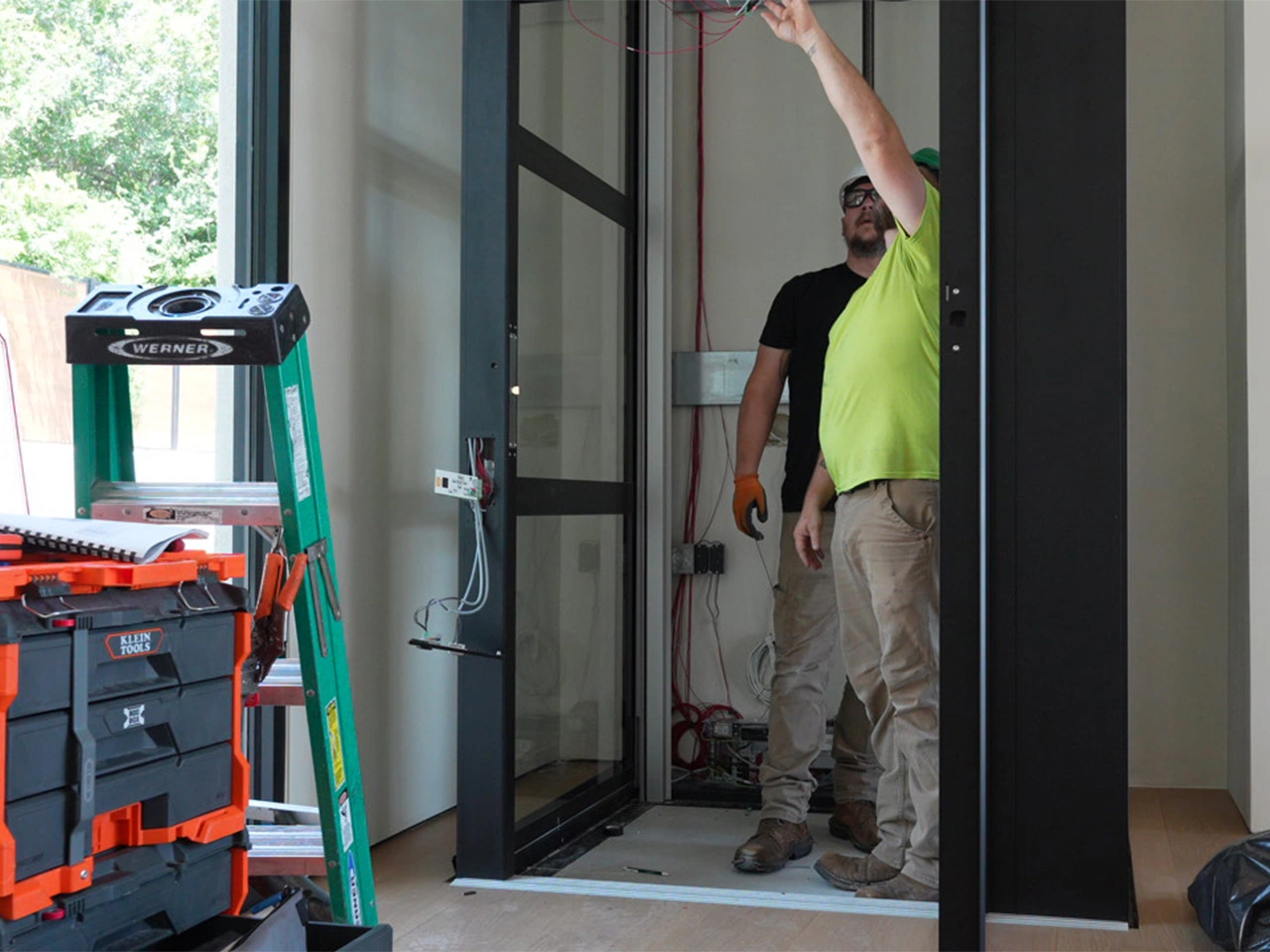
Adding an elevator to your home involves several steps. The scope depends on the elevator type you choose.
- Research and budget: Identify providers and create a rough budget before scheduling a consultation.
- In-home consultation: A professional visits to assess your layout, measure available space, and recommend the right elevator type.
- Permits and site preparation: Most states require a building permit. Your provider typically handles this as part of the project.
- Installation: Ranges from two to three days for pneumatic elevators to two weeks or more for traditional systems requiring full shaft construction.
- Inspection: A licensed elevator inspector must sign off before the unit can be used in most states.
Concluding Thoughts on Home Elevators for Existing Homes
Adding an elevator to an existing home is more practical than most homeowners expect. With modern shaftless and pneumatic elevator lift systems, most multi-story homes can accommodate a residential elevator without major structural modifications or a costly remodel.
The key steps are choosing the right drive system and elevator type for your floor plan, confirming home elevator installation requirements with a licensed professional, and budgeting for both the unit and any site preparation needed to meet local building codes and safety regulations.
Frequently Asked Questions (FAQs) About Adding an Elevator to an Existing Home
Yes. Pneumatic and shaftless elevators are designed for retrofit installations and require minimal structural work. Most can be installed in two to three days without disrupting plumbing, walls, or HVAC systems.
You generally need about 25 square feet of floor space. Pneumatic elevators are the most compact option, with cabs that are 30 to 52 inches in diameter. Traditional hydraulic and traction elevators need a full shaft and elevator machine room, which requires more space.
Yes, in most states. A building permit and final inspection by a licensed elevator inspector are required before the unit can be used. Most reputable providers handle permitting as part of the installation process.
Pneumatic and shaftless elevators typically take two to three days. Traditional hydraulic lifts or traction systems can take two weeks or more, depending on the structural work required.
For many homeowners, yes. A home elevator provides multi-floor access, reduces fall risk for people with mobility challenges, supports wheelchair-accessible living, and can improve resale value. Compared to the cost of moving to a single-story home or assisted living, it can be a practical long-term investment. A home elevator also complements other stair lifts and platform lift solutions if you have mobility challenges on multiple levels.
Help us improve our resources! Email your recent shaftless elevator quote to [email protected]. And don’t worry, your personal details will remain confidential.