
Retirement Living takes an unbiased approach to our reviews. We may earn money when you click a partner link. Learn More
Electric vs. Hydraulic Elevator
Most electric systems, except traction elevators ($55,750), are cheaper than hydraulic elevators ($47,500), but hydraulic drives offer a higher weight capacity.


Updated:
At a glance:
- Electric models, such as through-the-floor ($15,000–$40,000) and winding drum elevators ($20,000–$40,000), are usually less expensive than hydraulic elevators ($25,000–$70,000). Traction elevators are an exception to this rule ($26,500–$85,000).
- Hydraulic elevators achieve lift through pressurized hydraulic fluid, while electric lifts utilize either a counterweight system or chain/cable drum mechanism.
- With a maximum travel height of 60 ft, hydraulic lifts can rise higher than through-the-floor (up to 20 ft) and winding drum lifts (up to 50 ft), but traction elevators are still the best for high-rise buildings (100 ft or more).
How Does a Hydraulic Elevator Work?
While modern hydraulic elevators use electricity to drive electric motors that power the hydraulic pump, they don’t actually need power to function. That’s because the lifting force is generated by the pressurized hydraulic fluid (usually oil inside a fluid-driven piston), rather than the motor itself. More specifically, the hydraulic pump pushes the fluid into a cylinder, which then moves the piston that lifts and lowers the elevator. Electrical valves precisely control fluid release for a smooth ride.
Most hydraulic elevators need a separate machine room and hoistway to function, as well as a drilled hole directly below the pit to house the underground hydraulic cylinder. This gives them a larger footprint than other elevator types.
Types of Electric Home Elevators
Electric home elevators come in a variety of shapes and sizes, with some requiring a dedicated elevator shaft and others being completely shaftless. Here are some of the most common examples:
Through-the-Floor Elevators
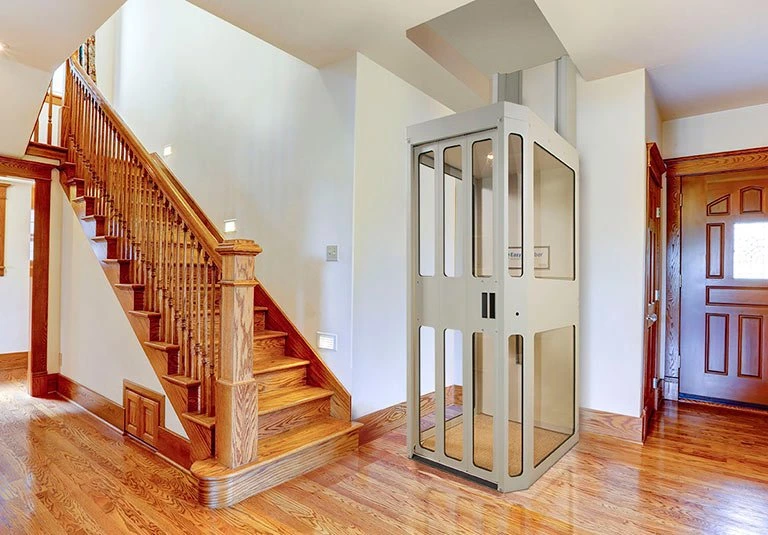
Through-the-floor elevators are among the most affordable solutions for low-rise applications. They operate using a small cutout in the floor, minimizing the need for structural modification. The electric-powered enclosed cab or open platform simply moves up through the cutout to transport you to the upper floor, safely sealing the hole when not in use. They can require as little as 8.5 to 15 square feet of floor space and are installed with zero shaft framing, but generally only travel between two floors.
Winding Drum Elevators
Winding drum elevators are like a dumbwaiter designed for human-sized cargo. Their cable-based lifting system (usually steel ropes) is driven by an electric motor that winds the cables directly onto rotating drums, creating the force that lifts the cab. It’s a fully machine-room-less (MRL) design in which the motor, pulleys, and control panel are located within the hoistway itself. They have a small footprint and can rise up to 50 ft, but the pulley system (often called deflector sheaves) causes wear that can decrease cable lifespans.
Traction Elevators
Traction elevators are the most costly option, as while MRL designs exist, most installations require a separate machine room to function. They aren’t shaftless either, unlike through-the-floor lifts.
They operate similarly to winding drum models, using an electric motor and steel-rope pulleys to lift the elevator cab. The ropes roll over built-in grooves on the sheave, providing a tight grip as the elevator moves. The main difference is in the use of a counterweight system. A carefully balanced counterweight connected to the ropes reduces the cab’s energy consumption as it moves up and down the elevator shaft. These elevators have an impressive lift height of 100 ft or more, depending on the application, but require significant home renovation.
Hydraulic Elevator vs. Electric Elevator: Side-by-Side Comparisons
If you’re considering a residential elevator installation in your home, understanding the pros and cons of each system is key. Here are the most important factors you should be aware of for both elevator types:
| Category | Hydraulic | Through-floor | Winding Drum | Traction |
|---|---|---|---|---|
| Average Cost | $25,000 – $70,000 | $15,000 – $40,000 | $20,000 – $40,000 | $26,500 – $85,000 |
| Overall Footprint | 20–25 sq ft; hoistway required; MRL options rare | 8.5–15 sq ft; no hoistway or machine room required | 20–25 sq ft; requires a hoistway but no machine room | 20–25 sq ft; hoistway and overhead clearance required (min. 9 ft ceiling); MRL options available |
| Energy Efficiency | 1.0–5.0 kWh/day | 0.5–1.5 kWh/day | 1.0–3.5 kWh/day | 1.0–3.5 kWh/day |
| Ride Quality | 32–50 FPM; can be noisier and bumpier than other options | 12–30 FPM; functional but not the smoothest ride | 20–40 FPM; May use variable speed tech to ease starts and stops | 36–40 FPM; quiet and steady with minimal vibration |
| Load Capacity | 1,000 lbs or more | Up to 845 lbs | Up to 950 lbs | Up to 1,000 lbs |
| Travel Distance | Up to 60 ft | 14–20 ft | Up to 50 ft | 100 ft or more |
| Maintenance | $200–$800/year; regular hydraulic fluid checks and oil changes; risk of leaks | $250–$1,000/year; routine inspections of drive system and cables | $300–$1,200/year; cables, drum, and gears need regular lubrication and inspection | $200–$800/year; pulley and cable system servicing |
Should I Choose a Hydraulic or Electric Elevator?
Though most modern elevators require electricity to operate, there are key differences among the types mentioned above that affect which installation will be best for your home. Here are some of the main questions you should be asking yourself, along with their answers:
1. How much space do I have?
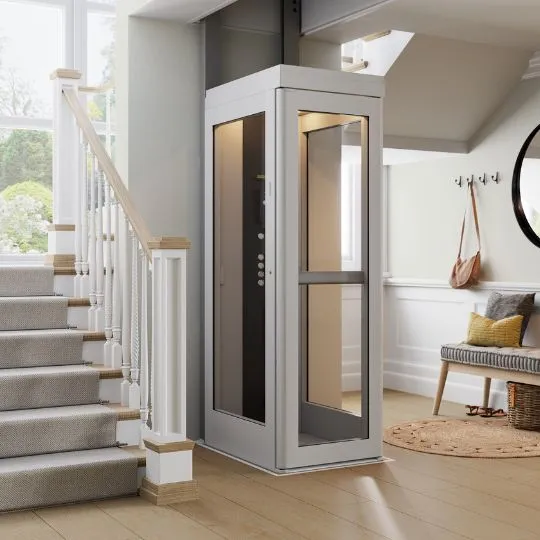
Every residential elevator has unique space requirements. Most require 20–25 sq ft for the cab/platform, with through-the-floor lifts being the main exception due to their extremely compact footprint (8.5–15 sq ft). Likewise, through-the-floor lifts don’t need an elevator shaft, while the other three options do. Hydraulic and traction models also usually need a separate machine room.
Ultimately, if you want minimal home renovation, through-the-floor and winding drum lifts are the best option, with the former being the most space-efficient overall. On the other hand, hydraulic and traction elevators can lift more but demand more space.
2. What mobility needs do I have?
If you use a mobility aid (wheelchairs, scooters, walkers, etc.), you’ll likely need an elevator with a larger-than-normal platform and increased weight capacity. Hydraulic and traction models are regularly designed to lift over 1,000 lbs, making them a great option. Winding drum and through-the-floor lifts can also be designed to lift mobility aids, but the latter is the least viable option—standard through-the-floor elevators lift 550 lbs or less.
3. What is my budget?
If you have a larger budget, hydraulic and traction elevators can lift heavier loads and travel higher. However, when you want the most affordable renovation or retrofit, through-the-floor lifts can save you thousands on costly structural modifications.
Energy consumption is another budgetary factor to consider. Through-the-floor lifts usually consume less than 1.5 kWh/day, while some hydraulic lifts can consume up to 5.0 kWh/day. Therefore, the former option can lead to significant savings on monthly utility bills.
4. What safety features are available?
All four elevator types we’ve mentioned share a standard set of safety features: emergency stop buttons, automatic door interlocks, and battery backups. Beyond that, your options will largely depend on the individual manufacturer and model. Families with young children might benefit from the simple sealed-floor design of through-the-floor lifts, while those who want more advanced features should consider luxury traction or hydraulic elevators.
5. How much does regular maintenance cost?
Maintenance expenses vary, but annual inspections are the norm regardless of type. Compared to purely electric models, though, hydraulic lifts require routine oil checks and fluid replacements in addition to standard inspections. However, the intricate pulley and cable components associated with winding drum and traction elevators can also wear down over time, leading to costly repairs.
Overall, traction elevators tend to last the longest—often 20–35 years with proper maintenance. Hydraulic elevators follow closely behind, at 20–25 years. Winding drum and through-the-floor lifts generally fall in the 15–20 year range.
Our Takeaway: Choose the Elevator That Fits Your Home and Mobility Needs
Most modern elevators require some form of electrical connection, but differences in electric and hydraulic drive systems, overall cost, travel height, weight capacity, and more are key considerations when you’re looking to invest. Hydraulic lifts are a great option for lifting heavy loads, like wheelchairs or scooters, and can reach heights of up to 60 ft, but they generally require expensive structural modifications. Electric lifts, such as through-the-floor and winding drum models, are usually cheaper and more space-efficient but have limited capacities. Traction elevators are also an option for high-rise buildings but demand a lot of space.
Not sure which lift is right for your home? Reaching out to a local expert can help. We recommend contacting a professional company that can assess your space, explain code requirements, and recommend the best systems for your budget and needs.
Frequently Asked Questions (FAQs) About Electric vs. Hydraulic Elevators
Electric and hydraulic elevator costs vary depending on the type of electric elevator, the model/brand, and even your local region. Here are the typical price ranges when you account for professional installation:
• Hydraulic elevators: $25,000 – $70,000
• Through-the-floor elevators: $15,000 – $40,000
• Winding drum elevators: $20,000 – $40,000
• Traction elevators: $26,500 – $85,000
Traction elevators are the most complex and time-consuming to install, followed by hydraulic, winding drum, and through-the-floor lifts. This complexity generally also gives traction and hydraulic models the highest installation costs.
• Traction: Can take several weeks and requires considerable renovations
• Hydraulic: Takes one to two weeks and may require deep drilling for the pit/shaft.
• Winding drum: Typically completed in less than a week, requiring a hoistway but no separate machine room.
• Through-the-floor: Can take as little as a few days, needing only a small floor cutout and basic electrical connection.
Yes and no. Hydraulic elevators can travel higher (up to 60 ft) than through-the-floor elevators (up to 20 ft) and winding drum elevators (up to 50 ft), but not as high as traction elevators (over 100 ft in some instances).
Through-the-floor lifts are the simplest and require the least amount of maintenance. However, all four types should receive annual maintenance, which usually costs less than $1,000. Hydraulic models also need regular oil checks and fluid replacements. Traction and winding drum elevators can experience costly wear over time due to their pulley systems.
Through-the-floor elevators are the most cost-effective long-term when you only need to travel between two floors, as they only consume 0.5–1.5 kWh/day on average and aren’t complex systems. Traction and winding drum elevators consume more energy (1.0–3.5 kWh/day) and require more complex maintenance. Hydraulic elevators consume the most energy on average (1.0–5.0 kWh/day), which can make them less cost-effective over time.
Because the hydraulic fluid in the pump unit is oil-based, leaks and other issues pose an environmental hazard. Conversely, the electric systems do not use hydraulic oil, making them cleaner and safer for sensitive sites.
Help us improve our resources! Email your recent home elevator quote to [email protected]. And don’t worry, your personal details will remain confidential.