
Retirement Living takes an unbiased approach to our reviews. We may earn money when you click a partner link. Learn More
How to Choose a Home Elevator
Evaluate your mobility and capacity needs, home layout, budget, providers, and warranties.


Updated:
AT A GLANCE:
- Choosing a home elevator starts with evaluating your mobility needs and available space while comparing drive systems, cab design, codes, and installer options.
- Different drive systems, such as hydraulic, traction, and pneumatic, offer different advantages in space, ride quality, and capacity.
- Total cost depends on various factors, including floors traveled, shaft construction, power requirements, permits, and finish options.
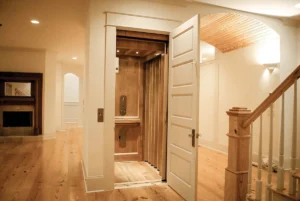
Whether you’re looking to future-proof your home, increase accessibility or enhance resale value, installing a home elevator is a worthwhile investment. Not only do residential home lifts make traveling between floors easier and safer for those with mobility issues or aging in place, but they can also provide a convenient way to transport heavy objects.
Finding the right elevator is a complex process, but it doesn’t need to be overwhelming. Below, we discuss how to choose a home elevator step-by-step, discuss different drive systems to consider and dive into cost-influencing factors.
How to Choose a Home Elevator
Choosing the right home elevator for you and your family goes beyond looking at price; it involves evaluating your mobility needs, home layout, budget, and long-term accessibility needs. From there, you can consider what type of elevator and drive system would serve you best, as well as any potential home renovations that would accompany the addition.
Below, we discuss seven steps to follow when choosing the best home elevator.
Step 1: Define Mobility and Capacity Needs
First, you will need to define your mobility needs so you can look for home elevators that will be able to safely transport you, other users and heavy objects between floors. Your mobility and accessibility needs will influence what the elevator’s capacity must be.
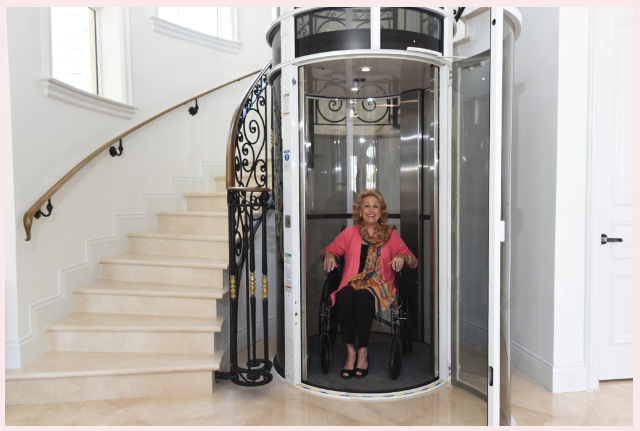
For example, a single user without a mobility device can have a smaller elevator car than someone with a wheelchair or caregiver assisting them. Consider who will be using the elevator and ensure the cab provides enough space for them to comfortably move in and out.
Similarly, keep in mind how much weight the elevator will need to lift. The weight capacity of a home elevator can range anywhere from 300 lbs to over 1,000 lbs, depending on the passenger limit, drive system and your home’s structure.
Step 2: Measure Space and Layout Limits
The next step is to measure the space the elevator will be installed in and consider what limits your home layout may set. In many cases, this step will be conducted by a professional during a home evaluation, but you can also evaluate the space before to get a rough idea of what to expect.
Space and layout limits to consider include:
- Clearance Space: You’ll need at least 36 to 48 inches of open entry clearance in front of doors on every floor.
- Travel Distance: Most home elevators are restricted to a travel height of 50 feet or less (typically 2 to 5 stories)
- Cab Dimensions: Standard cabs are about 36″ by 48″, while ADA-compliant cabs are larger to fit wheelchairs, meaning you will need a larger floor space if you use a wheelchair or similar device.
- Hoistway (Shaft) Size: Typically, hoistways need a 4′ x 5′ framed vertical space, but compact elevators can fit in a 3′ x 3′ space.
- Machine Room: Traditional and hydraulic systems often require a separate machine room for mechanical components and controllers, which will require even more space.
- Pit Depth: Most traditional elevators need a recessed pit at the bottom of the shaft (usually 6 to 12 inches), but pitless or pneumatic vacuum options sit directly on the floor.
You will likely have to make a series of home modifications for the residential elevator to fit and meet all the legal and building codes, especially with traditional or heavy-duty elevators with higher weight limits.
Step 3: Choose the Elevator Drive System
Once you know your mobility needs and have a rough idea of how an elevator will fit into your home layout, you can choose a drive system that works best for you. The main types of drive systems for home elevators include traction, hydraulic, winding drum, and pneumatic (vacuum) systems.
Different drive systems are better for traveling longer distances, transporting higher weight capacities, saving energy, or fitting in compact spaces. Choose the drive system that best fits your mobility needs and budget. We discuss drive systems more in the next section.
Step 4: Compare Sellers, Warranties, and Service
Once you know what your mobility needs are and roughly what kind of elevator will best suit them, you can start researching providers. Create a list of sellers and manufacturers that offer the right type of elevator, comparing services, warranties, maintenance access, and customer reviews.
Once you narrow down your list, you can schedule free in-home consultations. A dealer or installer will come to your home and discuss your needs. They can help confirm space requirements, code compliance, available customization, and total costs.
Step 5: Pick Cab Size, Safety, Doors, and Finishes
Choosing a cab size requires balancing your available floor space and accessibility needs. You can discuss your needs with your provider to ensure your cab is spacious enough while still meeting regulations. You should also ensure the elevator includes all necessary safety features, such as battery backups, emergency stop protocols, overload sensors, and more.
From there, you can discuss door style and finishes, as well as any customization options you’d like to include to ensure the elevator fits your design preferences. Keep in mind that the more customizations and luxury features, will increase overall costs.
Step 6: Confirm Safety Codes and Permits
To install a home elevator, you will adhere to local building permits, electrical compliance and national safety codes. Depending on where you live, you may also need to get permission from your HOA before installation. Research what permits are required and be sure to obtain those.
Most home elevator providers help with this step and will inform you what requirements they will handle and which ones you will need to manage.
Step 7: Estimate Total Cost and Timelines
After all the previous steps have been addressed, you can estimate total costs and discuss timelines with your provider. Pre-manufactured units with minimal home modifications can take as little as 2 to 3 days to install, while more complex custom retrofits can take several months.
Home Elevator Types and Drive Systems
There are different types of home elevators and drive systems, and which is best for you depends on your needs and preferences. Below, we discuss the main types of elevators and drive systems to help you determine what kinds would work for you and which you’d prefer.
| Type | Drive System | Weight Capacity | Average Price Range | Best For |
|---|---|---|---|---|
| Hydraulic Elevator | Uses pressurized hydraulic fluid and pistons inside a cylinder | 750 – 1,000 lbs | $45,000 – $85,000+ | Low-rise homes, heavy lifting capacity, & smooth rides |
| Traction Elevator | Uses steel ropes, grooved pulleys, and electric motors | 900 – 1,000 lbs | $45,000 – $85,000+ | Multilevel homes, energy efficiency, & saving space |
| Chain-Driven Elevator | Uses heavy-duty chain and motors | 750 – 1,000 lbs | $20,000 – $65,000 | Retrofitting older homes, high weight capacity, & space efficiency |
| Winding Drum Elevator | Uses electric motors, steel cables and a large “drum” (may or may not have counterweights) | 500 – 1,000 lbs | $20,000 – $40,000 | Low-rise homes & retrofitting existing homes |
| Machine Room-Less (MRL) Elevator | Uses compact electric motors, controllers, and variable-frequency drives | 750 – 1,000 lbs | $20,000 – $100,000 | Homes with limited square footage and high weight capacity |
| Shaftless (Through-the-Floor) Elevator | Uses either a hydraulic or winding drum drive system | 300 – 770 lbs | $35,000 – $60,000 | Two-story homes with limited space |
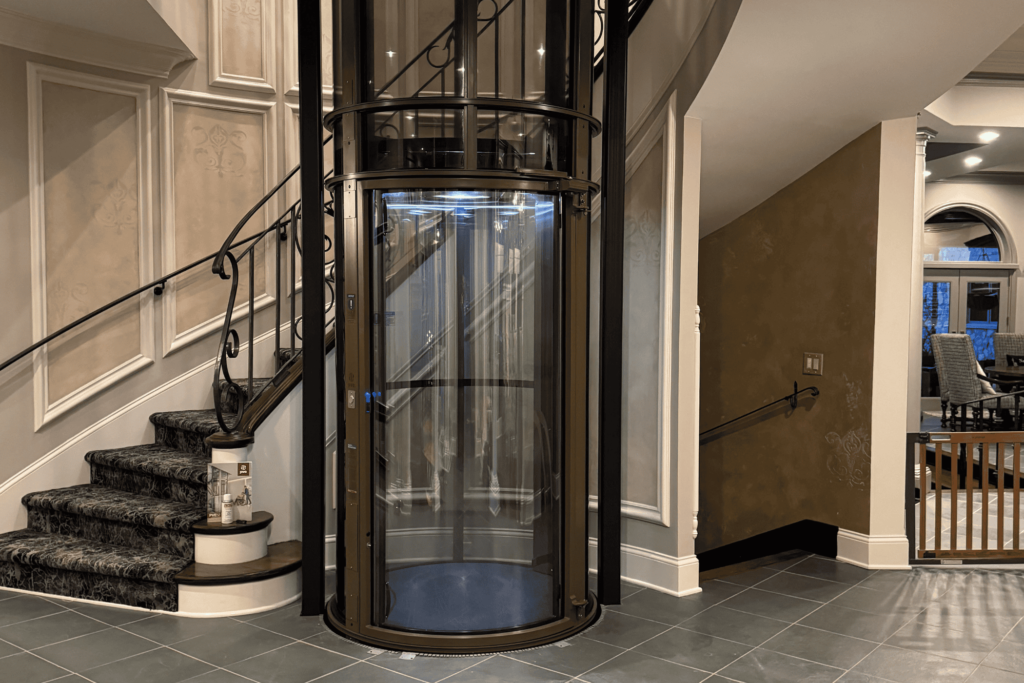
| Pneumatic (Vacuum) Elevator | Uses air pressure | 350 – 525 lbs | $35,000 – $85,000 | Light weight capacity, space-saving, & eco-friendly needs |
Some things to keep in mind when choosing an elevator type are space needs, capacity, and performance. Hydraulic home elevators tend to offer smooth, high-capacity rides but need a dedicated machine room and periodic fluid maintenance. On the other hand, pneumatic (vacuum) and shaftless elevators are space-efficient and don’t require a machine room, but they have a much smaller weight capacity and travel height.
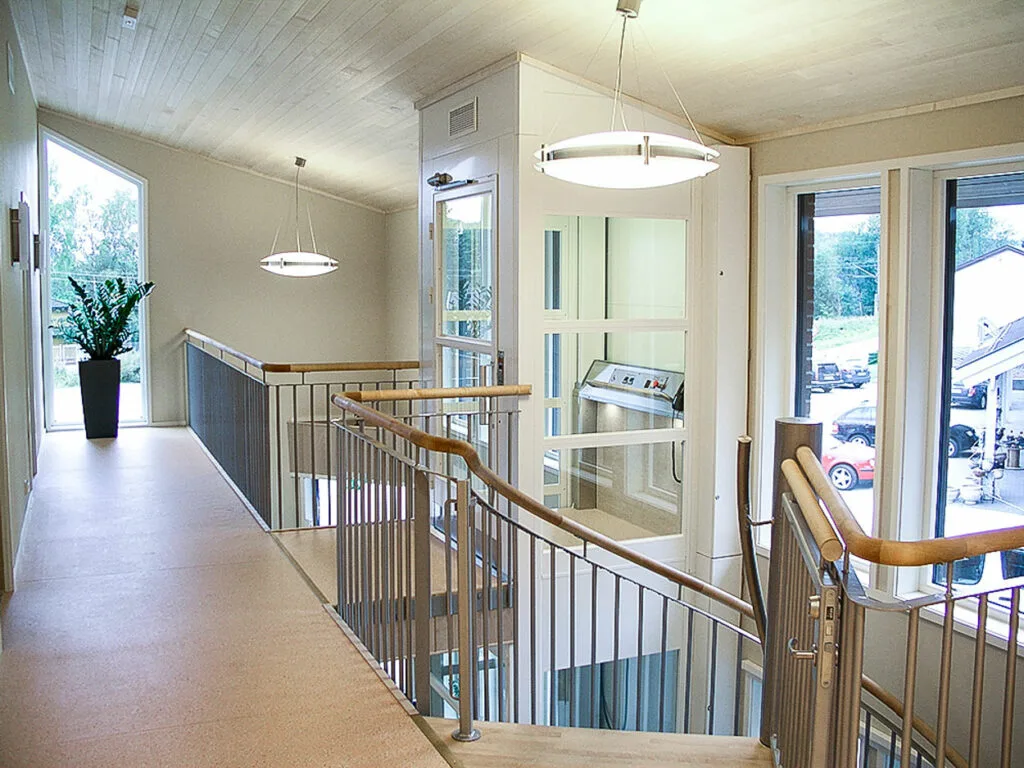
Traction, chain-driven and MRL elevators are great for balancing efficiency and space-saving and are typically easy to retrofit into an existing home. Finally, winding drum elevators are considered budget friendly option for multi-story homes with room for equipment. Overall, the best home elevator is the one that meets your needs and fits your home and budget.
Home Elevator Costs and Installation Factors
The total cost of a home elevator depends on the type, the number of floors it must travel, whether a hoistway is constructed, electrical upgrades, permits, cab finishes, and customizations. Average prices range from $30,000 to $ 100,000.
How long and complex the installation is will also influence costs. For instance, adding a home lift to new construction typically costs less than retrofitting an existing home. Generally speaking, the more structural work required, the higher the final costs.
In addition to purchase and installation costs, you can expect ongoing costs, including annual maintenance, electricity consumption, repairs, component replacements, and potential upgrades. These expenses can be mitigated with warranties, but each provider offers different ongoing services, so be sure to review what is included in the warranty and if it’s worth extending the warranty.
Bottom Line: Choosing a Home Elevator
The best way to choose a home elevator is to match your mobility needs and home layout constraints to the appropriate drive system. From there, you can focus on customizations and design. It’s important to set a budget that first allows for safety and capacity over aesthetics.
Additionally, weighing space requirements, ride quality, and maintenance needs against upfront and long-term costs will help you avoid overspending or under-planning. Overall, find a reputable installer who will not only ensure code compliance, but also address your mobility needs along with offering strong warranty and service support over time.
Frequently Asked Questions (FAQs) About How to Choose a Home Elevator
Original Medicare does not pay for home elevators because they are not considered durable medical equipment but rather structural home modifications, and therefore don’t fall under coverage. However, some private Medicare Advantage plans may offer supplemental benefits or allowances that may partially cover costs.
For a standard residential elevator, you will need about 20 to 25 square feet of total floor space for the shaft and cab. However, some compact models require only 9 square feet, but this does not provide enough room for wheelchair users.
Yes, home elevators are typically safe for those aging in place as long as the lifts are properly selected, installed, and maintained.
The actual process of installing an elevator usually takes 2 to 5 days once the site is fully prepared; however, the entire process, from prep to installation and testing, can take 4 to 8 weeks, on average.
Help us improve our cost data! Email your latest home elevator quote to [email protected]. Rest assured, your personal details will remain completely confidential.