
Retirement Living takes an unbiased approach to our reviews. We may earn money when you click a partner link. Learn More
Luxury Home Elevators: Cost, Installation, & Features
Installing a luxury home elevator costs an average of $82,500 due to exceptional craftsmanship, more features despite a compact footprint, and the high level of customization.


Updated:
AT A GLANCE:
- Luxury lift parts and installation cost between $15,000 and $150,000+, depending on the elevator type, lift height, and additional features.
- The most affordable luxury elevator types are enclosed VPLs ($15,000 – $60,000+) and MRL hydraulic elevators ($25,000 – $60,000+). Vacuum/pneumatic (PVE) elevators with a glass enclosure and a full panoramic view are among the most expensive options ($35,000 to $100,000+).
- Custom features that make a residential elevator a luxury system include machine-room-less (MRL) designs, premium cab finishes, custom cab sizes, advanced smart home integration, “whisper-quiet” drive systems, panoramic glass enclosures, and bespoke door designs.
When you have the budget, installing a new residential elevator is about more than just functionality. In fact, senior homeowners can invest in a variety of luxury home elevators that increase their home’s value by adding a mobility solution and a focal point.
Below, we discuss what makes a home elevator a luxury installation, including the features that set these models apart from their traditional counterparts. We also calculate cost estimates for parts and labor, so you know exactly what to expect even before you head to the showroom.
Luxury Residential Elevators vs. Traditional Options: What’s the Difference?
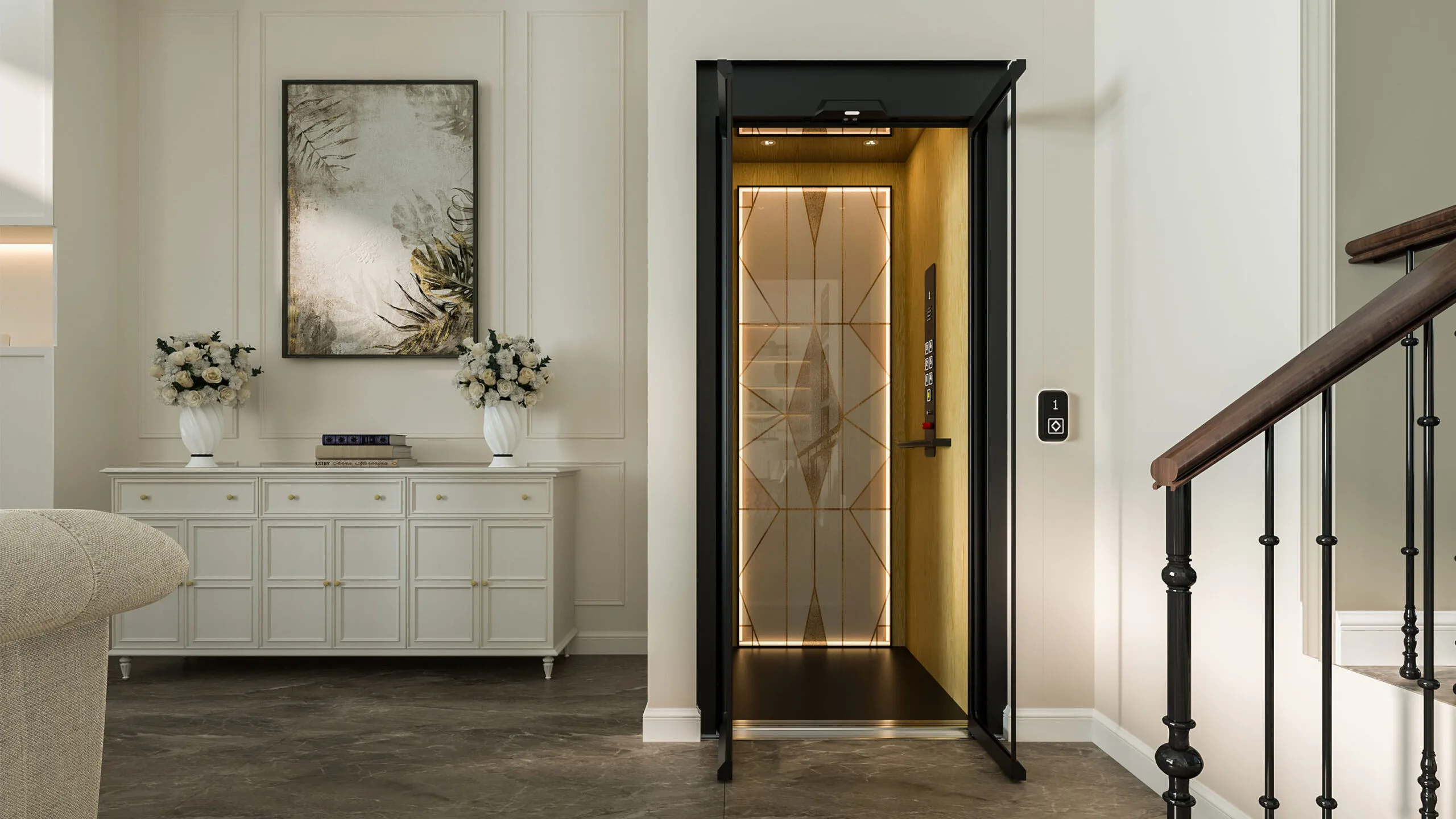
Compared to traditional home lift options, luxury elevators go beyond basic functionality, offering personalized, seamless integration backed by top-quality materials and craftsmanship. Aesthetically, the difference can translate to premium cab finishes like marble, hardwood, and brushed stainless steel, or a full glass enclosure with panoramic views. On the functional side, you can expect advanced features like smart home integration and whisper-quiet drive systems.
The other key differentiator is the level of personalization. Most traditional residential elevators come in standard sizes, materials, and configurations, while luxury models are designed to match your specific vision. This degree of customization, at the material and installation level, justifies the premium price tag.
The Importance of Customization Options
One of the key things that sets luxury home elevators apart from your typical lift system is the level of customization available. Most companies allow you to tailor nearly every detail—cab dimensions, door styles, flooring materials, lighting, and more. You can design your new home elevator to specifically complement your home’s architecture and interior design. This personalization extends to the installation process itself, where manufacturers work closely with senior homeowners to match both aesthetic and mobility essentials.
Common Luxury Elevator Features & Prices
Luxury elevators tend to come with a litany of upgrades other personal elevator systems lack. For instance, you can usually tell that a model is luxury if it offers:
- Premium cab finishes ($2,000–$10,000+): Options like marble flooring, hardwood paneling, and brushed metal accents.
- Panoramic glass enclosures ($5,000–$20,000+): Provide a full 360-degree view of the outside from inside the cab; a fantastic addition for high-rise scenic views or for preserving natural light.
- Custom lighting packages ($1,000–$5,000+): Unique LED mood lighting, chandeliers, or backlit ceilings.
- Smart home integration ($2,000–$8,000+): Integrating new elevator software with your existing home systems, including voice control, app-based operation, and automated scheduling.
- Whisper-quiet drive systems ($3,000–$10,000+): Provide near-silent operation as the elevator travels between floors.
- Custom door designs ($2,500–$12,000+): Door installations that include custom wood, frameless glass, or decorative metalwork.
- Soft-close and smooth-stop technology ($1,500–$4,000+): Creates a smoother riding experience that reduces wear and maintenance costs over time.
- Climate control and ventilation systems ($1,000–$3,500+): To maintain more comfortable temperatures and better air quality inside the cab.
- Handrails and seating ($500–$3,000+): Comfortable ways for seniors to rest made from premium materials like leather or suede.
Examples of Modern Luxury Home Elevator Designs
There is no specific type of luxury home elevator, as installations with almost any drive system can be customized into luxury territory. With that in mind, here are some designs that are usually considered luxury installations:
- Enclosed vertical platform lifts (VPLs), also known as wheelchair lifts, are shaftless elevators that can be used on stairs, rather than stair lifts. A motor-driven drive mechanism lifts and lowers the platform along a vertical tower adjacent to the stairs. Luxury VPLs usually include a full enclosure: a self-contained shaft that surrounds the platform, offering extra safety while entering, exiting, and traveling, as well as protection from the elements when the lift is installed outdoors. Maximum travel height for VPLs is around 14 feet.
- Machine-room-less (MRL) hydraulic elevators use a compact hydraulic pump and fluid-driven piston system to raise and lower the cab, and are also designed to house the mechanical components in the hoistway itself rather than in a dedicated machine room. The result is a system with an impressive weight capacity that can rise to 40–50 feet, all while maintaining a quiet ride and requiring minimal footprint.
- Machine-room-less (MRL) traction elevators work via a counterweight and steel rope system driven by a compact motor mounted directly in the hoistway. They can rise over 100 feet, making them ideal for larger luxury homes with three or more floors. They also offer an exceptionally smooth, energy-efficient ride and faster travel speeds than hydraulic alternatives.
- Pneumatic vacuum elevators (PVE) with custom, panoramic glass enclosures use air pressure to lift and lower a cylindrical elevator car within a sealed tube. This means that the system requires no cables or counterweights but can only rise up to 50 feet. They’re particularly well-suited for homes with limited space or those seeking scenic views, as the system itself serves as both the hoistway and the car enclosure.
Every luxury model will have unique pros and cons, especially considering that every home layout is different. We recommend contacting individual manufacturers for more information on available features and pricing.
Luxury Elevator System Equipment Costs
The average cost of a luxury home elevator, including the elevator car, installation equipment, and labor, ranges from $15,000 to $150,000+. This is a wide range, largely due to the potential for customization. The actual price will depend on the type of elevator, floor plan, added safety features, and even your state/region. Here’s what homeowners might expect to pay based on elevator type:
- Enclosed vertical platform lifts: $15,000 – $60,000+
- MRL hydraulic elevators: $25,000 – $60,000+
- MRL traction elevators: $35,000 – $70,000+
- Panoramic vacuum elevators: $35,000 and $100,000+
What Does It Cost to Install a Luxurious Elevator?
Luxury home elevator installations tend to be more complex and time-consuming compared to their standardized counterparts. Before construction even begins, you need to understand which structural modifications, dedicated electrical work, and local permits you will need.
PVE systems can take as little as a few days to install, as they require very few structural modifications. On the other hand, MRL traction and hydraulic installations require shaft construction, reinforced flooring, and custom cab fitting that can take several weeks.
Realistically, labor will account for 20–30% of your total installation cost. For an elevator costing $50,000-$150,000, that amounts to roughly $10,000–$45,000. Hourly rates for certified elevator installers generally range from $60 to $150 per hour, depending on your region, the system’s complexity, and the contractor’s level of specialization.
The Best Luxury Home Elevator Manufacturers
We’ve compared a few popular luxury elevator brands, including their type and price ranges:
| Brand / Model | Elevator Type | Starting Price |
|---|---|---|
| Inclinator Elevette | MRL hydraulic elevator | $25,000 |
| Harmar Highlander II | Enclosed VPL | $31,000 |
| PVE52 Residential Elevator | PVE panoramic glass elevator | $35,000 |
| Savaria Vuelift | PVE panoramic glass elevator | $35,000 |
| Savaria Zenith | MRL traction elevator | $40,000 |
The Bottom Line: Luxury Home Elevators Enhance Accessibility and Home Value
Luxury home elevators not only address your mobility concerns but can also significantly boost your home’s value. However, whether you need a VPL for your outdoor porch or a traction elevator to navigate a three-story home, you should expect a hefty price tag. Including installation, most luxury systems will cost between $15,000 and $150,000.
Frequently Asked Questions (FAQs) About Luxury Home Elevators
The cost of a luxury home elevator largely depends on the type of model you choose. Enclosed VPLs are the cheapest, starting at as little as $15,000, but can only travel a limited distance. Other options, like MRL traction, MRL hydraulic, or panoramic PVE models, regularly exceed $40,000, with some costing more than $100,000.
What sets a luxury home lift apart from standard options is the level of customization available to you, including premium cab finishes, panoramic glass enclosures, custom lighting, smart home integration, soft-close and smooth-stop technology, climate control, and more.
If you have Medicare or a private insurance plan, you will likely not have coverage for your new luxury elevator installation. Some nonprofit organizations, like your local Agency on Aging (AAA), may be able to help, but you should still expect to pay for most luxury features out-of-pocket.
Installing a high-quality elevator with luxury features can take anywhere from a few days to several weeks, depending on the elevator type, the level of structural modification required, and the specific upgrades you choose. Be sure to ask your technician for a specific timeline.
The best luxury elevator for your home depends on the available space, your mobility needs, and overall budget. Enclosed VPLs are a particularly excellent choice when you only need to travel between two floors, while a PVE installation is the best when you want minimal structural modification and panoramic views. MRL hydraulic and traction installations are especially useful if you need to travel multiple floors or carry heavy loads.
Usually, yes. While an elevator doesn’t need to be customized to be considered a luxury model, almost all high-end installations include some level of customization.
Yes, luxury VPLs and hydraulic elevators are especially effective options for wheelchair users. While neither can travel as high as traction elevators, their high weight capacity improves safety for wheelchair-bound seniors.
Help us improve our cost data! Email your latest home elevator quote to [email protected]. Rest assured, your personal details will remain completely confidential.