
Retirement Living takes an unbiased approach to our reviews. We may earn money when you click a partner link. Learn More
Small Home Elevators: Cost & Space-Saving Designs
The best small lifts are shaftless, pneumatic, and “mini” home elevators, offering affordable accessibility.


Updated:
At a glance:
- The main types of small home elevators include shaftless (through-the-floor) elevators, pneumatic vacuum elevators, and “mini” traditional elevators, each offering its own benefits.
- The average cost of small home elevators ranges from $15,000 and $60,000, depending on model, construction requirements, added features, and manufacturer.
- Various factors influence the final cost, including brand, height requirements, additional features, local laws, installation time, and more.
Types of Small Home Elevators
The space required for a residential elevator installation is about 20 to 25 square feet, with hoistways averaging 5′ x 5′ to 5′ x 7′. Small home elevator lifts, on the other hand, can have cabs as small as 3’ x 3’. Small elevators usually don’t need the complex drive systems of traction elevators or the hydraulic systems of hydraulic elevators, nor the bulky equipment typically required to operate, thanks to their unique, compact designs.
Below are the three types of small home lifts most commonly offered by elevator manufacturers.
Shaftless Elevators
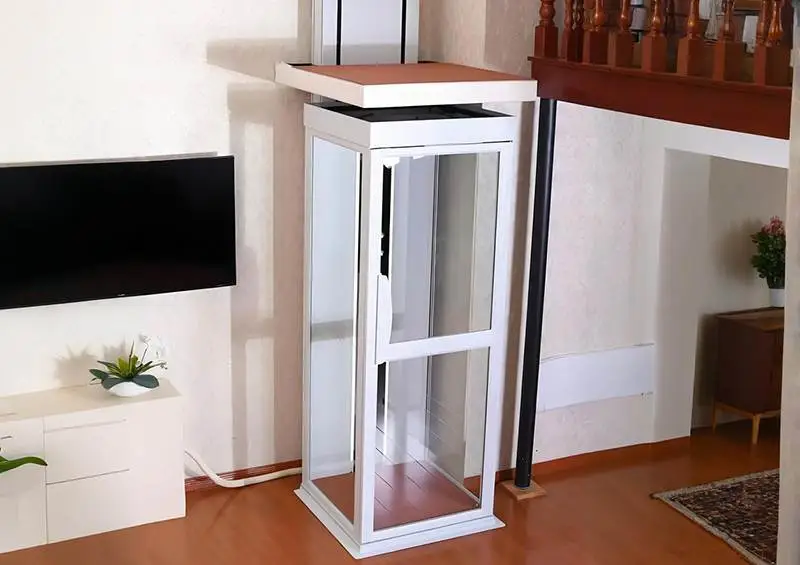
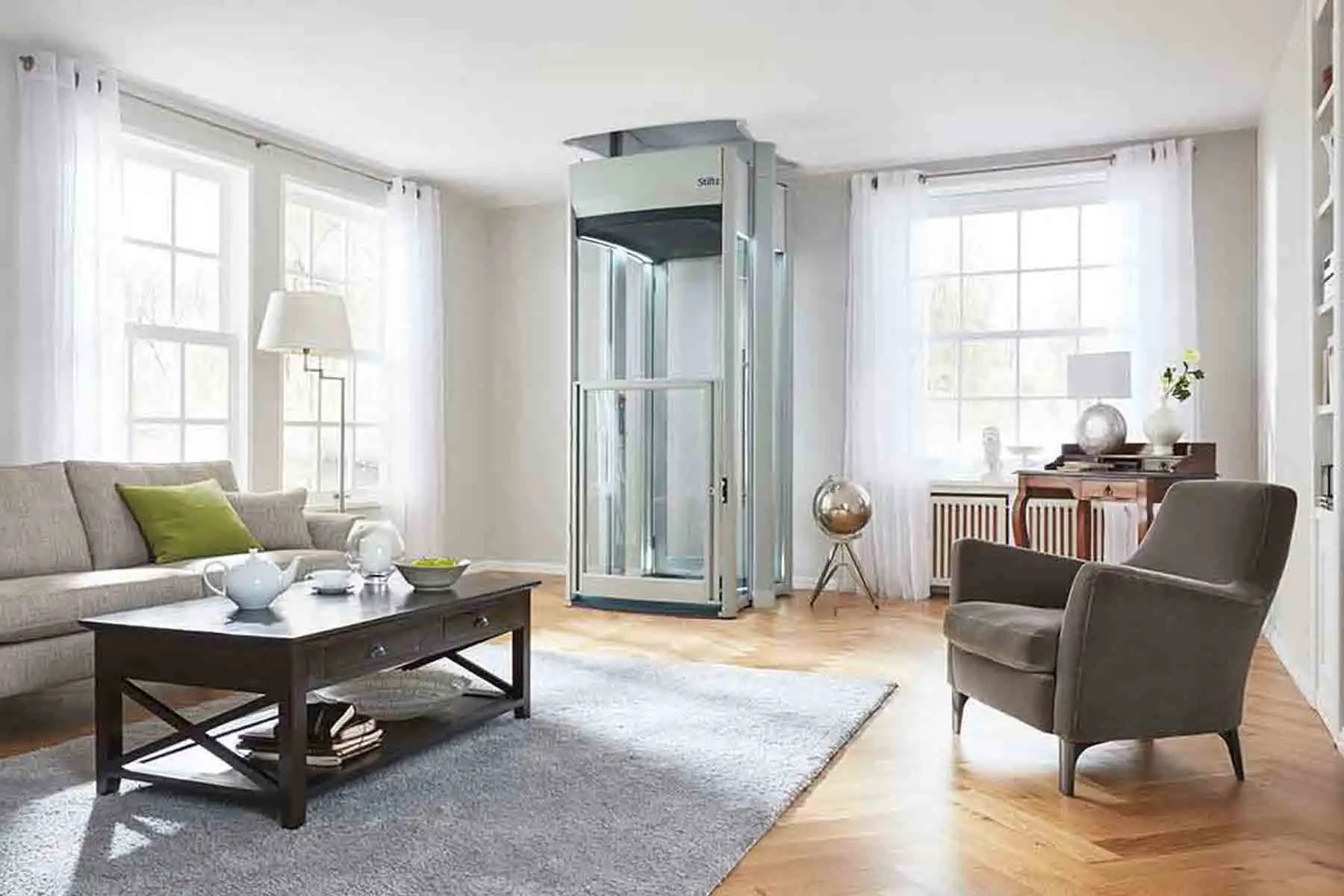
Shaftless elevators, often referred to as through-the-floor elevators, can be installed almost anywhere with minimal preparation and limited construction. They are often placed against a wall or in a corner, using your home’s existing structure to frame the lift and maximize space. A guided rail system carries the elevator cab up through the floor and between levels, without the need for a machine room.
Shaftless elevators are often the most affordable option for homeowners wanting smaller home lifts, with average costs ranging from $15,000 to $30,000, depending on the type of elevator, floor plan, additional features, local laws, and more.
Pros of shaftless elevators:
- Space Saving: Has a small footprint, requiring minimal construction and machinery.
- Cost-Effective: Tend to be more budget-friendly than traditional home lifts, requiring fewer structural modifications.
- Easy Installation: Most shaftless in-home elevators can be installed in just a few days.
- Modern Aesthetics: Many models now come with sleek finishes, optional glass panels, and minimalist interiors, meeting modern aesthetics.
Cons of shaftless elevators:
- Smaller Weight Limits: Shaftless elevators tend to have lower weight capacities than traditional elevators due to their smaller design and can usually fit only one or two people at a time.
- Floor Limits: Most through-the-floor elevators are limited to two levels, making them unsuited for multi-story homes.
- Visible Machinery: The mechanical, structural, and drive components are often visible, which may clash with some interior design schemes.
Pneumatic Elevators
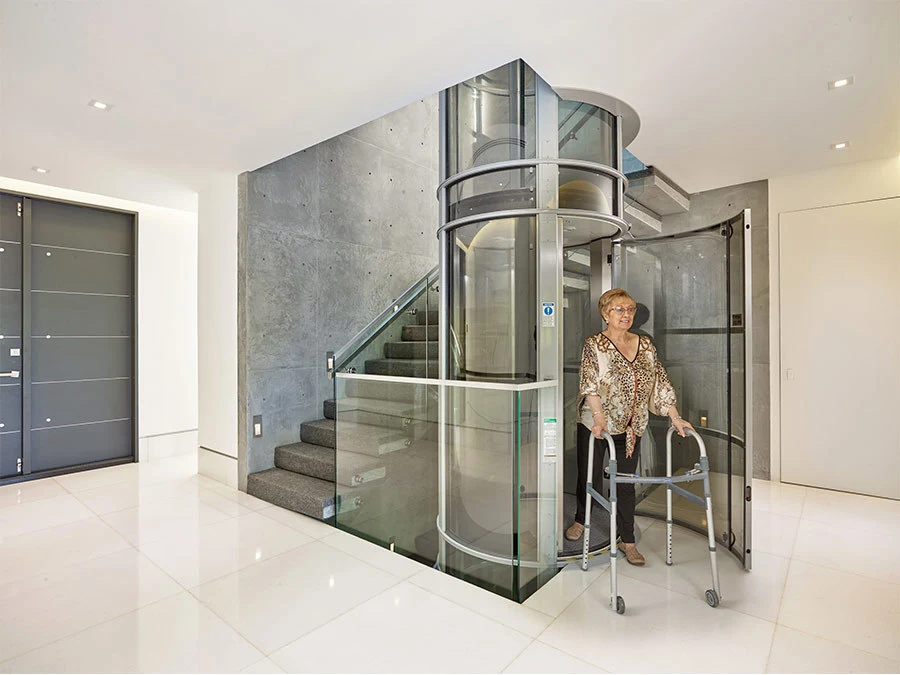
Pneumatic vacuum elevators, sometimes called tube elevators or just vacuum elevators, use air pressure to move the cab through a cylindrical tube. They are similar to shaftless elevators in that they are self-supporting, require minimal construction, and have a small footprint.
Pneumatic elevators operate entirely on air pressure and a vacuum system and don’t require complex machinery, leading to a fast home elevator installation process. Because of their modern design and advanced components, the average cost of vacuum elevators is $35,000 to $60,000, depending on the model, travel distance, and installation needs.
Pros of pneumatic elevators:
- No Shaft Necessary: Pneumatic lifts are self-supporting, meaning they stand alone without the need for any machinery or large construction space.
- Energy Saving: Because they use air pressure to move up and down, they use very little electricity.
- Luxurious Design: The modern aesthetic is visually appealing, and the glass tube offers panoramic views.
- Higher Travel Distance: Pneumatic lifts can travel higher distances than shaftless elevators, making them a good solution for those in multi-story homes.
Cons of pneumatic elevators:
- Lower Weight Capacities: Vacuum elevators typically have a weight limit of 350–525 kg, depending on the model.
- Not Wheelchair Friendly: Due to their compact design, most pneumatic elevators aren’t large enough for wheelchair users.
- High Price Tag: Advanced technology and luxurious design lead to higher costs.
Mini Traditional Home Elevator
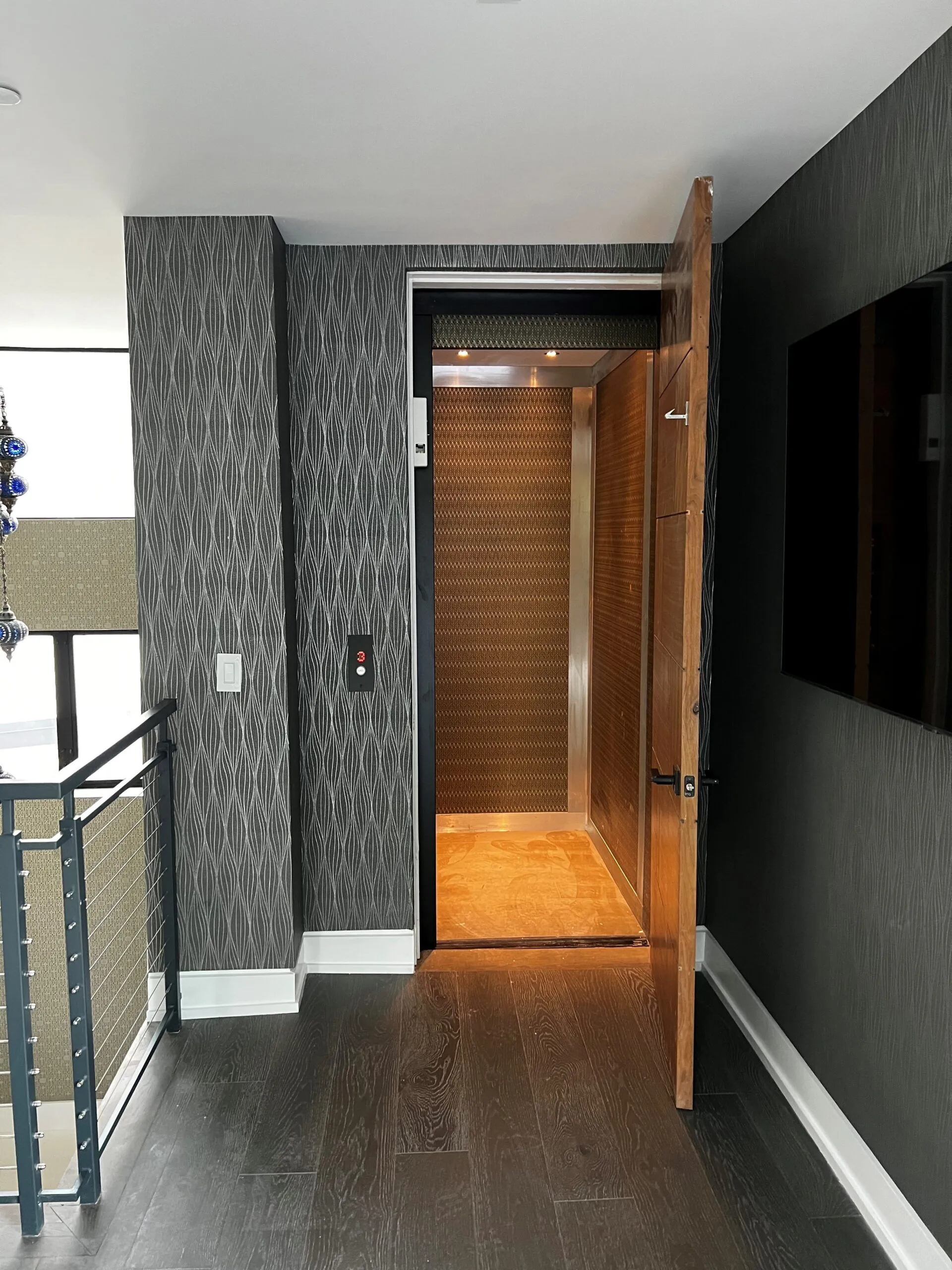
Another option for a small home elevator is similar to a “mini” version of the standard home elevator, often designed as a machine-room-less (MRL) or inline gear drive (IGD) style. These mini home elevators typically require only an electrical cabinet for their controls, reducing the space normally needed by traditional home elevators. They typically cost between $25,000 and $60,000, depending on the drive system and added features.
Pros of Mini Traditional Elevators:
- Space-Saving w/ Traditional Designs: Offers the appearance of regular home elevators without taking up as much space.
- Robust Features: Often support advanced, smart features such as voice-activated controls, light-up panels, child-lock functionality, safety brakes, and more.
- Customizable: Have fully customizable interiors, fixtures, doors, and gates.
- Multi-User Friendly: They can be used by the entire household and often accommodate multiple users at a time, depending on the model.
Cons of Mini Traditional Elevators:
- Space Limitations: While “mini,” these elevators still take up floor space and require overhead clearance that shaftless and pneumatic elevators do not.
- Maintenance Costs: Like full-sized units, mini elevators require regular maintenance to remain safe and functional, and the costs can add up.
- Slower Speeds: Mini traditional elevators tend to have slower travel speeds, which can be inconvenient when transferring between floors.
How Much Does a Small Residential Elevator Cost?
When budgeting, expect small home elevator prices between $20,000 and $60,000, for both the unit and installation.
Shaftless elevators are the most affordable small home lift option, averaging $15,000 to $30,000. The other two small home elevators are more expensive, with prices ranging from $25,000 and $60,000, and pneumatic lifts have a typical starting price of $35,000.
While these prices may seem high, full-size home elevators can cost up to $100,000, not including ongoing expenses such as repairs and maintenance.
What Factors Affect the Cost of Small Home Elevators?
Various factors influence the final cost of a home elevator. The biggest factors often the provider, model, and labor requirements.
Factors that influence the cost of a small home elevator:
- Elevator type
- Manufacturer
- Technology level
- Number of floors/stops
- Cab size
- Weight capacity
- Customizations
- Smart home integrations
- Geographic location
- Extended warranties
- Labor costs
- Retrofitting services
- Demolition and preparation
- Remodeling services
- Required permits
- Ongoing maintenance
- Regular safety inspections
- Repairs
Overall, the final cost of installing a small elevator depends on many factors. Added features, installation time, safety regulations & local codes, permits, and the elevator’s capabilities will often lead to additional costs. Before choosing a small elevator for your home, be sure to get free quotes from multiple providers to stay within budget.
Bottom Line: Space-Saving Home Elevators
Installing a small home elevator is a great choice for those seeking convenient, safe, and stylish mobility solutions to increase home accessibility. Small elevators, shaftless, pneumatic, and mini traditional, are affordable and aesthetic alternatives to full-sized models. They require minimal construction and less machinery, saving money, energy, and space.
If you’re considering installing a home elevator but are concerned about installation time, high costs, and loss of floor space, a small elevator may be the best option for you and your family.
Frequently Asked Questions (FAQs) About Small Home Elevators
For those who plan to age in place or have mobility issues, home elevators are generally considered to be worth the cost. While initial costs are high, home elevators increase accessibility, offer physical relief, and increase property value.
Installation costs for small home elevators are typically included in the total cost, which ranges from $15,000 to $60,000. To get exact pricing for installation, you typically need to get a professional quote after a site survey.
Of the options above, a shaftless (through-the-floor) elevator is the more affordable option, costing between $15,000 and $30,000. However, some may consider a vertical platform lift (VPL) instead of a home elevator; these have a limited travel distance and are primarily meant for wheelchair users, but they can be installed both indoors and outdoors, costing between $9,000 to $20,000.
Small home elevators have a price range of $15,000 and $60,000, while stairlifts cost between $2,900 and $14,000, on average. While more affordable, stair lifts are attached to a flight of stairs and can only carry one user at a time; additionally, they are unsuitable for wheelchair users. Home elevators are more expensive but offer higher weight capacities, provide vertical transportation, and are considered more aesthetically pleasing by most people.
Help us improve our data! Email your latest home elevator quote to [email protected] or submit a review about your experience. Your personal details will remain completely confidential.