
Retirement Living takes an unbiased approach to our reviews. We may earn money when you click a partner link. Learn More
Through-the-Floor Elevators: Cost & Installation
The average cost to install a through-the-floor elevator is $27,500, making them one of the most affordable solutions for travel between two levels.


Updated:
AT A GLANCE:
- On average, the cost of through-the-floor lift parts and installation ranges from $15,000 to $40,000, depending on the home layout, wheelchair accessibility, and other upgrades.
- Through-the-floor elevators are considered shaftless models because they don’t require a dedicated hoistway or machine room, giving them an incredibly space-saving design.
- This mobility solution can only travel between two floors (approximately 14 – 20 feet).
When you need an affordable residential lift that doesn’t require a dedicated elevator shaft or machine room, through-the-floor systems are a practical choice. In fact, compared to other shaftless home elevator costs, they’re one of the cheapest options.
Below, we analyze what you can expect to spend on a new through-the-floor residential elevator, including parts and installation labor. Read on to learn whether this system is a good investment for your home.
Through-The-Floor Home Elevator Cost: Equipment & Installation
The average cost of a through-the-floor home elevator, including the elevator car, installation equipment, and labor, ranges from $15,000 – $40,000. What you pay upfront will ultimately depend on your home layout, labor costs, additional safety features, and even your state/region.
How Does a Through-The-Floor Elevator Installation Work?
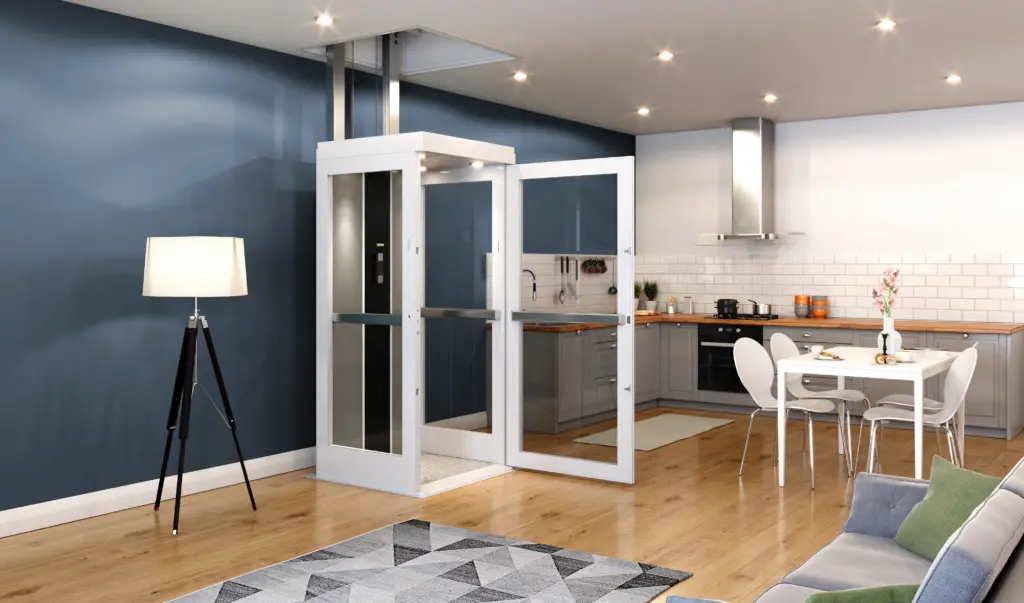
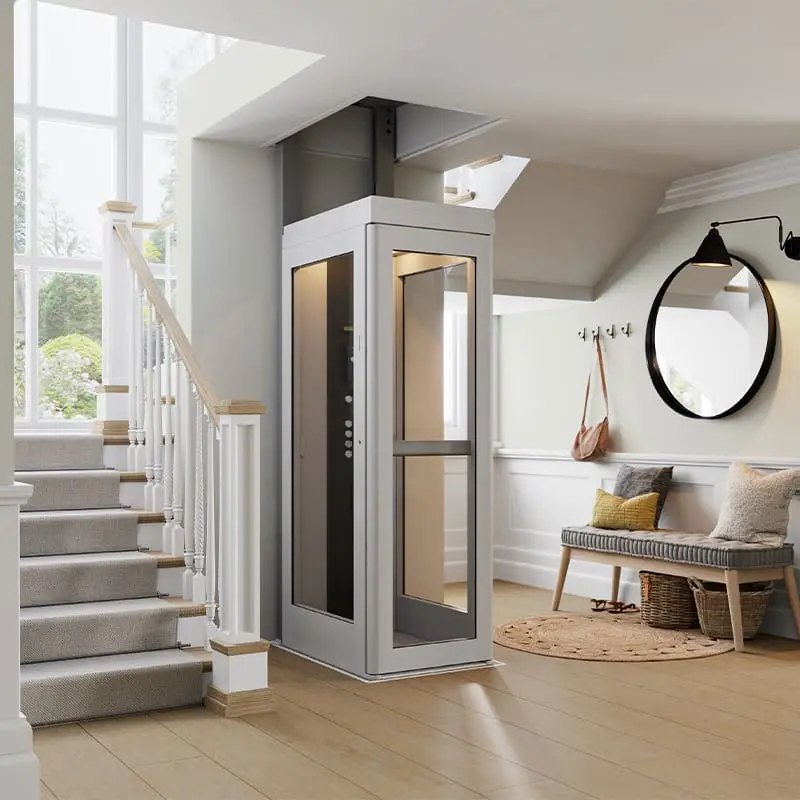
Through-the-floor elevators work using a simple cutout in the floor. Between the bottom floor and the cutout, an enclosed, electric-powered system is installed that both safely seals the floor when not in use and pushes the elevator car up and down. The electrical system includes battery backups and built-in safety sensors for automatic emergency-stop functions.
Typical home elevators might require 15 to 25 square feet for the hoistway, but through-floor lifts are installed with zero shaft framing. That’s why they have such a small footprint. However, this design limits travel to just two levels.
Through-The-Floor Elevator Capabilities
- Space requirements: Only require 8.5 to 15 square feet of floor space, making them a great option for seniors with limited space. No hoistway or separate machine room is required for operation.
- Travel distance: Most through-the-floor elevators travel 14-20 ft, approximately two floors, giving them a limited travel height compared to other residential lifts. Traction elevators, for example, can reach up to 300 ft.
- Ride speed: Travel at a relatively slow, steady speed of 12 to 30 feet per minute (FPM). Hydraulic and traction elevators may travel faster, but they also require more complex machinery.
- Weight capacity: Some through-the-floor models can be configured for mobility-aid support (wheelchairs, scooters, walkers, etc.), but most have a weight capacity below 550 lbs. If you need reliable wheelchair support, look for heavy-duty models, such as the Savaria Telecab, which can support up to 845 lbs. Traditional home elevators can move up to 1,000 lbs, but they also require a hoistway and a stronger support wall.
- Safety features: Like traditional options, through-the-floor elevators include built-in safety sensors and an emergency stop mechanism to keep riders protected every time the elevator car travels between floors.
Through-The-Floor vs. Other Shaftless Elevators
Every elevator type has unique pros and cons, and when comparing shaftless options, Vertical Platform Lifts (VPLs) and Pneumatic Vacuum Elevators (PVEs) regularly come up.
- Through-the-Floor vs. VPL: While both are usually electric-powered systems, they have several key differences. Through-the-floor elevators are fully enclosed and designed for floor-to-floor travel, while many VPLs are more open and better suited for outdoor use. Additionally, wheelchair accessibility is a primary focus of VPLs, whereas through-the-floor elevators accommodate a broader range of mobility needs.
- Through-the-Floor vs. PVE: The first big difference is that PVEs rely on air pressure and require no cables or counterweights, whereas through-the-floor elevators use an electric-powered drive system. Through-the-floor elevators can typically be installed in a wider variety of home layouts and have a smaller visual footprint, whereas PVEs require sufficient ceiling height to accommodate the tube structure. However, PVE models can achieve a more impressive lift height of up to 50 feet.
Ultimately, all three options are generally more affordable than traditional shaft-based elevators. Consider the right choice for your home based on your specific mobility needs, available space, and number of floors.
Through-The-Floor Home Lift Installation Cost & Process
Through-the-floor installations are one of the fastest and least invasive home elevator projects. Unlike hydraulic or traction models, they don’t require major structural changes; instead, they rely on a small floor cutout and basic electrical connections. Most installers only need a few days to a week to prepare the floor opening and reinforce the surrounding structure. Then, the elevator car and guide rails are assembled, wired, and tested for safety and smooth operation.
Overall labor costs for through-the-floor elevators usually range between 20–30% of the total project cost, or $60 to $150 per hour. That means you can expect to pay $3,000–$9,000 for the installation, a range that’s far lower than many other elevator types.
The Best Through-The-Floor Lift Manufacturers
We’ve compared a few popular through-the-floor elevator brands, including their type and price ranges:
| Brand / Model | Key Features | Starting Price |
|---|---|---|
| Lifeway Mobility Wessex | Compact footprint, enclosed cabin, quiet operation | $35,000 |
| Arrow Lift Shaftless | Self-contained design, small footprint, panoramic visibility | $30,000 |
| Mobility123 TrioAlta | Self-supporting structure, quick installation, compact floor opening | $29,000 |
| Mobility123 Stiltz | Freestanding lift, plugs into a standard outlet, small footprint | $25,000 |
| Stannah Uplifts S2 / S3 | Self-supporting rail system, enclosed cabin, energy-efficient operation | $20,000 |
| Savaria Telecab | Wheelchair-friendly design, 500 lb capacity, optional second-door configuration | $25,000 |
The Bottom Line: Balance Accessibility, Features, and Cost When Choosing a Through-the-Floor Elevator
When you need to travel between floors, through-the-floor elevators are among the most cost-effective mobility solutions for your home. Including installation, you should expect to pay $15,000 to $40,000 for your new lift. However, every brand and model ultimately has a unique price tag, so it’s important to compare and contrast your available options before you invest.
Frequently Asked Questions (FAQs) About Through-the-Floor Elevators
Through-the-floor home elevators cost between $15,000 and $40,000, making them cheaper than other shaftless home elevator options, like vacuum elevators (PVE). Most realistically, many homeowners pay between $25,000 and $35,000.
If you have Original Medicare or private insurance, you’re unlikely to get coverage for your new elevator. However, you can get financial assistance through other insurances (Medicaid, Veterans Benefits, etc.) if you can prove that the installation is a medical necessity. We also recommend contacting your local Area Agency on Aging (AAA) and other local nonprofits for assistance.
Through-the-floor elevators have a relatively simple installation process: cutting a hole in the floor(s), assembling the elevator car and guide rails, and connecting the system to a compatible electrical outlet.
Yes, through-the-floor elevators can save you significant space compared to other elevator types, as no hoistway or separate machine room is required. Stair lifts are still more space-efficient but less likely to accommodate wheelchair users.
While through-the-floor elevators have a limited weight capacity compared to other elevator types (usually less than 550 lbs), there are models designed specifically to transport wheelchair users.
Through-the-floor elevator maintenance ranges from $250 to $1,000 per year, depending on the brand, your specific plan, usage level, and the elevator’s age. You can help prevent downtime and costly repairs by:
• Scheduling routine inspections for the drive system and cables every 12 months
• Checking for wear or unusual noises
• Regularly lubricating the moving components
• Keeping the area around the elevator free from debris.
Help us improve our cost data! Email your latest home elevator quote to [email protected]. Rest assured, your personal details will remain completely confidential.