
Retirement Living takes an unbiased approach to our reviews. We may earn money when you click a partner link. Learn More
Pets and longevity: New study aims to unpack the connection
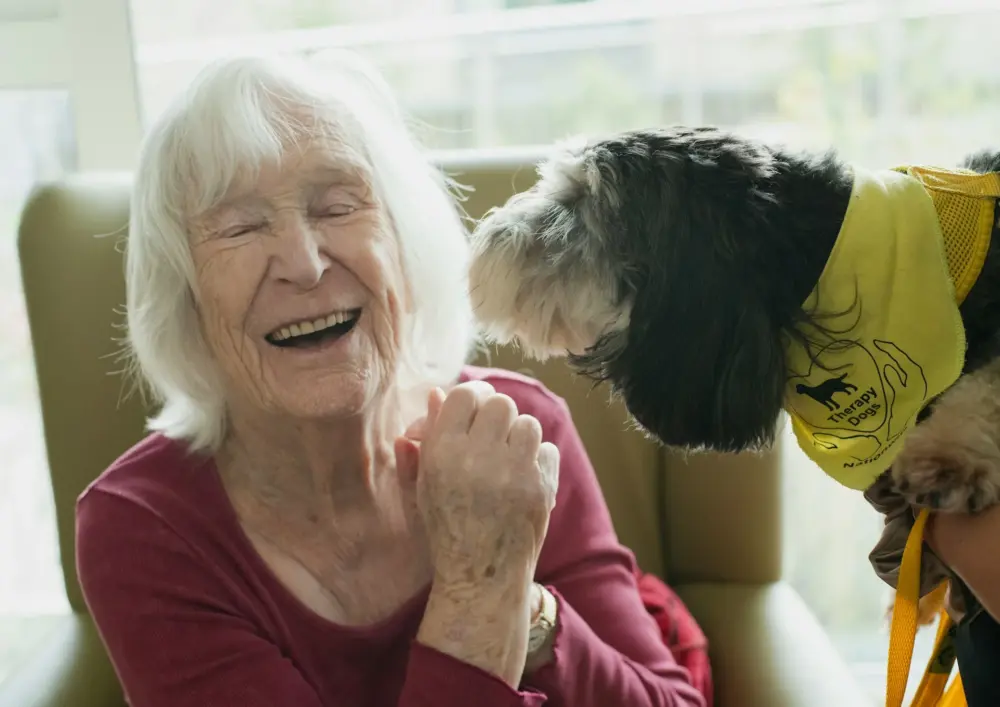
Researchers hope to better understand both direct and indirect effects of pet ownership

Updated:
key insights:
- New research will examine whether pet ownership can influence how long older adults live.
- The study will analyze how factors like loneliness, physical activity, and companionship may affect mortality.
- Researchers say the findings could help clinicians better understand pets’ role in healthy aging.
A newly announced research project is taking a deeper look at a long-debated question: Can having a pet help people live longer?
The Human Animal Bond Research Institute (HABRI) has awarded a grant to researchers at the University of Guelph to investigate how pet ownership may influence mortality among older adults. The study will focus on identifying the psychosocial and behavioral pathways that could link pet ownership to longer lifespans.
Led by Dr. Lauren Grant, an assistant professor of environmental and public health, the research will use longitudinal data from the Canadian Community Health Survey – Healthy Aging and the Canadian Vital Statistics Death Database. By combining health survey data with mortality records, the team aims to better understand both direct and indirect effects of pet ownership on survival outcomes.
The effect of companionship
Unlike earlier research, the study will employ a “path or mediation analysis,” allowing researchers to examine how different variables interact. These include psychosocial factors such as companionship, loneliness, and social isolation, as well as health behaviors like physical activity and body mass index.
“This is the first path or mediation analysis” examining pet ownership alongside psychosocial and behavioral factors and multiple mortality outcomes in older adults, Grant said, adding that the findings could help clinicians better communicate the health benefits of pet ownership.
HABRI President Steven Feldman said the study builds on existing evidence suggesting that pets may support healthier aging.
The evidence seems to be there
“Solid science links pet ownership to healthy aging, increased longevity, and reduced loneliness,” he said.
While previous studies have hinted at links between pet ownership and improved health, results have been mixed, often due to differences between pet owners and non-owners. The new research aims to address those gaps by isolating the mechanisms that may explain any potential benefits.
Ultimately, researchers hope the findings will provide a clearer picture of how the human-animal bond influences aging — and whether pets truly play a role in helping people live longer, healthier lives.