
Retirement Living takes an unbiased approach to our reviews. We may earn money when you click a partner link. Learn More
Installing a Stair Lift With a Top-of-Stairs Door
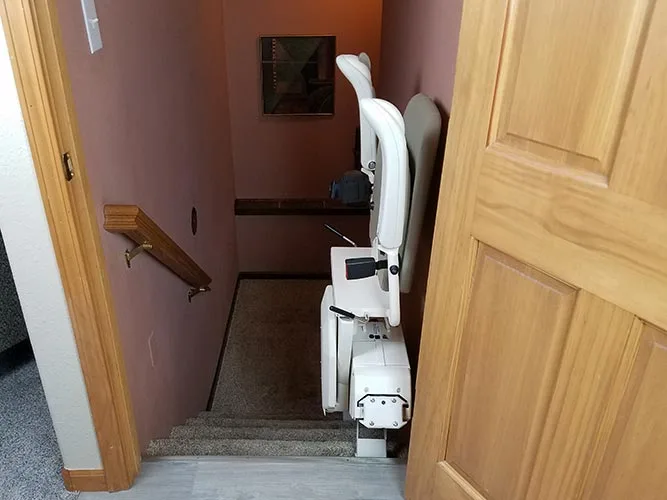
“Zero intrusion” stair lift models are the best for addressing doors at the top of the stairs, stopping the rail flush with the top step so there’s no overrun blocking the doorway. Simple solutions like extension brackets or a power swivel seat can also improve functionality.


Updated:
At a glance:
- With add-ons like extension brackets, folding rails, or a power swivel seat, both curved and straight stair lift models can address doors at the top of the stairs. However, Handicare’s zero-intrusion models operate without modification.
- Models compatible with doors at the top of the steps have costs similar to typical stair lifts ($2,900 to $14,000), though zero-intrusion kits and add-ons like folding rails or swivel seats can increase the base price.
- Professional stair lift rail installation is essential for top-of-stairs doors, as precise measurement and rail configuration are required to ensure the chair stops level with the landing without hitting the door.
Compared to residential elevators, stair lifts are often a more cost-effective mobility solution for seniors with functional straight or curved staircases. However, what do you do when you have a door at the top of the stairs?
Luckily, these doors don’t prevent effective installation. You just need a model that’s built to address the issue. Below, we’ve outlined how to install an in-home stair lift that’s compatible with the door at the top of the steps so you can find the perfect solution for your home. Peace of mind is just one smart investment away.
Can Any Type of Stair Lift Work?
For the most part, yes. While the best combination of features for addressing the top-of-stairs door depends on the type of lift, almost any lift can be adapted to the situation. This includes straight, curved, and outdoor stair lifts, vertical platform lifts (VPLs), and other specialty wheelchair lifts.Some steps the stair lift company can take to ensure functionality include:
- Zero intrusion designs: Typically only available for straight staircases (notably the Handicare 1100), this design stops the rail flush with the top step. This eliminates any rail overrun that could block the doorway or create a tripping hazard.
- Curved rail designs: Curved stair lifts are always customized, regardless of whether a door is present, allowing installers to wrap the rail around the banister and naturally position the chair lift away from the door. This process is more costly ($10,000–$25,000) but might be the most realistic option for your curved staircase.
- Retractable or folding rails: These rails move out of the way when the chair travels up the stairway, creating clearance for the door to swing open. They’re a widely available option for Bruno, Stannah, and Acorn stair lifts. The entire process is also automated, which can be life-changing for seniors who live alone.
- Swivel seats: While a swivel seat doesn’t directly address rail intrusion, the rotation makes it easier to dismount without having to twist awkwardly near a door frame. This improves safety around the top-of-stairs door, especially for seniors with limited leg mobility.
- Extension brackets: One of the most cost-effective solutions, these simple brackets raise the rail angle at the top of the stairs, reducing how far it protrudes toward the door. It’s practical for straight stair lifts and is often the first option installers consider before recommending a full zero-intrusion configuration.
Step-By-Step Stair Lift Installation For A Door At The Top of The Stairs
1. Schedule an In-Home Assessment
Most stair lift companies will provide a free consultation. During your consultation, a certified technician visits your home and uses years of experience to assess the door’s location, swing direction, and clearance at the top of the stairs.
2. Get Precise Measurements
Once you confirm your investment, the technician measures the staircase’s length, width, and angle. They’ll also evaluate landing space, headroom, and any possible obstructions, including a special measurement between the top step and the door to help prevent rail overrun.
Generally speaking, standard rails extend about 18 inches at the top of the stairs: a length that may need to be reduced or eliminated to function with the door.
3. Select Your Model
Your technician helps you choose the best model and combination of safety features depending on the measurements. For straight staircases, zero-intrusion models are highly recommended. However, custom designs or folding rail configurations will likely be needed for curved staircases.
4. Prepare the Staircase
Once the order is placed, it’s important to clear the staircase of any furniture or debris before installation day. Stair lifts are battery-powered, so for remote control functionality and safety during power outages, installation requires a 10-volt outlet near the staircase. If no outlet is within reach, an electrician will need to install one beforehand.
If the door swings outward toward the staircase and clearance is tight, this is also the time to adjust the door’s hinges or swing direction. Ideally, you want the door to open away from the lift, not toward it.
5. Install the Rail
On installation day, the technician will mount the pre-measured, cut rail directly onto the stair treads, with brackets spaced at even intervals. For zero-intrusion designs specifically, the installer fits an adapter plate or tall brackets at the top of the rail so the footrest ends flush with the landing rather than extending past the top step.
6. Mount the Stair Chair and Test Features
After the rail is secured, the motorized lift chair is attached. The installer will then test any additional features (swivel seats, armrests, footrests, safety belts, etc.).
On average, the full installation takes between two and six hours, depending on the staircase and stair lift model. Before leaving, your technician should walk you through the operation and confirm that there is proper clearance around the top-of-stairs door.
The Bottom Line: Custom Stair Lifts Make Door Clearance Safe and Simple
When it comes to stair lift installation, doors at the top of the steps can be a minor hurdle. You’ll want to invest in a zero-clearance or custom system, as well as additional safety features like swivel seats and folding rails. These features may cost slightly more than your typical stair lift, but they are still far less expensive than home elevators.
Ultimately, reaching out to a trusted stair lift company will help answer any further questions you may have about installation.
Frequently Asked Questions (FAQs) About Installing a Stair Lift With a Top-of-Stairs Door
Zero intrusion, straight lifts are designed specifically for doors at the top of the stairs, making them among the best options. However, if your curved staircase is incompatible with zero intrusion models, you can still opt for a custom design.
Yes. A combination of custom measurements, retractable or folding rails, and swivel seats can all enable a safe dismount for seniors with curved staircases.
Yes and No. Folding rails can be a solution for both instances, helping to prevent blockage near the doorway. However, the clearance needed for an effective swivel seat varies between the two.
Doors at the top of the steps can make the area less accessible for wheelchair users, but with the right safety features, they should have no problem dismounting. The door does not impact the stair lift’s weight capacity.
Sometimes. These stair lifts are more likely to require custom measurements and additional features, which can add a few extra hours to the installation process. Though installation should still take less than a day.
Usually, yes. Making your stair lift compatible with a door at the top of the steps requires add-ons that increase the base price. For example, swivel seats and folding rails can add $500–$2,000 to the total cost. Custom measurements also tend to raise costs. The good news is that these add-ons don’t dramatically change the overall price range ($2,900 and $14,000 total).
Help us improve our cost data! Email your latest stair lift quote to [email protected]. Rest assured, your personal details will remain completely confidential.