
Retirement Living takes an unbiased approach to our reviews. We may earn money when you click a partner link. Learn More
Wheelchair Lift Grants: How to Get Assistance
There are several grants sponsored by either governments (state and federal) or local nonprofits that help wheelchair users access free or reduced-cost wheelchair lift installations.


Updated:
At a glance:
- Government programs offered by the U.S. Department of Veterans Affairs (VA) and State Vocational Rehabilitation (VR) Agencies, as well as State Home Modification Programs, allow you to take out grants for your wheelchair lift when you meet eligibility requirements.
- Nonprofit organizations such as Rebuilding Together, Habitat for Humanity, the Bryon Riesch Paralysis Foundation, the ALS Association, the Multiple Sclerosis Foundation, and United Cerebral Palsy can provide wheelchair lift grants for seniors in need.
- Similar to grants, you can also acquire a free wheelchair lift through specific Medicaid waivers (usually Home and Community-Based Services (HCBS) waivers) offered by your particular state.
For wheelchair-bound people with disabilities, independent living can become a challenge as you age. A wheelchair lift can improve home accessibility for disabled seniors, but because it’s classified as a home modification rather than durable medical equipment (DME), healthcare coverage isn’t always available.
Instead, many seniors achieve success through federal, state, and local grants that cover the cost of wheelchair lifts. Below, we outline the best options available to those with physical disabilities and their family members, so they can maintain their quality of life while safely aging in place.
Understanding Wheelchair Lift Funding Programs
Generally speaking, specific government programs (federal, state, or joint) or national/regional nonprofits provide wheelchair lift grants. Eligibility requirements vary for both, especially at the state level, so it’s important to understand what you qualify for as a senior wheelchair user.
For example, if you use a wheelchair or scooter due to a medical condition such as ALS, Multiple Sclerosis, or Cerebral Palsy, nonprofits related to those conditions may be able to provide grants for assistive technology. Likewise, seniors with low incomes can often access wheelchair lift grants through state-specific assistance programs.
Ultimately, you should expect a similar process for both types: you’ll submit a grant application and then wait to see if you’re approved. Once approved, you’ll typically receive the funds or have the lift installed through a contractor, depending on how the program distributes assistance.
Financial Assistance Through Government Programs
Government programs vary by state, but there are a few solid options most seniors can access. These include:
- Department of Veterans Affairs (VA) Programs: While limited to eligible senior veterans and their family members, you may be able to access Specially Adapted Housing (SAH) or Special Housing Adaptation (SHA) grants. To improve home accessibility, these grants allow veterans to borrow tens of thousands of dollars to construct, remodel, or install wheelchair lifts in their homes. Additionally, the VA offers the Automobile Adaptive Equipment (AAE) grant for wheelchair-accessible vehicles.
- State Vocational Rehabilitation (VR) Agencies: Vary significantly by state but provide financial assistance to disabled seniors who want to obtain, maintain, or advance employment. Individual state programs regularly fund and subsidize wheelchair lifts, ramps, and vehicle modifications. For example, Minnesota’s “Positively Minnesota” program helps seniors with physical and mental disabilities get to and from work by providing grants for wheelchair vans. Texas administers its VR program through the Texas Workforce Commission (TWC), which partners with local workforce development boards to help disabled Texans fund mobility equipment, including wheelchair-accessible vans.
- State Home Modification Programs: Similar to Medicaid waivers but with different eligibility requirements, funding mechanisms, and application processes, these state-specific programs help disabled seniors improve their daily lives. Every state is different; for instance, Massachusetts’ Home Modification Loan Program (HMLP) offers zero-interest, deferred-payment loans of up to $50,000 to disabled homeowners over 60. This money can fund ramps, stair lifts, platform lifts, and bathroom and kitchen upgrades. Conversely, Alabama, Alaska, Idaho, Mississippi, and Nevada generally lack broad state-funded home-modification assistance for wheelchair lifts. You should contact your state’s housing or aging agency to find out what programs are available.
Your ability to rely on government grant programs will usually depend on where you live. So, to make your fundraising journey more productive, we always recommend visiting your state’s .gov website for more information about state-specific programs.
National & Regional Nonprofits
When federal or state programs aren’t an option, you can still reach out to a national or local nonprofit for assistance. For wheelchair-bound seniors, there are several options that provide tax-free grants:
- Rebuilding Together: This national nonprofit provides no-cost home modifications, such as widened doorways, ramps, grab bars, and wheelchair lifts, to income-qualifying seniors.
- Habitat for Humanity: Another major US nonprofit that allows low-income seniors to access affordable repairs and home modifications through its Aging in Place Program.
- Bryon Riesch Paralysis Foundation: Seniors with spinal cord injuries and neurological disorders can receive charitable grants for vehicle modifications, ramps, and other home accessibility equipment. The foundation is based in Wisconsin, so while anyone can apply from anywhere in the US, Wisconsin residents are prioritized.
- ALS Association: Can connect seniors living with ALS to funding options, including the VA’s Specially Adaptive Housing grant and state assistive technology programs. Local chapters may also offer direct equipment loans and financial assistance.
- Multiple Sclerosis Foundation: Local chapters distribute grants to people with multiple sclerosis to cover wheelchair ramps, bathroom safety improvements, doorway widening, and vehicle modifications. More specifically, the grants cover only a portion of the cost, capped at 50% for modifications over $700.
- United Cerebral Palsy (UCP): Uses a national affiliate network to help seniors with disabilities access lifts for homes and vehicles, wheelchairs, assistive devices, and other accessibility resources. They can also help applicants connect with other local programs.
The nonprofit assistance you can access varies by region, so you might also find local options that aren’t mentioned above. You can use databases such as the IRS Tax-Exempt Organization Search or GuideStar to identify organizations and verify their legal status and financial information.
Navigating The Grant Application Process
The grant application process will be unique for every program you apply to, but there are some general ways you can improve your approval odds. Here are some general, step-by-step tips to follow:
1. Gather Documentation
Assembling everything you need before you submit your application is always a good idea. First, you’ll want to have proof of disability, including a doctor’s note or medical assessment that certifies your condition. Many programs also require a letter of recommendation from a medical professional and non-family member that explains how the new lift will improve daily life.
Additionally, you’ll need to verify your income. We recommend having copies of your last two paychecks, tax returns, or SSI/SSDI statements on hand. Keep all of the documents you gather in a dedicated folder so they’re easy to access when you apply.
2. Get Itemized Manufacturer Quotes
Programs are more likely to hand you money when you can show exactly how much you need. Before applying, contact a certified wheelchair lift dealer for a formal cost estimate and obtain at least one or two itemized quotes for the project.
3. Refine Your Project Narrative
Why do you need the wheelchair lift? Your application should clearly state how the grant will help you restore your independence/age in place safely. The best Project Narratives focus on what the grant will enable you to do: go to work, keep up with medical appointments, navigate your home, etc., rather than just the challenges you face.
4. Apply For Multiple Grants
Don’t put all your eggs in one basket! You don’t need to wait for a single grant to reply before you apply to others. Instead, try applying to different programs at the same time to see which one offers you the best terms.
Wheelchair Lift Grants & Taxes: What To Expect
Whether or not your grant is taxed depends on who issued it. Most federal grants, such as those distributed by the VA, are not considered taxable income. State-level programs vary, and you should consult a tax professional to confirm the taxable status of any grant.
When you receive a partial grant through an organization like the Multiple Sclerosis Foundation, you can deduct any costs you paid out-of-pocket. This deduction reduces your tax bill, but you can only claim it if your expenses exceed 7.5% of your adjusted gross income.
Other Funding Sources For Wheelchair Lifts
Grants aren’t the only way you can get financial assistance for wheelchair lifts. Other methods include:
- Healthcare: Original Medicare (Parts A and B) doesn’t cover wheelchair lifts, but low-income seniors can access Home and Community-Based Services (HCBS) Waivers through Medicaid. Medicare Advantage (Part C) and private long-term care insurance are also an option if you can afford the copays and monthly premiums. Always research your specific plan before you attempt to purchase a lift.
- Loans: Assistive technology loans, home improvement loans, home equity loans, and manufacturer financing are all potential options when you can’t get a grant. However, it’s important to confirm that the interest rates and loan term are fair and affordable.
- Tax Deductions: IRS Publication 502’s list of deductible medical expenses will often apply to wheelchair lifts. You can file for any expenses you had to pay out of pocket.
The Bottom Line: Grants and Nonprofits Can Help Cover the Cost of Wheelchair Lifts
There are several grant programs wheelchair-bound seniors can apply for to cover wheelchair lifts. Popular starting points for low-income households include State Home Modification Programs and Vocational Rehabilitation (VR) Agencies. Qualified senior veterans can also get assistance through the VA.
When government programs aren’t an option, it’s also worth looking into national and local nonprofits that operate nearby. Rebuilding Together, Habitat for Humanity, and several disability-specific organizations provide financial assistance to seniors in need.
Ultimately, research is vital. You should weigh the pros and cons of different grant options as you navigate the application process.
Frequently Asked Questions (FAQs) About Wheelchair Lift Grants
In many cases, yes. While some programs only cover part of the cost, many will provide a grant for the full cost of wheelchair lift equipment if you can prove it’s a medical necessity.
Whether you’re eligible for a wheelchair lift grant depends on the specific grant. That said, most programs will factor in proof of disability, income level, housing status, and the medical importance of the installation. Veterans, low-income seniors, and those with specific diagnoses such as ALS, MS, or cerebral palsy are more likely to qualify for certain programs.
If you can get approved, grants are one of the most reliable ways to cover wheelchair lifts, especially since they’re usually tax-free. Some healthcare options, like Medicaid or Medicare Advantage, will cover wheelchair lifts when medically necessary, but there are fewer guarantees.
What’s covered ultimately varies by program, but most cover a broad range of modifications and assistive devices, like:
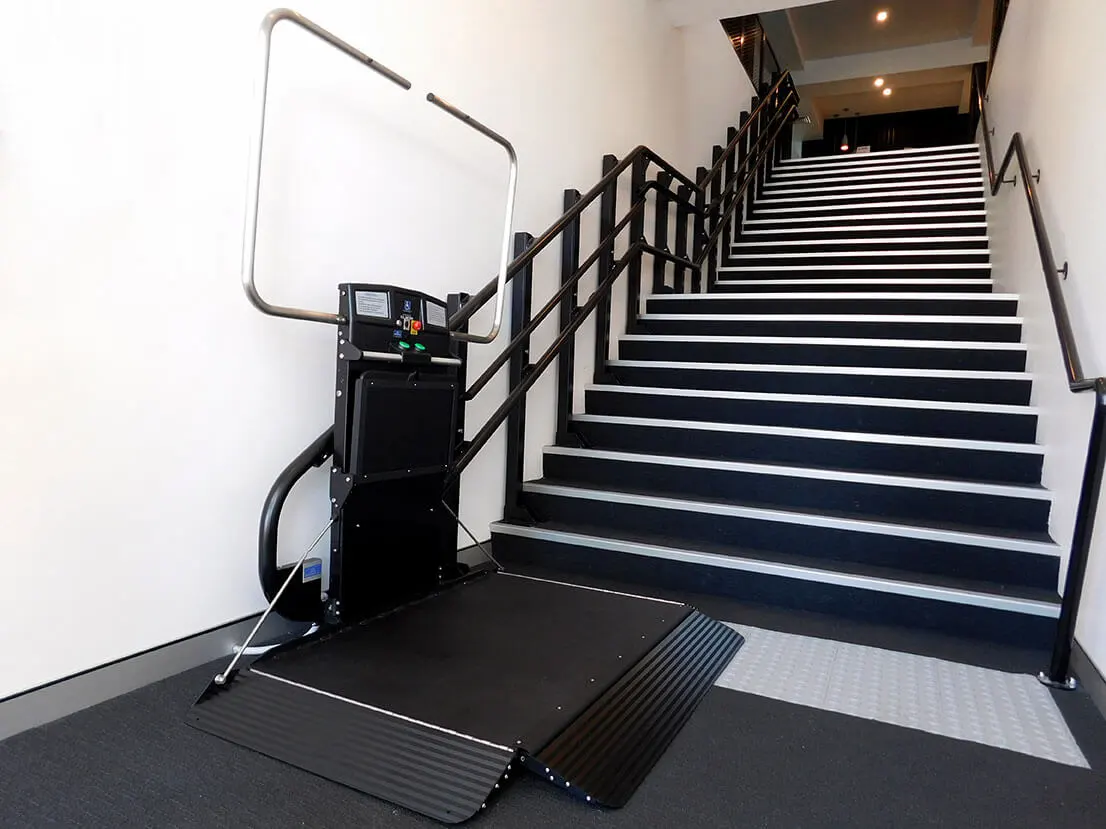
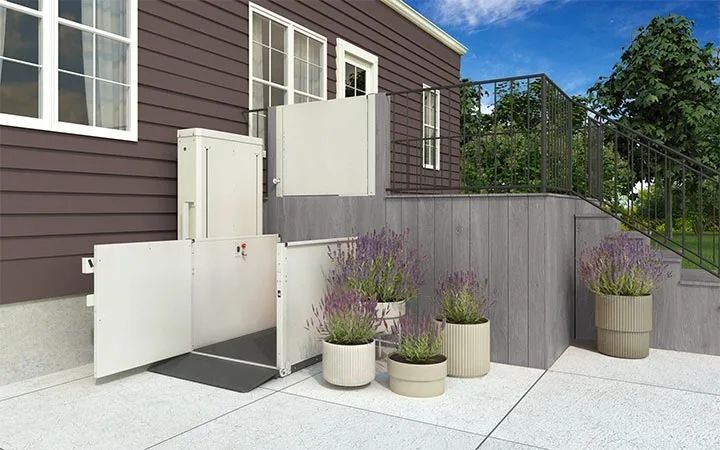
• Vertical platform lifts (VPLs) and inclined platform lifts (IPLs)
• Permanent and portable wheelchair ramps
• Widened doorways and thresholds
• Grab bars, railings, and non-slip flooring
• Accessible bathroom modifications
• Wheelchair van modifications
• Power wheelchairs and scooters
Yes, most wheelchair lift grants are tax-free, meaning they don’t need to be reported as taxable income. However, you should always have a tax professional check the status of the specific grant you’re applying for.
Wheelchair lifts cost an average of $14,500. Simple vehicle lifts are on the cheaper end of the spectrum ($4,000), while a fully enclosed vertical platform lift (VPL) can exceed $25,000.
Help us improve our cost data! Email your latest wheelchair lift quote to [email protected]. Rest assured, your personal details will remain completely confidential.