
Retirement Living takes an unbiased approach to our reviews. We may earn money when you click a partner link. Learn More
How to Choose Hearing Aids
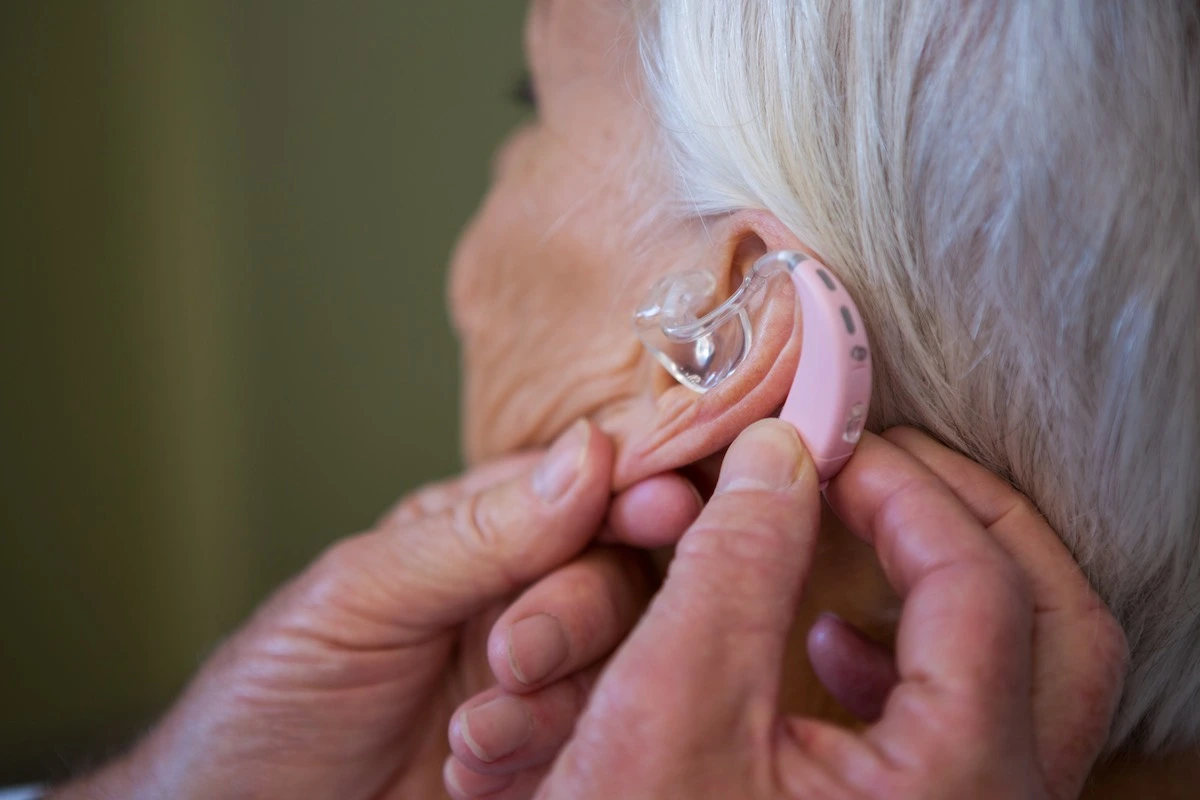
Choosing the best hearing aids requires careful consideration of the type that is ideal for your level of hearing loss and other hearing needs, as well as their power source, additional features, and overall cost.


Updated:
At a glance:
- If you have mild to moderate hearing loss and are looking to save money on hearing aid costs, over-the-counter (OTC) hearing aids will usually provide adequate sound quality.
- Seniors with more severe hearing loss should consider prescription hearing aids, especially behind-the-ear (BTE) and receiver-in-canal (RIC) hearing aids, to address their specific needs.
- More subtle hearing aids, such as in-the-canal (ITC) or completely-in-the-canal (CIC) styles, generally lack the amplification needed to address profound hearing loss but offer more discretion.

According to the National Institute on Deafness and Other Communication Disorders (NIDCD), around one in three seniors aged 65 to 74 have hearing loss, a statistic that increases to nearly half once they are 75 or older. However, with so many hearing aid styles and companies, it can be challenging to find the option that will most improve your quality of life. Luckily, getting the right hearing care is as simple as knowing what you’re looking at, whether it’s the hearing aid style, cost, battery life, or other features.
Below, we outline the most important factors you should consider when investing in hearing aids. That way, seniors in need can make the best choices not only for their level of hearing loss but also for their wallets.
Choosing Hearing Aids: What to Look For In A Hearing Aid
Choosing the best hearing aid involves balancing a range of factors, from medical and lifestyle considerations to navigating financial realities. Our guide breaks down the most important factors so you can make an informed choice.
1. Type & Level of Hearing Loss
Have you had a hearing test recently? The first step in finding the right hearing aid is to understand the type and severity of your hearing loss. Contact your local audiologist to schedule an appointment for a comprehensive examination. Online hearing tests can also help you determine your level of hearing loss but won’t tell you the exact type, cause, or severity of the issue.
Level of Hearing Loss
Determines how much amplification you need. Our table outlines each level, what it might feel like, and which hearing aid styles audiologists generally recommend:
| Level | dB Range | Symptoms | Recommended Styles |
|---|---|---|---|
| Mild | 26 – 40 dB | Trouble following speech with background noise present | CIC, ITC, ITE, RIC/RITE, BTE |
| Moderate | 41 – 55 dB | Difficulty participating in conversations and regularly needing to turn the volume up | ITE, RIC/RITE, BTE |
| Moderately Severe | 56 – 70 dB | Normal speech is unclear without amplification | RIC/RITE, BTE |
| Severe | 71 – 90 dB | Even loud speech is hard to understand, leading to regular lip reading | High-power BTE, Power RIC/RITE |
| Profound | 91+ dB | Most speech is inaudible | Ultra-power BTE, Cochlear implants |
Type of Hearing Loss
Knowing the type of hearing loss you have is as important as knowing the level, as it directly affects whether you can get a standard OTC hearing aid or need a specialized device. A professional audiologist should help you identify the type.
| Type | Description | Common Causes | Recommended Styles |
|---|---|---|---|
| Sensorineural | Damage to the inner ear or auditory nerve | Aging, long-term loud noise exposure | Standard hearing aids (RIC/RITE, BTE, ITE) |
| Conductive | Blockage that prevents sound from reaching the inner ear | Earwax buildup, fluid, or bone changes in the middle ear | Bone conduction hearing aids, bone-anchored hearing aids (BAHA) |
| Mixed | A combination of both sensorineural and conductive loss | Combination of aging and middle ear issues | Personalized approach required |
2. Hearing Health Needs
Beyond a basic hearing test that determines the type and level of hearing loss, the details of your hearing health also matter. Anything from medical conditions to lifestyle factors can shape which hearing aid will serve you best day-to-day. Consider:
- Tinnitus, or the feeling of ringing, buzzing, or hissing in your ear with no external source, can be alleviated by hearing aids with built-in tinnitus-masking features.
- Single-sided hearing loss, or uneven hearing loss from ear to ear, is common. In these cases, you may need a Contralateral Routing of Signals (CROS) or BiCROS hearing aid system rather than a standard pair.
- A lack of dexterity and vision is also a prevalent issue for seniors, making smaller styles that sit inside the ear canal difficult to handle. This is especially true when they use tiny, disposable batteries that need to be replaced regularly. Opt for larger behind-the-ear hearing aids or rechargeable models instead.
- Cognitive decline is often linked to hearing loss, but early and consistent use of hearing aids, particularly personalized models, can help reduce the risk of progression.
3. Type of Hearing Aids
As touched on already, different types of hearing aids are better for certain levels of hearing loss, hearing health needs, and lifestyle considerations. Compare and contrast the styles below to help determine which one might be right for your situation.
Behind-the-Ear (BTE) Hearing Aids
With BTE hearing aids, a large portion of the device, including the receiver and amplifier, is in a housing unit that hugs the outer ear. Using small tubing, sound picked up by the device travels from the receiver to the ear canal. BTE hearing aids are particularly effective for severe-to-profound hearing loss because they sit outside the ear, allowing them to support larger, more powerful receivers. However, these devices can be used at almost any level of hearing loss.
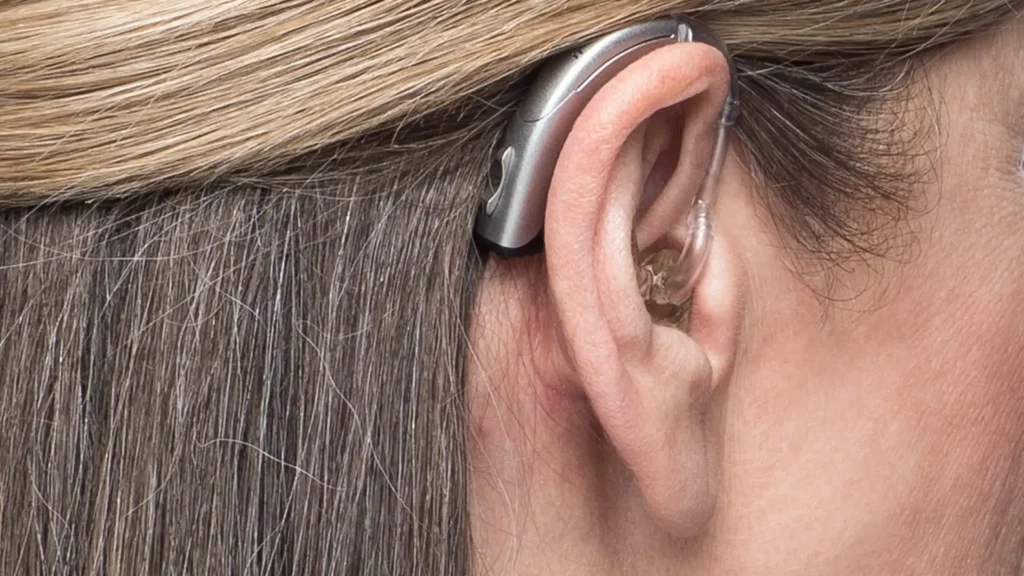
BTE hearing aid examples:
You may also be able to find basic OTC BTE models at your local pharmacy.
Receiver-in-Canal (RIC) Hearing Aids
RIC hearing aids are also commonly known as receiver-in-the-ear (RITE) hearing aids. While the amplifier, microphone, and processor are all housed in a small case that sits outside of the ear, these models differ from BTE options in that the receiver is nestled in the ear canal. This limits the receiver’s size and power but also improves sound quality and discretion for users. These devices can also be purchased OTC or custom-designed for your prescription.
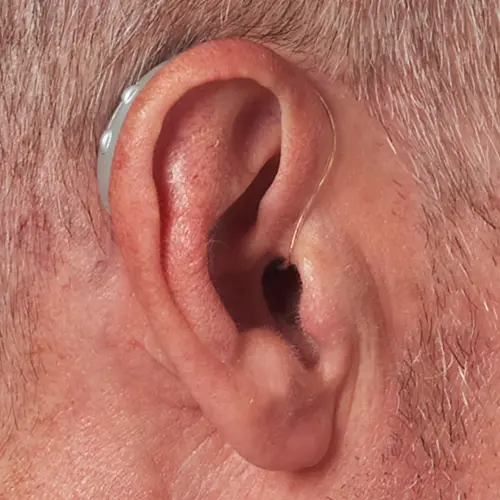
Examples of RIC hearing aids include:
In-the-Ear (ITE) Hearing Aids
ITE hearing aids place the receiver inside the ear canal, while the housing unit rests against the bowl of the ear rather than behind it. There are FDA-approved OTC ITE hearing aids, but prescription models are specifically designed for easy custom earmold fittings. They can address mild to severe hearing loss (up to about 70–90 dB). Some OTC ITC devices have been FDA-approved since 2022.
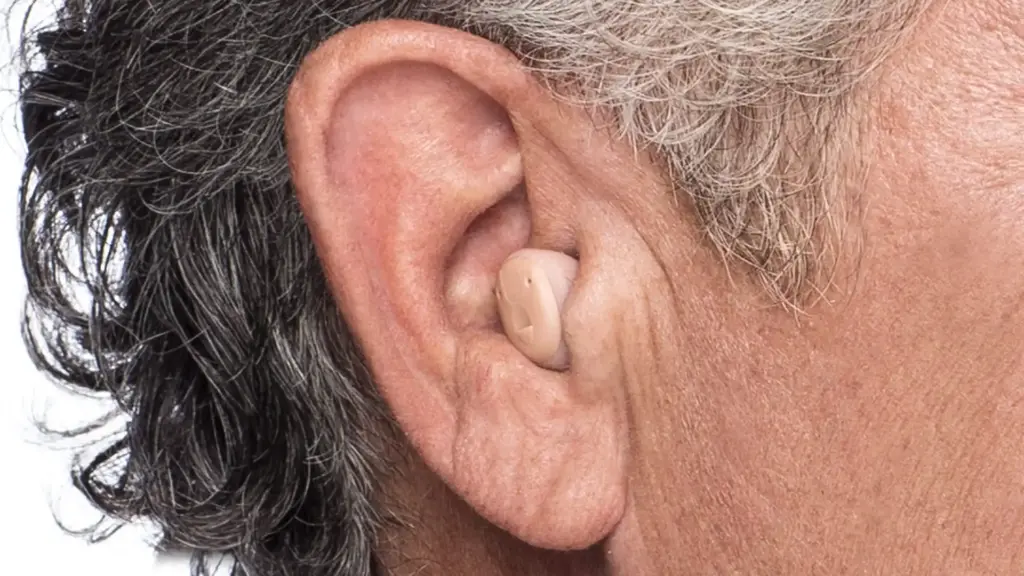
ITE hearing aid examples:
In-the-Canal (ITC) Hearing Aids
Smaller than ITE hearing aids, ITC models house everything in a unit that sits slightly outside the ear canal, similar to wireless earbuds. Because the components are small and discreet, both OTC and prescription ITC options usually address mild to moderate hearing loss.
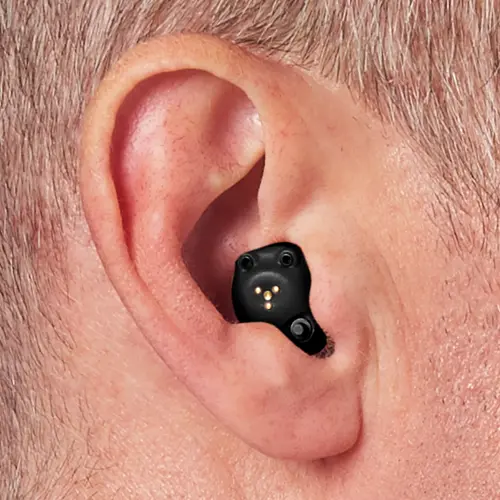
ITC hearing aid examples:
Completely-in-Canal (CIC) Hearing Aids
CIC hearing aids fit snugly inside the ear canal, making it so they’re only visible from certain angles. To remove the device, you’ll simply tug on a small, clear wire that protrudes from the ear canal. CIC units are among the most inconspicuous hearing aid options, though their tiny size makes them best suited for seniors with mild hearing loss and intact fine motor skills. Some models are available OTC with pre-sized silicone domes, but most require custom earmolds.
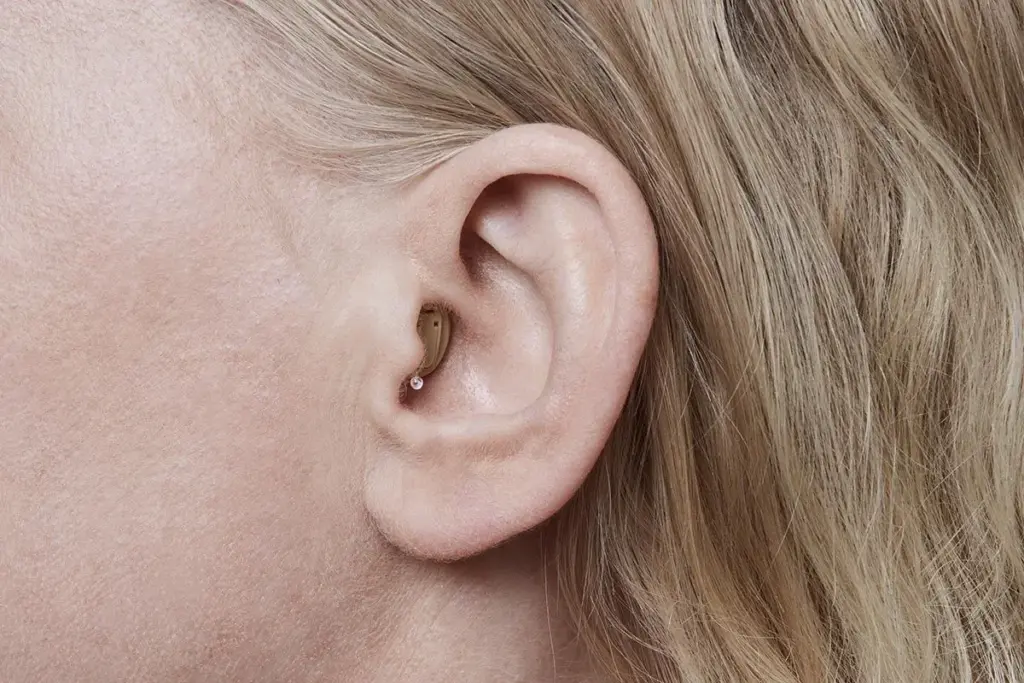
CIC hearing aid examples:
Invisible-in-Canal (IIC) Hearing Aids
IIC devices are the smallest and most difficult to detect, sitting even deeper in the ear than CIC options. They’re essentially invisible from any angle and also utilize a thin wire for removal. This style must be administered by a professional audiologist, and their small size makes them more effective for lower levels of hearing loss.
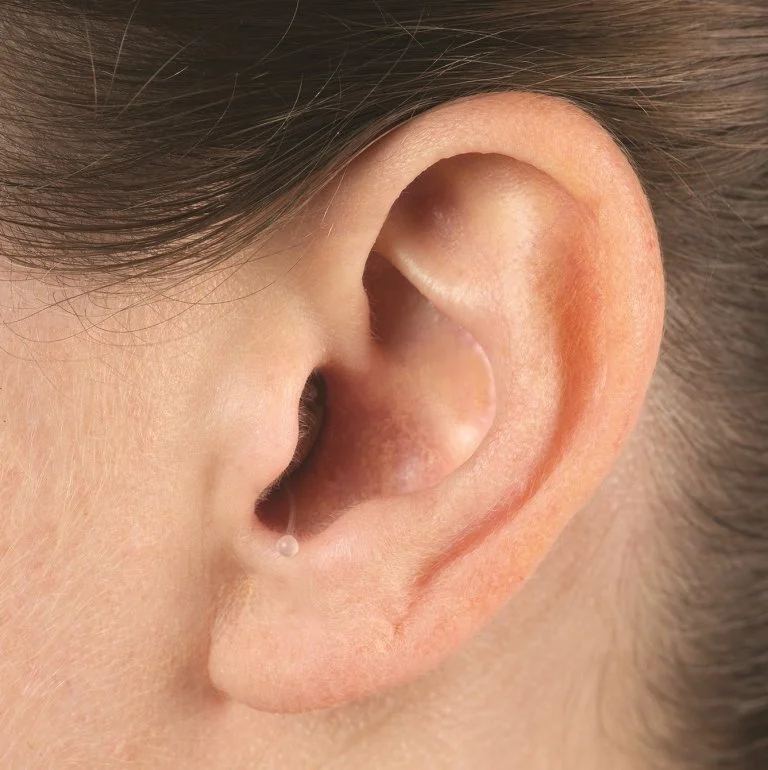
IIC hearing aid examples:
4. Hearing Aid Power Source
Most hearing aids work using either disposable or rechargeable batteries. Neither is definitively better than the other, but they have unique pros and cons.
Rechargeable Hearing Aids
- Pros: No need to keep buying batteries, since devices only need to be recharged after 12 to 30+ hours of use. The internal batteries also stay fully encased, meaning that not only is the device better protected from moisture and skin oils, but also seniors with mobility issues won’t need to struggle with tiny battery changes.
- Cons: You’ll need to have access to a charging dock and electricity to keep your device going, and most need to be recharged each night. If your device dies while you’re out and about, you’ll need to wait a couple of hours for the pair to recharge rather than do a quick battery swap.
Disposable Battery Hearing Aids
- Pros: Devices can last anywhere from 5 to 14 days on a full charge, and when the battery dies, you simply pop in new ones and are back to hearing in seconds.
- Cons: You’ll need to continuously buy new batteries, and the packaging for zinc-air batteries can be difficult for seniors with mobility issues to open. The device is also more exposed to moisture and skin oils, which can shorten its overall lifespan.
5. Hearing Aid Features
Hearing aids can come with several extra features that improve your day-to-day experience using them. These features may or may not cost extra, depending on the brand/model, and are worth considering.
- Background noise reduction: In addition to regular volume control, certain hearing aids have specialized algorithms that carefully identify and suppress background noise (such as traffic or humming appliances) while sharpening nearby human voices.
- Adaptive directional microphones: Hearing aid microphones can focus on sounds from specific directions and ignore others. For example, the device will hone in on the sound of someone speaking in front of you, and muffle sounds coming from behind you.
- Feedback suppression: Monitors and prevents unpleasant high-frequency sounds (squealing, whistling, etc.) from reaching your ear.
- Bluetooth connectivity: Allows the hearing aid to act as wireless headphones that connect directly to your smartphone, tablet, TV, or computer. That way, it’s easier to hear phone calls, music, GPS directions, audiobooks, and more.
- Telecoil (T-Coil) compatibility: A small, built-in antenna that picks up signals for hearing loops put out by public venues like theaters, concert halls, museums, and lecture rooms.
And more! Check the product information details for each specific device you’re considering to see which features it includes. You can also ask the hearing aid company directly for more information.
6. Hearing Aid Costs
Hearing aids have a wide cost range depending on their type, added features, and whether they’re prescription or over-the-counter. OTC hearing aids are by far the cheapest, ranging from $100 to $2,500. As of 2026, you can get almost any model OTC, except IIC hearing aids. The only downside is that the lack of custom fittings and earmolds makes these options less comfortable and effective overall for your specific type and level of hearing loss.
Prescription hearing aids are much pricier on average at $6,500 per pair ($4,000 to $12,000). However, hearing care providers regularly bundle the extra features mentioned above into the price, and your hearing aid will be better fitted to your individual needs.
7. Healthcare Coverage
Original Medicare (parts A and B) and most private health insurance plans are not a reliable way to cover hearing care costs (audiologist visits, hearing exams, fittings, or the medical devices themselves). Medicare Advantage plans are more likely to cover OTC devices and some prescription models, but coverage ultimately depends on your specific plan.
More reliably, you might be able to get prescription hearing aids covered by Medicaid, VA Benefits, and some long-term insurance companies when eligible. Just remember that, for Medicaid specifically, coverage depends on your state. We recommend visiting your state’s Medicaid website at medicaid.gov for more information.
How to Purchase Hearing Aids
How you go about purchasing your new hearing aids depends on whether they’re over-the-counter (OTC) or prescription. Here are the main differences between the two options:
Over-the-Counter Hearing Aids
Anyone can purchase OTC hearing aids online or at your local department store/pharmacy. You don’t need to see a professional audiologist before purchasing, though visiting one is still recommended to ensure you know exactly what kind of hearing care you need.
The models available in-store are generally for adults 18+ with mild to moderate hearing loss. Pay close attention to the return policy, as even if these models are cheaper, you’ll want to return a device that doesn’t actually meet your needs. Luckily, most OTC hearing aids come with 30 to 60-day trial periods, giving you time to test their sound quality and amplification at home.
Prescription Hearing Aids
Unlike OTC options, you’ll need to visit an audiologist to get an official hearing aid prescription. When you arrive for your appointment, they’ll first test your hearing, then professionally diagnose the cause of and level of hearing loss. This allows them to make expert device recommendations. Often, you can even try on different styles of hearing aids in the office.
After you work together to make an informed decision, you can shop around for the best prescription hearing aid for your needs and budget. Your audiologist can order your chosen device for you, ensuring it’s programmed to match the exact results of your test.
Even after the device is in your possession, you’ll be able to return for regular follow-up visits to tweak your personalized device as your ear shape and hearing loss level change over time.
The Bottom Line: Choose a Hearing Aid That Matches Your Hearing Loss and Daily Life
Choosing the best hearing aid for your situation is a balance among optimizing for your type/level of hearing loss, choosing the most comfortable style, and adding the extra features you want while staying within your budget. Smaller OTC models are ideal when you have mild to moderate hearing loss, while larger prescription models can address severe to profound hearing loss. Overall, you should always discuss your options with a professional audiologist before you make the final investment.
Frequently Asked Questions (FAQs) About Choosing Hearing Aids
You’ll know if your new hearing aid is a good fit if it’s both comfortable to wear and provides the level of amplification you need. More specifically, you should be able to wear it all day without pain or unpleasant feedback. If you notice regular slipping, ear pain, or overly loud/muffled sounds, your hearing aid needs adjustments.
Modern hearing aids include features like Bluetooth and telecoil compatibility, background noise reduction, and adaptive directional microphones. Though each device varies, these features are not guaranteed across all devices.
No, Original Medicare does not cover hearing aids because they’ve been considered “inexpensive” and “elective” since 1965. However, several state Medicaid programs, Veterans Benefits, and even some Medicare Advantage plans will cover them if you’re eligible. Local nonprofits are another great source of financial assistance when healthcare isn’t available.
The most affordable option is usually an over-the-counter (OTC) hearing aid, which can be found online or in person at department stores, technology retailers, and pharmacies. Generally speaking, the less personalized the device and the fewer luxury features it has, the more affordable it will be.
Typically, smaller hearing aids that rest entirely in the ear canal are best for mild to moderate hearing loss. On the other hand, BTE or RTE models that rest behind the ear can have larger, more powerful receivers, making them more effective for moderate-to-profound hearing loss. Ask your audiologist about which specific models will work best for you.
Yes, we always recommend getting a professional hearing test before you purchase hearing aids, whether they’re an OTC or prescription model. Having specific information about your type/level of hearing loss is crucial for buying the right device. A history of formal tests can also help you track your hearing health over time.
After any new fitting, you should return to the audiologist within 6 to 12 weeks for a follow-up. If everything goes smoothly, visits every 3 to 6 months for cleanings and annual hearing tests are the norm.
Help us improve our guides! If you’ve recently purchased or used hearing aids, we’d love to hear about your experience. Share your insights with us at [email protected]. Your personal details will stay completely confidential.