
Retirement Living takes an unbiased approach to our reviews. We may earn money when you click a partner link. Learn More
Best Medical Alert Watches of 2026
We compared medical alert watches based on upfront and monthly costs, battery life, response times, fall detection, and other safety features.


Updated:
Our top picks are Medical Guardian’s MGMove, Medical Care Alert’s SmartWatch PRO, the Lifeline Smartwatch, and Bay Alarm Medical’s SOS Smartwatch. Each watch connects to a professional monitoring center without requiring a nearby smartphone. All four also provide GPS location tracking, two-way communication, and optional fall detection.

4.7
Medical Guardian’s tagline, “Life Without Limits,” shows its mission. The company aims to help customers live independently. Medical Guardian provides five in-home or mobile systems. They also have a medical alert smartwatch and the MGMini wearable alert button.
- Great variety
- Call chain for caregivers
- Sleek, stylish wearable devices
Medical Care Alert is a Michigan-based company. They provide personal medical alert systems and monitoring services. No matter where you are—at home, in the yard, running errands, or traveling—Medical Care Alert has a system to help you when you need it. The pendant and wristband emergency buttons are waterproof for continuous everyday use.
- Great fast response
- Certified responders
- No equipment charges

4.4
Philips was the first company to offer a medical alert system in North America, serving hospitals and healthcare facilities since 1974. Today, Philips Lifeline helps seniors live independently and safely at home and on the go with medical alert systems that provide one-touch communication with trained representatives. With six points of mobile communication, Philips has the largest subscriber base of any medical alert company, with over 7 million people using the service.
- Great reputation
- Professional installation option
- GPS with five location technologies
Bay Alarm Medical is a medical alert system that offers 24/7 monitoring and trained professionals to assist during urgent situations. Bay Alarm, the parent company, has been protecting its clients for almost 80 years.
- Great customer service
- Vial of Life included with purchase
- Free spouse monitoring
Medical Alert Watch Reviews
Medical alert watches are wearable alternatives to traditional medical alert systems, combining everyday wearability with emergency support. Most models include professional monitoring, GPS location tracking, and two-way communication, while features such as fall detection and caregiver tools may cost extra.
We compared watches from Medical Guardian, Medical Care Alert, Bay Alarm Medical, and Lifeline. Our evaluation considered monitoring services, safety features, ease of use, battery life, upfront costs, monthly rates, additional fees, and customer feedback.
For more information about how we chose our top picks, read our full methodology.
Medical Guardian Review
Great variety
|
Medical Guardian offers the MGMove, a compact smartwatch with up to 24 hours of battery life. It combines the independence of a smartwatch with the protection of a 24/7 monitored medical alert system. It also features GPS tracking, a dedicated help button, two-way communication, and optional fall detection.
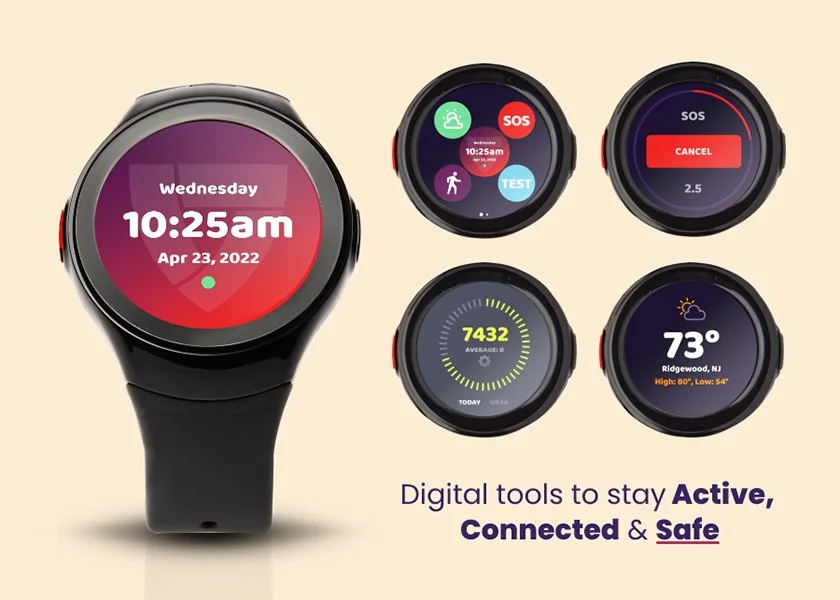
The MyGuardian app allows caregivers and loved ones to view the wearer’s location data. Built-in 4G LTE lets users contact the monitoring center at the press of a button. No separate cellular plan or smartphone is required.
One of the primary factors that sets MGMove apart is its advanced lifestyle features. It offers a step counter, weather updates, and text messaging with family or emergency contacts through the Social Circle app. It’s also water-resistant (IP67), making it suitable for daily wear and use in the shower.
The Medical Guardian MGMove costs $199.95 upfront. Monitoring costs $49.95 per month or $539.40 per year.
This watch is an excellent choice for users who want freedom, safety, and connectivity — all on their wrist.
To learn more, read our full Medical Guardian review.
Medical Care Alert Review
Great fast response
|
For a more affordable option that still offers 4G LTE connectivity with 24/7 monitoring, Medical Care Alert provides the SmartWatch PRO, starting at $39.95 per month with a one-time equipment fee of $149.95. This watch connects directly to Medical Care Alert’s U.S.-based response centers at the touch of a button, so no app or smartphone is required.
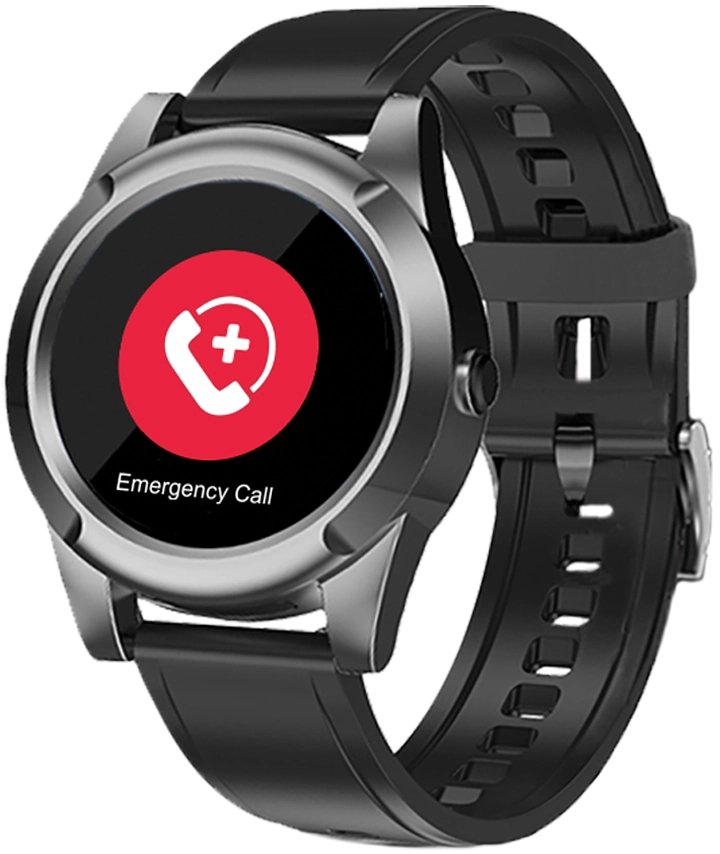
This standalone smartwatch features two-way voice communication, GPS location tracking, and optional automatic fall detection. It also features lifestyle benefits, including water resistance, step tracking, heart rate monitoring, and weather updates.
Caregivers and family members can locate the watch by sending a text message, with no app download required. They can also receive text alerts when the battery is low or a fall is detected.
Medical Care Alert offers a 14-day trial and does not charge an activation fee. The company also guarantees that the monthly monitoring price won’t increase.
To learn more, read our full Medical Care Alert review.
Lifeline Review
Great reputation
|
The Lifeline Smartwatch combines decades of emergency response experience with the convenience of modern smart devices. With 4G LTE connectivity, it provides round-the-clock protection without the need for a smartphone or in-home base unit. Lifeline recommends charging the watch daily.
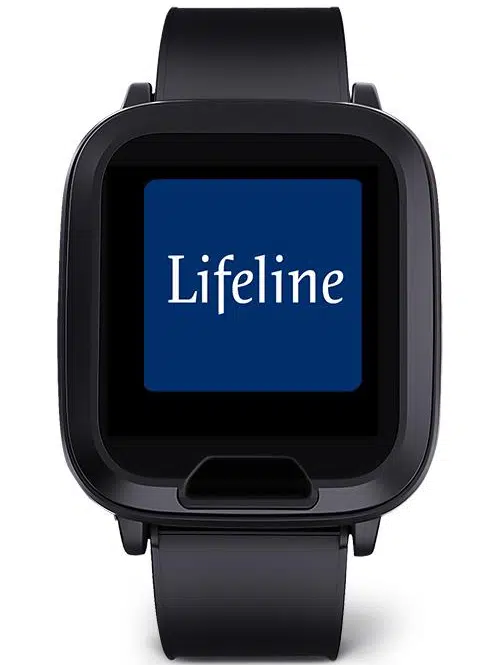
Monitoring costs $39.95 per month or $419.40 per year. Two-way communication connects wearers directly to Lifeline’s 24/7 monitoring center. The device also features optional automatic fall detection, GPS and Wi-Fi location technology, and waterproof construction. The watch face offers a clear digital display that presents the time, battery status, and current connectivity.
There’s no long-term contract, but you will need to pay a one-time $159 programming and activation fee.
Overall, the Lifeline Smartwatch is an excellent choice for seniors who regularly run errands or travel.
To learn more, read our full Philips Lifeline review.
Bay Alarm Medical Review
Great customer service
|
Bay Alarm Medical is well-known for decades of emergency monitoring with fast response times. With built-in GPS and 4G LTE, the SOS Smartwatch operates independently, requiring no additional apps or smartphones for functionality. This makes it an easy-to-use option for seniors who want 24/7 connectivity.
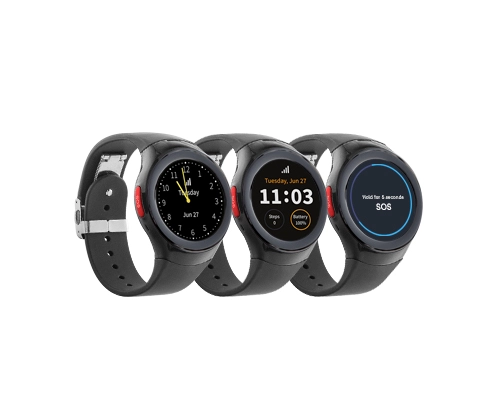
The smartwatch features two-way communication, optional automatic fall detection (available for $10.00 per month), and a water-resistant design (IP67) that works well for everyday wear indoors and outdoors.
Seniors can easily press the red SOS button for immediate assistance. It’s also fully compatible with the Bay Alarm Medical caregiver app and all its features. The Bay Alarm Medical caregiver app provides location information, low-battery notifications, and device status updates. The watch typically provides six to 18 hours of battery life.
When you choose this device, you’ll be responsible for a $159.20 equipment fee and monthly monitoring fees starting at $39.95. Overall, it’s a great option for seniors on the go who need reliable emergency call services with top-notch customer service.
To learn more, read our full Bay Alarm Medical review.
Compare the Best Medical Alert Watches Side-by-Side
Our team compared the best medical alert watches with fall detection by reviewing upfront and monthly costs, battery life, and average response times.
| Brand | Monitoring Cost | Upfront Cost | Battery Life | Fall Detection | Response Time |
|---|---|---|---|---|---|
| Medical Guardian | $49.95/month | $199.95 | Up to 24 hours | Optional ($10/month) | 10 seconds on average |
| Medical Care Alert | $39.95/month | $149.95 | Up to 48 hours | Optional ($10/month) | 12 seconds on average |
| Lifeline | $39.95/month | $159.00 | Daily charging | Optional ($15/month) | 30 seconds or less |
| Bay Alarm Medical | $39.95/month | $159.20 | 6 to 18 hours | Optional ($10/month) | 45 seconds or less |
Great variety
Medical Guardian
- Call chain for caregivers
- Sleek, stylish wearable devices
Medical Alert Watch Buyer’s Guide
Medical alert watches are among the most advanced monitoring systems seniors can invest in. They provide lifestyle and emergency response services that enhance daily quality of life and safety. Some are standalone medical alert devices, while others utilize dedicated apps for advanced features.
Here are some things you need to know before you buy:
How Medical Alert Watches Get Help
Medical alert watches can connect you to help in a few different ways:
- Professional monitoring: You’ll be connected to an agent who can contact 911, a family member, or a caregiver.
- Direct-to-911 calling: The watch contacts emergency services without first connecting you to a monitoring agent.
- Caregiver alerts: If you press the emergency SOS button or the watch detects a fall, a designated contact is notified.
- Phone connection: Some watches work independently, while others need a compatible smartphone nearby to place a call or send an alert.
Medical alert watches without professional monitoring often cost less. However, you’ll have to rely on a loved one, caregiver, or 911 dispatcher instead of a monitoring agent who can assess the situation and coordinate the response. Direct-to-911 devices may also result in an unnecessary emergency response after a false alarm.
Popular Medical Alert Watch Features
Not sure what to expect from your new medical alert watch? We’ve outlined some common features, so you can more easily compare and contrast what’s offered by different brands/models.
While medical alert watches function similarly to other monitoring devices, they sometimes have advanced and specialized add-ons, including:
- 24/7 emergency monitoring: Watches use cellular service to connect wearers to trained agents at an emergency monitoring center.
- Two-way communication: Many devices allow you to speak directly through the watch, eliminating the need for a smartphone or base unit.
- GPS location tracking: Most watches use GPS to help monitoring agents and emergency responders locate the wearer during an emergency, along with location history.
- Fall detection: Though it’s sometimes included in the price, fall detection is typically an optional add-on that raises monthly costs by about $10 to $15. Some watches use AI-powered technology to detect falls, alerting both caretakers and emergency responders when they occur.
- Water-resistant design: If you want to wear your watch in the rain or shower, look for a water-resistant model. An IP67 rating means the watch can withstand temporary immersion in up to 1 meter of water.
- Health and fitness tools: Some watches have features that enhance your daily activities, like step counting, weather updates, and reminders about activities or medications.
- Caregiver apps: Some brands offer apps that connect to the watch and provide caregivers with updates on its battery level, location, and cellular connection.
The Pros and Cons of Medical Alert Watches For Seniors
Medical alert watches generally cost more than basic in-home systems because you may have to purchase the watch and pay a monthly monitoring fee. However, they typically offer more features than in-home base units or standalone apps.
We’ve outlined some of the main pros and cons, so you can fully consider your options:
Pros
- Wearable protection at home and away
- GPS location and caregiver tracking during emergencies
- Discreet smartwatch-style designs
- Step counting and other lifestyle features
- Location, battery and connection updates for caregivers
Cons
- Frequent charging
- Potentially difficult setup and app pairing
- Higher costs than basic in-home systems
- Coverage depends on cellular signal
- Protection requires consistently wearing the watch
Understanding Medical Alert Watch Costs
Medical alert watches have several costs to consider, including monthly monitoring costs, which typically run between $40 and $50. Other common costs include:
- Upfront fee: Expect to pay about $150 to $200 upfront. Depending on the provider, this may cover the watch itself or activation and programming fees.
- Add-on services: Automatic fall detection usually runs between $10 and $15 per month. Some providers also charge a few dollars each month for features like caregiver notifications, messaging, or reminders.
- Cellular service and apps: Cellular service is typically included in the monthly monitoring fee. Basic caregiver tools may also be included, but some providers charge extra for advanced app features.
Medical alert watches generally cost more than basic in-home systems. However, the added cost may be worthwhile for active older adults who want GPS location tracking, two-way communication, and protection away from home.
For a comparison, read our Medical Alert Bracelet vs. Necklace article.
Methodology: How We Chose the Best Medical Alert Watches
To find the best medical alert watches, our team reviewed the most popular brands and models on the market. We then narrowed it down to the top four, based on:
- Functionality
- Features and add-ons
- Expert and user reviews
- Pricing
Medical Guardian, Medical Care Alert, Lifeline, and Bay Alarm Medical stood out as the best choices based on our strict criteria.
Medical Alert Watch FAQs
Most medical alert watches have monthly fees ranging between $40 and $50, with automatic fall detection adding around $10 to $15 to the total price. Many systems also require an upfront charge of $150 to $200 for the watch itself or activation and programming.
Most medical alert watches with professional monitoring charge a monthly fee. Some consumer smartwatches like the Apple Watch offer emergency calling and fall detection without a monthly monitoring fee. However, they typically connect to 911 instead of a professional monitoring center and may require a nearby smartphone or cellular plan to work.
Original Medicare (Parts A and B) usually doesn’t cover medical alert watches since they aren’t considered durable medical equipment. Some Medicare Advantage plans may include a medical alert benefit, though coverage varies by plan.
Some medical alert watches do have dedicated apps. Medical Guardian’s MyGuardian platform and Bay Alarm Medical’s caregiver app provide access to information such as location, battery level, and device status.
Medical Care Alert instead allows caregivers to locate the watch by text without downloading an app. The Lifeline Smartwatch also works independently without a companion app.
Is a Medical Alert Watch Right for You?
Medical alert watches provide more than 24/7 access to a monitoring center. Most also offer two-way communication, GPS location tracking, optional automatic fall detection, and lifestyle features such as step counting and weather updates.
These watches generally cost more than basic in-home systems. However, the added cost may be worthwhile for active older adults who want protection both at home and away.
The right device depends on the user. Medical alert watches may be more discreet, but their touchscreens and controls can be difficult to navigate during an emergency. Traditional medical alert systems are often easier to operate because the user only needs to press one clearly marked help button. Before choosing a device, make sure the wearer feels comfortable using it to call for help.