
Retirement Living takes an unbiased approach to our reviews. We may earn money when you click a partner link. Learn More
Medical Alert Bracelet or Necklace: Which Is Better?
Compare medical alert bracelets and necklaces by comfort, fall detection, features, and cost to find the right fit.


Updated:
At a glance:
- Medical alert bracelets suit people who prefer wristwear, while necklaces may be more comfortable for those who want to keep their wrists free; the best choice depends on personal comfort and daily habits.
- Both wearables can offer help buttons and optional fall detection, but GPS tracking, water resistance, communication methods, and battery life vary by model.
- Before choosing, compare coverage at home and away, fall detection availability, and total costs, including monitoring fees, equipment charges, and optional features.
A medical alert bracelet may suit you better if you prefer a wrist-worn device, while a necklace may suit you better if you prefer a pendant. Both can connect you to emergency help, but features like fall detection depend on the device.
This guide compares medical alert bracelets and necklaces, including comfort, fall detection, and everyday use.
Medical Alert Bracelets Explained
A medical alert bracelet is a wrist-worn device that helps you call for assistance during an emergency. Some bracelets display medical information, while monitored bracelets have a help button that connects you to an operator.
A monitored medical alert bracelet typically costs about $30 to $45 per month when included with a monitoring plan. A basic medical ID bracelet that only displays health information costs much less, with examples starting at around $33.
Key Features
- Help button: Press it to contact an emergency response center. Depending on the system, the alert may go through a home base unit or a mobile device.
- Two-way communication: Some bracelets let you speak directly to an operator through the wearable. Others use a stationary speakerphone in the home base unit.
- Fall detection: Some models detect certain falls and send an alert without requiring you to press the button. This feature may cost extra.
- GPS tracking: Compatible mobile bracelets can share your location when you need help away from home.
- Medical ID: Medical ID bracelets display details such as allergies, medical conditions, and medications. They don’t automatically contact an operator unless they also include a monitored alert function.
- Water resistance: Some bracelets can withstand water exposure, but showering and bathing suitability varies by model. Check the manufacturer’s instructions before wearing one in water.
- Battery life: Some bracelets use rechargeable batteries, while others have sealed or replaceable batteries. Battery life varies by model, from a few days per charge to several years before the battery needs replacing.
Pros
- Easy access: You can reach the help button without searching for a phone.
- Familiar design: It may feel natural if you already wear an Apple smartwatch, wristband or bracelet.
- Visible identification: A medical ID bracelet can display important health information for responders if you can’t communicate.
Cons
- Limited hand movement: Arthritis or limited hand strength may make a small button difficult to press.
- Fit and comfort: A tight band may irritate your skin, while a loose one may shift around your wrist.
- Feature limits: Some bracelets only work within range of a home base unit, so they may not provide protection away from home.
Medical Alert Necklaces Explained
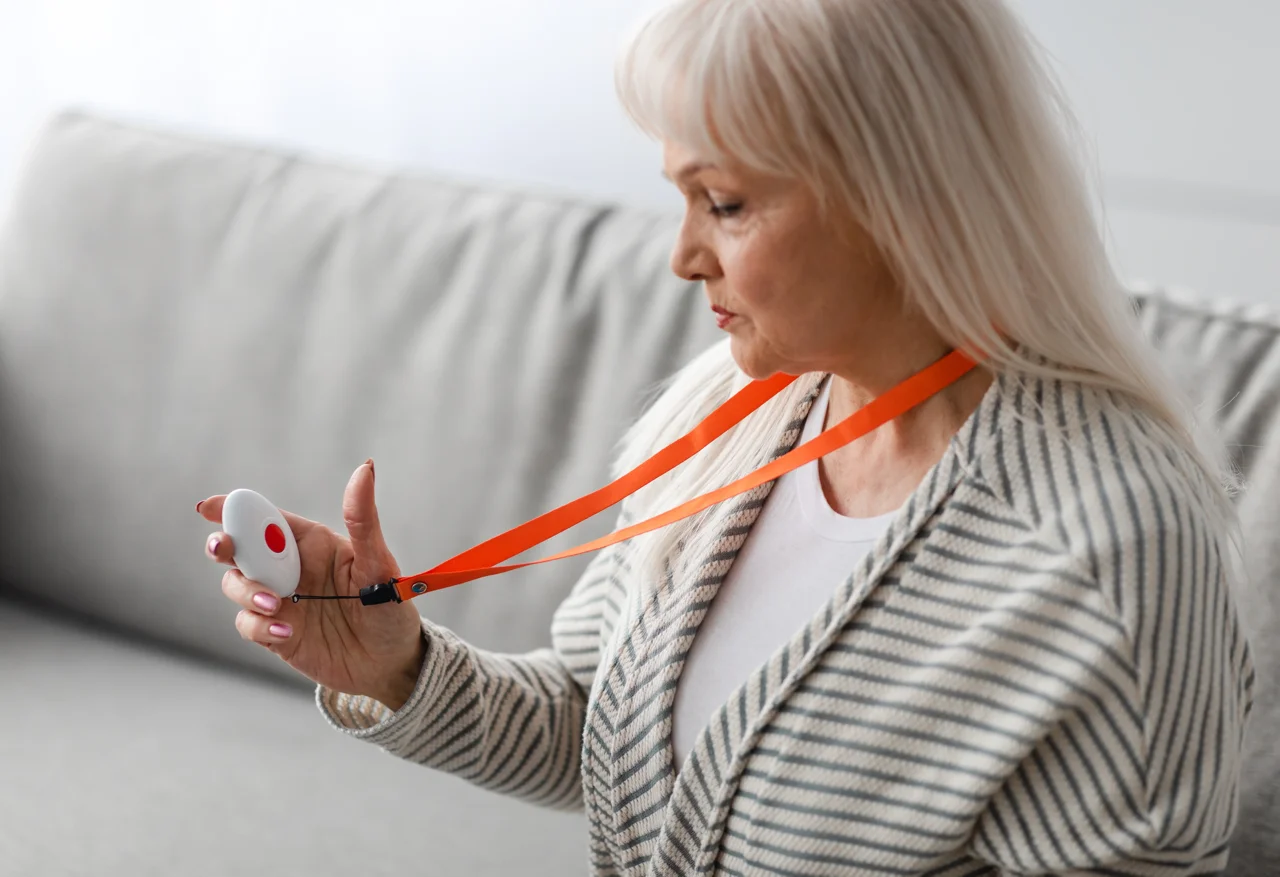
A medical alert necklace is a pendant worn around the neck. It usually has a help button that connects you to an emergency response center or another designated contact. Some models work with a home base unit, while mobile models can connect you to help away from home.
A monitored medical alert necklace typically costs about $30 to $45 per month, depending on whether it works at home or away from home and which features you choose. Optional fall detection may cost extra.
Key Features
- Help button: Press the button when you need assistance. Depending on the system, you may speak to an operator through the pendant, a portable device, or a home base unit.
- Fall detection: Some pendants can automatically send an alert when they detect a possible fall. This feature may cost extra, and no system detects every fall. Press the help button yourself when you can.
- GPS tracking: Compatible mobile pendants can help responders locate you when you’re away from home. A pendant designed only for in-home use may not offer GPS tracking.
- Water resistance: Some pendants are suitable for showering, but not all are safe to wear in water. Check the specific device’s rating and instructions.
- Battery life: Some pendants use rechargeable batteries, while others have sealed or replaceable batteries. Battery life varies by model. Some in-home pendants can last several years, while mobile devices may need charging every few days.
Pros
- Easy to find: The help button sits on your chest, so you don’t have to search for it on your wrist or in a pocket.
- No wristwear needed: You can wear a pendant without adding another device to your wrist, which may suit you if you already wear a watch.
- Can be worn discreetly: Some pendants fit under clothing, which may appeal to people who prefer a less noticeable device. However, follow the manufacturer’s wearing instructions, especially if the pendant has fall detection.
Cons
- May swing or catch: A pendant can move as you walk or catch on clothing, bedding, or mobility aids. Choose a comfortable length and secure design.
- May feel uncomfortable: You might dislike having something around your neck throughout the day or while sleeping.
- May depend on a base unit: Some in-home pendants only work within range of their base unit. They may not connect you to help when you leave home. Mobile models are designed to work away from home, subject to cellular coverage and battery power.
- May not suit every routine: If you prefer wristwear or find a cord uncomfortable, a bracelet may be easier to wear consistently.
Can You Use Both a Bracelet and a Necklace?
Some medical alert systems let you use both a bracelet and a necklace with the same monitoring account. This can give you more flexibility if you prefer different wearables for different activities.
However, support varies by provider. Check whether both devices can be connected and used with the same system, whether an extra device or fee is required, and whether both can send alerts. Using two wearables doesn’t guarantee uninterrupted protection if a device is removed, has a depleted battery, or is outside its coverage area.
If you’re comparing providers, prices, monitoring plans, and available features, see our guide to the best medical alert systems.
Key Factors to Consider When Choosing the Medical Alert System
Compare these factors before choosing a bracelet or necklace.
- Comfort and fit: Choose a bracelet that stays secure without pinching or a pendant that feels comfortable around your neck. Check its size and weight, and whether it could catch on clothing or mobility aids.
- Fall detection: Check whether automatic fall detection is available and whether it costs extra. No device detects every fall, so you should still press the help button when you can.
- In-home range: If the wearable connects to a home base unit, check how far away you can be while still reaching it. In-home systems typically advertise ranges of 200 to 1,400 feet, although walls and other obstacles can reduce the actual range.
- Coverage away from home: If you want protection while shopping, walking, or visiting friends, look for a mobile system. These devices use cellular service to connect you to help, and GPS may help responders locate you.
- Two-way communication: Check whether you can speak to an operator through the wearable or need to use a home base unit. This determines where you need to be to communicate during an emergency.
- Water resistance: Look for an IPX rating or another stated water-resistance rating. IPX4 indicates protection against splashing water, while IPX7 indicates protection against temporary immersion under specified test conditions. Neither rating automatically guarantees suitability for showering, so follow the manufacturer’s instructions.
- Battery life: Check whether the wearable has a rechargeable, replaceable, or sealed battery. Mobile devices often need charging every few days, while some in-home buttons can last for years before their batteries need replacing.
- Total cost: Compare monthly fees, activation charges, and optional features. ADT Medical Alert Basic costs $31.99 per month plus a $99.99 activation fee. Medical Alert Plus starts at $39.99 per month, with fall detection costing an extra $11 monthly. Additional wearables may cost extra.
- Trial and return policy: Check how long you can test the system and whether you can get a refund if it doesn’t suit your needs. For example, Bay Alarm Medical offers a 15-day trial, while LifeFone offers a 30-day risk-free trial. Return shipping costs and refund conditions may apply.
A bracelet may suit you better if you prefer wristwear and can comfortably reach its button. A necklace may suit you better if you prefer a pendant and want to keep your wrists free. Neither style is automatically safer for everyone. Choose one you can wear consistently, and that provides the coverage and features you need.
Help us improve our guides! If you’ve recently used a medical alert bracelet or necklace, we’d love to hear about your experience. Tell us what you liked, what could be improved, and which type you found more comfortable to wear. Share your insights with us at [email protected]. Your personal details will stay completely confidential.