
Retirement Living takes an unbiased approach to our reviews. We may earn money when you click a partner link. Learn More
7 Health Benefits of Walk-In Tubs
See how the right features turn bath time into real relief for your joints, muscles, and peace of mind.


Updated:
At a glance:
- A low threshold and watertight door reduce the risk of falls during entry and exit.
- Hydrotherapy jets can ease joint pain from arthritis and improve circulation.
- Built-in seating and grab bars support seniors with mobility issues or balance concerns.
- Heated seats and backrests add comfort during longer soaks.
- Chromotherapy and aromatherapy features are available on some higher-end models.
- Walk-in tubs can support recovery after a fall, surgery, or new mobility limitation.
The benefits of walk-in tubs include safer entry and therapeutic relief for joint pain and sore muscles. Older adults get more independence when they want to age in place. A low threshold and built-in seating make bathing easier, while hydrotherapy jets add real health value beyond safety alone.
1. Safer Entry and Fewer Falls
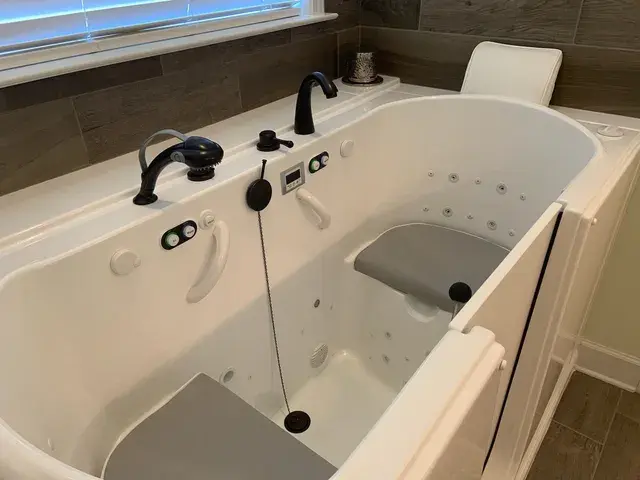
Walk-in tubs remove the tall wall that makes traditional bathtubs risky for older adults. A low-threshold entry and watertight door let you step in without lifting your leg over a high edge. This design cuts down on one of the most common causes of bathroom falls.
Once inside, non-slip flooring and slip-resistant flooring keep your footing steady. Grab bars and handrails give you something to hold onto while you sit down or stand back up. Built-in seating means you never have to lower yourself all the way to the tub floor. This matters if you have mobility challenges or joint pain in your knees or hips.
These safety features work alongside the fill and drain times that define how walk-in tubs work. You stay steady from the moment you sit down until the water drains.
2. Pain Relief From Hydrotherapy
Many walk-in tubs include hydrotherapy jets that go beyond a standard soak. These jets direct targeted streams of water at sore or stiff areas. This can ease muscle tension and support pain relief for conditions like arthritis and fibromyalgia.
Some models add air jets for a gentler massage, which suits people who find direct water pressure intense. A few premium tubs, including select Kohler walk-in bath models, pair hydrotherapy features with chromotherapy lighting or aromatherapy diffusers for a more spa-like experience.
For people managing joint pain day to day, this combination of heat, pressure, and buoyancy can reduce inflammation.
3. Better Circulation
Warm water combined with jet pressure boosts blood flow to tired muscles, which is why hydrotherapy helps with circulation. Even without the jets running, a warm soak on its own still delivers that passive heating effect.
This can support your heart health as part of a broader wellness routine. Just don’t treat it as a replacement for medical care.
4. Relief for Arthritis and Fibromyalgia
Heat and gentle jet pressure loosen stiff joints, which is why warm water works so well for arthritis and joint pain. Regular use may also ease fibromyalgia symptoms, since consistent warmth helps calm widespread muscle sensitivity.
Talk to your doctor before relying on a walk-in tub to manage a specific health condition, since needs vary by diagnosis and severity.
5. Support During Recovery
Recovery is different from ongoing conditions like arthritis. If you’re healing from a fall, surgery, or a new mobility limitation, the tub’s safety features matter more than the heat right now.
A low threshold, grab bars, and a secure seat let you bathe on your own without straining a healing body or risking another fall. During that vulnerable stretch, those features support a smoother return to independent bathing. You can build it back into a daily routine as you regain strength and confidence.
6. Everyday Comfort
Beyond therapy and safety, walk-in tubs add comfort you’ll notice on an ordinary day. Heated backrests and seats keep you warm while the tub fills, and depending on the model, that can take a few minutes.
A quick drain system helps on the other end, so you’re not stuck sitting in cooling water once you’re done soaking. Some models double as a walk-in shower too, giving you a faster option for days when a full bath isn’t practical.
7. Independence and Confidence
These benefits work together to help you keep bathing on your own. For older adults who want to age in place, that independence often matters as much as the physical relief.
A tub that lasts for decades keeps delivering these benefits year after year, since many brands back their tubs with a lifetime warranty on the tub itself, and some extend that coverage to labor.
Do the Health Benefits Justify the Price of a Walk-In Tub?
Walk-in tubs cost more upfront than a standard bathtub, so it’s worth weighing the benefits against the price. Hydrotherapy jets and premium finishes add the most to the cost of a walk-in tub, so that’s where the budget conversation starts.
For many older adults, the payoff comes from staying independent in their own bathroom longer, plus the health benefits from regular hydrotherapy use.
A tub-to-shower conversion can lower the price if safety matters more to you than therapeutic features. Whether those extras are worth it comes down to the full pros and cons of a walk-in tub for your specific situation.
Choosing a Walk-In Tub for Your Needs
Once you’ve decided a walk-in tub is worth it, the next step is matching its benefits to the right model. Start with what you need most, whether that’s safety alone, therapeutic relief, or both. Different types of walk-in tubs pair these benefits at different price points, so you’re not paying for extras that don’t match your goals.
Whatever you choose, confirm the model meets the basics for walk-in tub safety before you buy.
Frequently Asked Questions (FAQs) About the Health Benefits of a Walk-In Tub
Warm water soaks can support circulation, which plays a role in heart health. A walk-in tub isn’t a treatment for heart conditions, so talk to your doctor about what’s safe for you.
Outward-swinging doors give you more room to maneuver a walker or wheelchair during entry, which reduces strain and fall risk for people with limited mobility.
Pain relief and improved circulation from hydrotherapy last a few hours. Regular use over time tends to produce more consistent results.
Medicare doesn’t cover walk-in tubs, since it classifies them as home modifications rather than medical equipment. Some Medicaid programs and VA benefits may help with partial costs.
Help us improve our guides! If a walk-in tub has made a difference in your comfort or mobility, we’d love to hear from you. Share your experience with us at [email protected]. Your personal details will stay completely confidential.