
Retirement Living takes an unbiased approach to our reviews. We may earn money when you click a partner link. Learn More
Walk-In Tubs: Must-Have Safety Features
From watertight doors to ultra-low thresholds, find out which walk-in tub safety features matter most and how they make bathing safer, easier, and more comfortable at home.


Updated:
At a glance:
- Walk-in tubs have low entry steps, grab bars, and slip-resistant flooring to reduce the chance of falls for seniors aging in place.
- Anti-scald controls, watertight doors, and quick-drain systems help create a safer and more comfortable bathing experience.
- Choosing a reputable brand with a strong warranty and professional installation helps maintain long-term reliability and proper performance of safety features.
Seniors aging in place with limited mobility need accessible tubs that keep them safe while bathing. Luckily, walk-in tubs include a variety of features that reduce the risk of falls and make it easier to wash yourself.
This guide explains key walk-in tub safety features and what to look for when comparing models for your home.
Key Walk-In Tub Safety Features
A walk-in tub works much like a standard bathtub but is designed for easier and safer entry. Below, we’ve listed the many features that benefit seniors with limited mobility:
Low-Threshold Entry and Non-Slip Flooring
Both features reduce fall risk. A low-threshold entry is the short step at the bottom of the tub door. It replaces the tall wall of a standard tub, so you only need to lift your foot a few inches to get in. Additionally, most tubs include non-slip or textured flooring that provides traction, helping your feet stay steady on wet surfaces.
Grab Bars and Handrails
Grab bars and handrails give you steady exit and entry support. They can be placed in multiple different areas—near the entry, next to the seat, or along the back wall.
If you have specific mobility issues or a medical condition, don’t just rely on what comes standard. Careful vertical or horizontal grab bar placement can help with different movements (stepping in, sitting, standing, etc.), so you should talk to the installer or an occupational therapist about how many you need and where they should be oriented.
Built-In Seat, Backrest, and Heated Seat Options
Walk-in tubs often include seating features that keep you stable and supported while bathing. A built-in seat keeps your body above the floor of the tub, while a backrest allows you to relax without leaning against a hard surface. Some models also include gentle heat that helps you stay warm during filling and draining.
Common seating features include:
- Fixed molded seat: Part of the tub shell, designed for stability and long-term use.
- Contoured backrest: Keeps your back supported and reduces pressure during longer baths.
- Heated surface: Maintains warmth before and after bathing to prevent chills.
Watertight Door and Easy Access Design
The door on a walk-in tub allows you to step inside safely without climbing over the high edge found on a traditional tub. A rubber gasket around the door forms a tight seal when closed, keeping water inside and the bathroom floor dry.
Some doors open inward and stay closed by water pressure, while others open outward to create more room for walkers or wheelchairs. Both tub designs provide easy, steady access and reduce the strain of entering or exiting the bath. With proper walk-in tub installation, the door seals correctly and maintains a watertight fit over time.
Anti-Scald and Temperature Control Technology
Hot water can change temperature quickly, which increases the risk of burns. Walk-in tubs use safety controls that keep the temperature steady throughout your bath. An anti-scald valve limits how hot the water can get to protect your skin if there’s a sudden change.
Some models also include a thermostatic mixing system that blends hot and cold water before it reaches the tap. This keeps the temperature even and comfortable from start to finish.
Quick Drain Systems
Walk-in showers are built to fill and drain while you sit inside. A quick drain system removes water faster than a standard drain, so you spend less time waiting before you can open the door and step out. Some models use pumps to speed the process, while others rely on larger outlets that let water flow out more quickly.
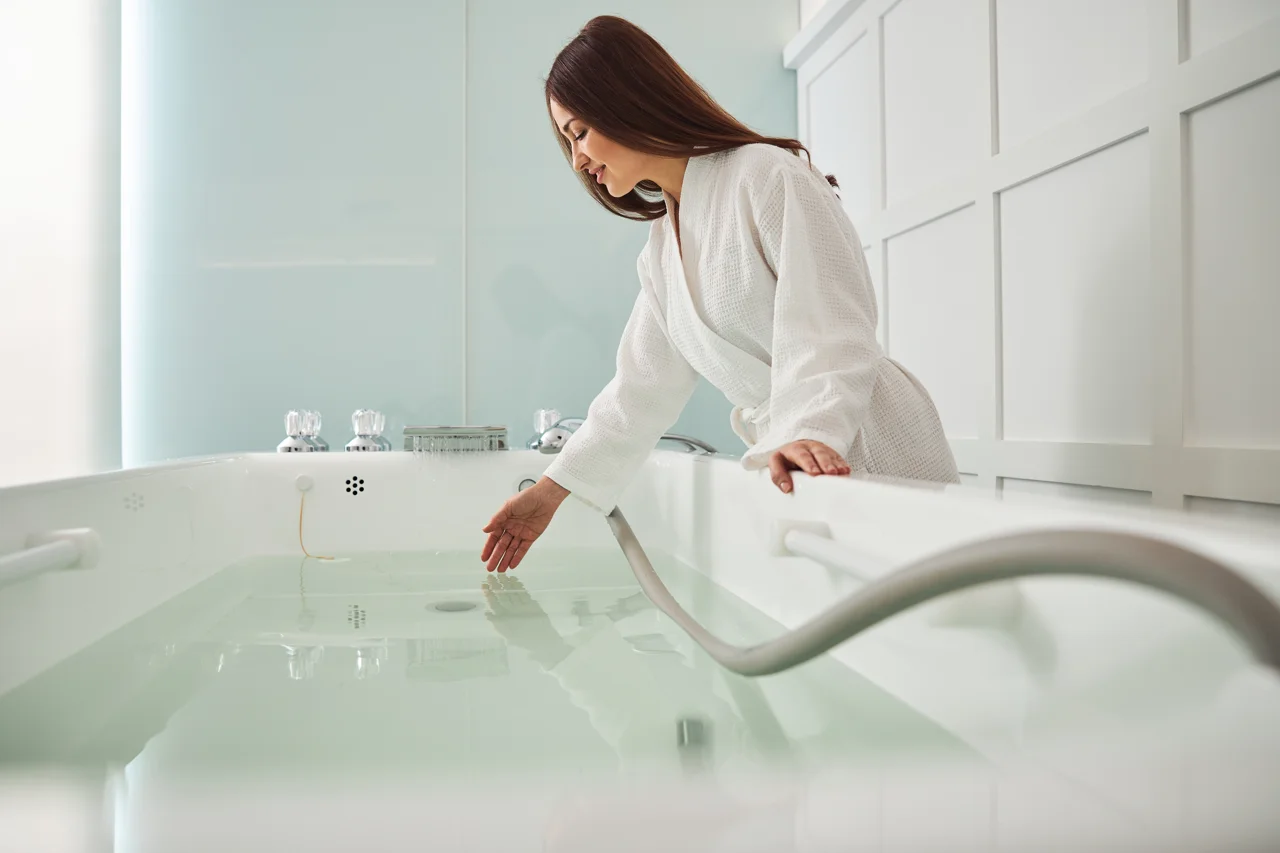
Easy-reach controls keep everything within arm’s length. You can adjust the water temperature or switch from the faucet to the handheld shower wand without stretching or standing up.
Easy-to-Reach Controls
Easy-reach controls keep everything within arm’s length. You can adjust the water temperature or switch from the faucet to the handheld shower wand without stretching or standing up. Staying seated while you use the wand and pointing the spray downward also helps keep water inside the tub and prevent slipping hazards.
We recommend choosing a hose length that reaches your back, legs, and feet without stretching outside the tub and mounting the holder where you can grab it without reaching or twisting. You should also keep the hose clear of the door and the entry threshold so it never becomes a tripping hazard when you step in or out.
Hydrotherapy and Whirlpool Safety
Walk-in bathtubs might also include whirlpool or hydrotherapy jet systems that move the water while you bathe. These systems use built-in jets to create controlled pressure that can help relax muscles and improve blood flow. Plus, moving warm water supports joint flexibility and reduces stiffness for people with limited mobility.
Common hydrotherapy systems include:
- Air jets: Release streams of air bubbles through the water for a light, massaging effect that helps loosen tight muscles.
- Water jets (hydrojets): Push warm water through targeted nozzles to provide deeper pressure around the back, legs, or feet.
- Whirlpool system: Combines air and water jets to create circular water motion around the tub.
- Warm water circulation: Keeps the temperature steady throughout the bath to maintain comfort and prevent sudden cooling.
Whirlpool and hydrotherapy features are built with safety controls that regulate pressure and temperature to prevent discomfort or overheating. However, you should always check with your doctor before you purchase jets, as if you have certain medical conditions, you’ll want to limit soak time. More specifically, jets can increase heart rate and lower blood pressure, which isn’t ideal for someone with a heart condition.
As far as safe usage and maintenance, only run the jets when the tub is filled to the indicated level. Additionally, you should schedule regular jet line cleaning and inspections to prevent bacterial growth and keep electrical components functional.
Choosing a Safe Walk-In Tub
When choosing a walk-in tub, it helps to separate the standard safety features every tub should have from optional upgrades. Knowing what’s essential helps you budget properly and compare quotes more effectively.
Essential safety features:
- Low-threshold entry
- Non-slip flooring
- At least two grab bars
- Built-in seating
- Anti-scald controls
Optional upgrades:
- Heated seat and backrest
- Chromotherapy
- Aromatherapy
- Hydrotherapy or air jets
Comparing Walk-in Tub Brands
Choosing a reputable brand matters. Look for third-party testing certifications or compliance statements, including adherence to local plumbing codes, electrical listings, or accessibility-related standards. This shows you that the model has been tested for leaks, electrical safety, and load-bearing performance.
A solid warranty and professional installation are also just as important as the features themselves. Good warranties ensure that you’re covered when something breaks, which can save you a lot of money in the long run.
Here are three well-known manufacturers recognized for reliability, clear warranty coverage, and consistent safety performance:
| Brand | Rating | Key Safety and Comfort Features | Warranty | Best For |
|---|---|---|---|---|
| Safe Step | ★ 4.8 | – Heated seat and backrest – Showerhead – Locking handle – Built-in towel bar – Ozone-cleaning system | Lifetime warranty on tub and labor | Joint pain, ADA compliance |
| Kohler Walk-In Bath | ★ 4.5 | – Low three-inch threshold – Control panel – Fast fill and drain – Hydrotherapy and air jets – Heated backrest | Limited lifetime warranty | Strong warranty, low entry height |
| American Standard | ★ 4.5 | – Quick drain – Outward-swinging door – Wheelchair accessibility – Anti-scald control – RevitaJet™ system | Lifetime door seal, 5 to 10 years on components | Wheelchair users, massage therapy options |
For detailed reviews and model comparisons, visit our best walk-in tubs guide to see which brands fit your needs and home layout.
Choosing an ADA-Compliant Walk-In Tub
The Americans with Disabilities Act (ADA) sets accessibility standards for a variety of mobility-related home modifications, and while meeting them isn’t legally required for residential installations, ADA-compliant tubs are generally safer.
Here are key ADA standards some walk-in tubs choose to follow:
- Door width: ADA-compliant tubs have a wheelchair-accessible, outward-swinging wide door that leaves more room for mobility aids and caregiver assistance.
- Seat height: Seats are designed to match standard wheelchair or transfer bench heights, so sliding into place is easier.
- Grab bar placement: Grab bar length and mounting height are set so that they’re reachable while standing, sitting, and shifting across, not just near the door.
Because “ADA compliant” is often used as a marketing phrase rather than an actual certification, you should always confirm what the manufacturer means when they say it. Request written specifications about door width, seat height and grab bar placement before you buy. You should also consider asking an occupational therapist to review the measurements, as they can confirm whether the model supports safe transfers and independent use.
Why Bathroom Environment and Installation Safety Matters
Choosing the best walk-in tub model matters, but so does the safety of the bathroom around it. The layout, flooring, lighting, electrical setup, and water heater settings impact fall and burn risks as much as the tub itself.
- Check for proper flooring: Textured, slip-resistant surfaces, like a non-slip mat or absorbent bathroom rug, prevent you from slipping when you step out of the tub.
- Account for doorway clearance: Make sure that when the tub is installed, the bathroom layout and doorway clearance make maneuvering in and out of the tub comfortable.
- Consider lighting: Bright, even light with no dark corners helps you judge the threshold and see wet spots. Night lights or motion-activated fixtures are also helpful for early morning or late-night baths.
- Ensure secure mounting: Mounting to drywall won’t cut it, so make sure the tub, grab bars, and any handrails are anchored to solid framing or the manufacturer’s recommended supports.
- Check electrical systems: For tubs with pumps, heated seats, and massage jets, you’ll need an electrician-certified GFCI outlet or breaker that can handle the tub’s load and shuts off power quickly if it detects a fault.
- Check plumbing systems: Make sure your plumbing can handle the volume of water and set your water heater temperature to 120°F or lower to reduce the risk of scalding, even if your tub has an anti-scald valve.
It’s always best to consider these factors before and during installation, rather than after, so your professional installer can flag and fix anything that needs updates before the tub goes in. They can also confirm that the room meets local building codes and that the floor can support the weight of a full tub.
Emergency Planning and Power Outage Safety
Seeing as the tub door stays sealed while the tub is full, it’s important to have a plan for emergency exits. After all, unlike a traditional gravity drain, a pump-assisted quick-drain system typically needs power to operate, and not every model comes with a battery backup. Note that some models offer dual-drain designs that give water a second way out if the pump fails, so it’s worth asking the manufacturer what’s available.
So, what should you do if you’re bathing when the power goes out, or the pump fails?
- Stay calm and seated.
- If your tub does have a gravity or secondary drain, open it and wait for the water to go down, which could take several minutes longer than usual.
- Once the water has drained, use the manual door release or emergency exit to safely leave.
If those steps aren’t possible, try to ensure that you have a waterproof call button or phone within reach to request help.
The best way to avoid these emergency scenarios is to invest in useful features like a manual door release or battery backup. Ask the manufacturer whether the tub drains without electricity and what the warranty covers if the pump fails. Additionally, you should always let a caregiver know when you’re bathing.
The Importance of Maintenance and Inspection for Safety Features
Walk-in tub safety features only work in your favor when they’re functioning. To mitigate the natural wear and tear that leads to malfunctions, regular inspection and maintenance are essential. Here are our tips:
Door Seal Integrity
- Inspection: At least once a week, check for cracks, unwanted residue, and leaks that pool near the door after a bath.
- Maintenance: After bathing, wipe off the gasket and frame. Disinfect the seal with rubbing alcohol weekly. Severe leaks will need professional repairs or replacement.
Slip Resistance Over Time
- Inspection: Remember to check that the floor still feels textured every so often and look for worn-smooth patches, soap scum or mineral buildup.
- Maintenance: After bathing, rinse the floor and wipe it down. Cleaning weekly with a non-abrasive cleaner can also help remove residue without wearing down the texture. Professional resurfacing may be necessary after a decade of use.
Grab Bar Mounts
- Inspection: Apply firm, steady pressure to bars once a month, checking for wobbles, rust, cracks, or gaps.
- Maintenance: Wipe the bars dry after bathing to prevent mineral buildup and corrosion. If a bar feels loose, we recommend professional tightening or replacement mounts rather than quick fixes.
Anti-Scald Valve and Temperature Control
- Inspection: Before bathing, check that the water temperature stays steady and matches the settings you’ve chosen. Sudden hot or cold swings are a sign of malfunction.
- Maintenance: Valve maintenance involves cleaning the faucet and showerhead outlets periodically to prevent mineral buildup. You should also have a professional test and service the valve once a year.
Pump, Drain, and Jets
- Inspection: At least once a month, listen for unusual noises, watch how quickly the tub drains and check for slow draining or leaks around the pump access area.
- Maintenance: Run the manufacturer’s recommended jet-cleaning cycle regularly and schedule professional service according to warranty recommendations.
Safety Feature Priorities by User Type
If you have a limited budget or aren’t sure what to prioritize, use the chart below as a jumping-off point:
| User Type | Top Safety Priorities | What to Avoid |
|---|---|---|
| Wheelchair users | – Seat heights or low thresholds that allow easy transfers – Wide, outward-swinging doors – Easy-to-reach controls and grab bars | – Inward-swinging doors – Tubs with limited clearance |
| Bariatric users | – Higher weight capacity – Wider seats and doors – Reinforced frames and secure mounting | – Non-bariatric walk-in tubs |
| Users with high fall risk | – Low-threshold entry – Non-slip flooring – Multiple grab bars | – Tubs with slick floors – Models with limited grab bars |
| Users who bathe with a caregiver | – Easy caregiver access beside the tub – Seats that allow easy transfers – Handheld shower wand | – Tubs with little room for a caregiver to stand or assist |
Please note that for users with cognitive impairments or dementia, a walk-in tub might not be the best option. Instead, a roll-in shower with consistent caregiver assistance is the best way to improve safety. A waterproof call button also improves safety for these users, as well as for wheelchair users.
Walk-In Tub Safety Features FAQs
The main drawbacks are cost and wait time. Walk-in tubs are easier to enter, but you have to wait while they fill and drain due to the watertight door. Walk-in tub installation may also need plumbing or electrical updates.
Yes. The door locks to stay watertight, so you enter first, close it, and then run the water. This process can take up to 15 minutes, but some tubs have heated seating or backrests to keep you warm. Quick drain additions can also speed up the time it takes to exit by several minutes.
Yes. Walk-in tubs are specifically made for seniors and your loved ones with limited mobility. Low steps, grab bars, and non-slip flooring reduce strain and support balance, helping users bathe independently and safely.
Help us improve our guides! If you’ve recently installed a walk-in tub or have insights on which safety features matter most, we’d love to hear from you. Share your experience with us at [email protected]. Your personal details will stay completely confidential.