
Retirement Living takes an unbiased approach to our reviews. We may earn money when you click a partner link. Learn More
Walk-In Tub Installation Guide
Learn what walk-in tub installation involves, including costs, space requirements, and key steps.


Updated:
At a glance:
- Walk-in tub installation typically costs $4,000 to $15,000, depending on the tub, labor, and bathroom modifications.
- Before installation, check bathroom measurements, floor support, plumbing, drainage, and electrical requirements to avoid unexpected costs.
- Professional installation can help prevent leaks and other problems, while regular cleaning and maintenance help keep the tub in good condition.
Walk-in tub installation involves removing the old tub, preparing the bathroom, and connecting plumbing and electrical systems. Installation costs typically range from $4,000 to $15,000, depending on the tub model, labor, and bathroom modifications. This guide explains the installation steps, costs, and requirements to help you plan your project.
Walk-In Tub Installation Requirements
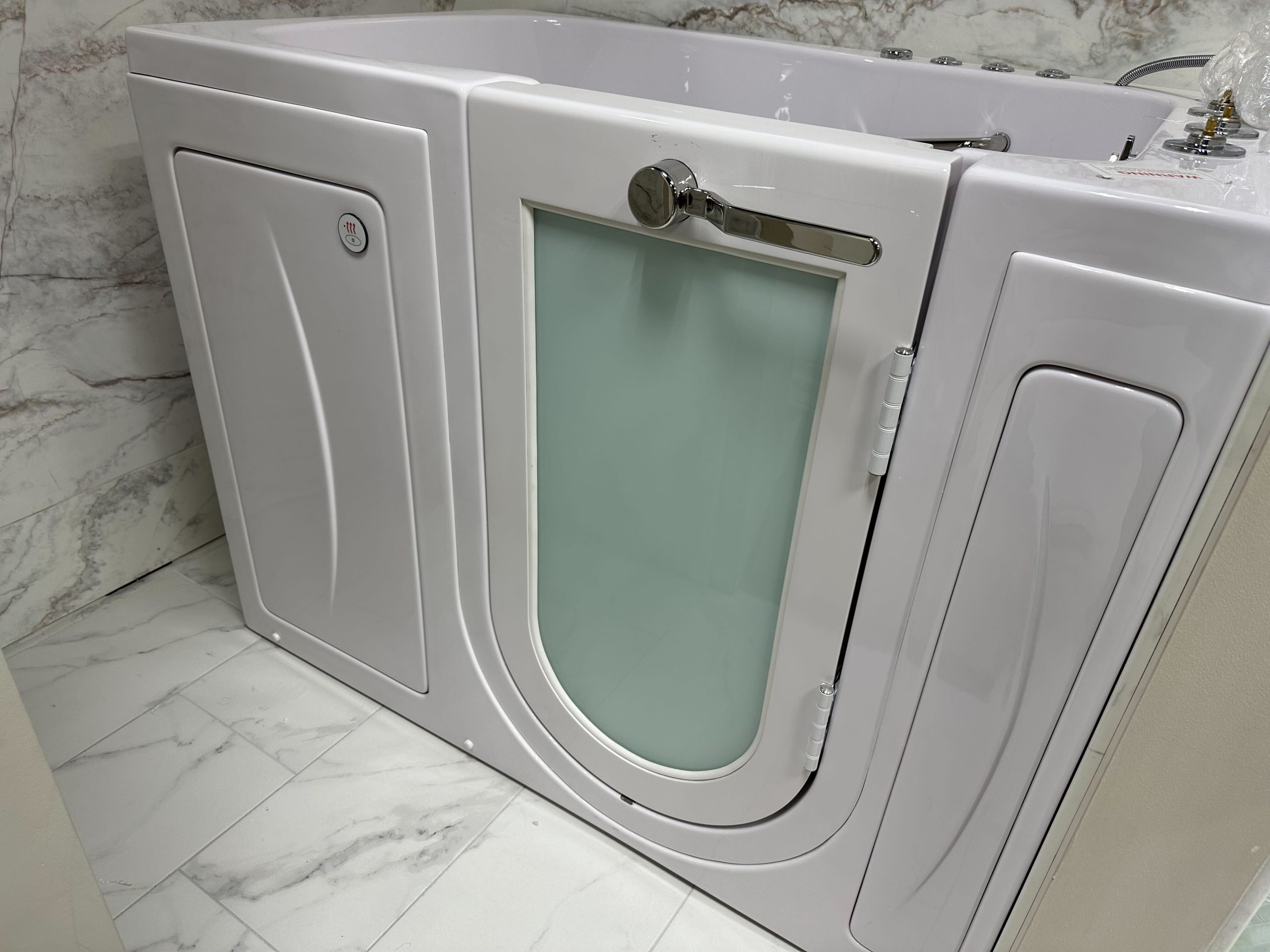
Most walk-in tubs measure about 52 to 60 inches long, 28 to 32 inches wide, and 38 to 40 inches tall. Compare your chosen model’s dimensions with the bathroom and measure the full delivery route, including exterior doors, hallways, tight turns, and stairs. Also check that the tub’s entry door can open fully without hitting nearby fixtures.
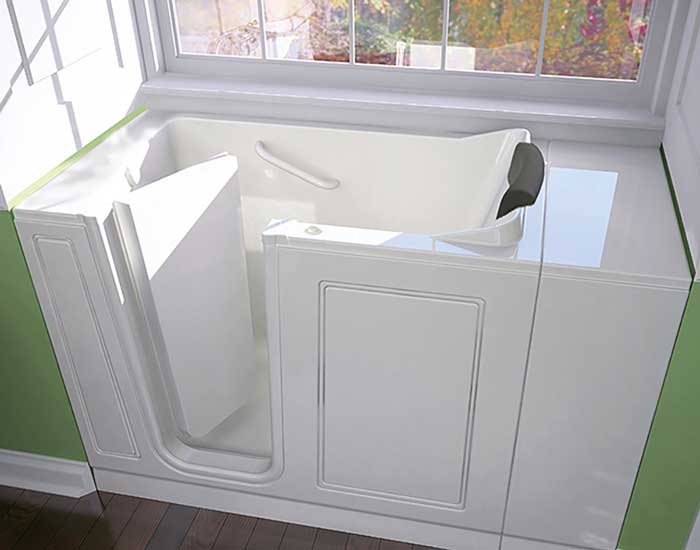
- Bathroom space: A standard bathtub alcove is often about 60 inches long and 30 to 32 inches wide. Compare these measurements with the tub’s specifications, including clearance for its door to open and access for installation and repairs.
- Floor support: The floor must support the tub, the water, and the person bathing. Have a professional check for structural issues or water damage and determine whether repairs or reinforcement are needed.
- Plumbing and drainage: Many walk-in tubs use a 1½-inch drain connection, but requirements vary by model. A plumber should check the drain size, location, and flow capacity, along with the water supply’s ability to fill the tub at the expected rate. Slow drainage can increase the time you must wait inside before opening the door.
- Water heater: Check the tub’s capacity and your water heater’s usable hot-water supply before installation. A larger tub may require a water heater upgrade, depending on its capacity and your household’s hot-water needs.
- Electrical supply: Tubs with pumps, air jets, or heaters may require a dedicated, GFCI-protected circuit. Some models use a 120-volt, 20-amp circuit, while others need separate circuits for different features. Have a qualified electrician check the manufacturer’s requirements and local electrical codes.
Before ordering the tub, have an installer review the measurements, plumbing, floor support, and electrical requirements. Confirm the installer’s qualifications, who will handle the plumbing and electrical work, and what the quote includes. Get the expected timeline, warranty terms, and post-installation support in writing.
Steps for Walk-In Tub Installation
Here’s what each step involves.
- Remove the old tub. The installer removes the existing tub or shower and disconnects the plumbing. Older pipes may need repairs if they’re corroded or incompatible with the new tub.
- Prepare the space. Check the floor for damage, moisture, and uneven areas. It must support the tub, the water, and the person bathing. The installer also checks the drain and water supply.
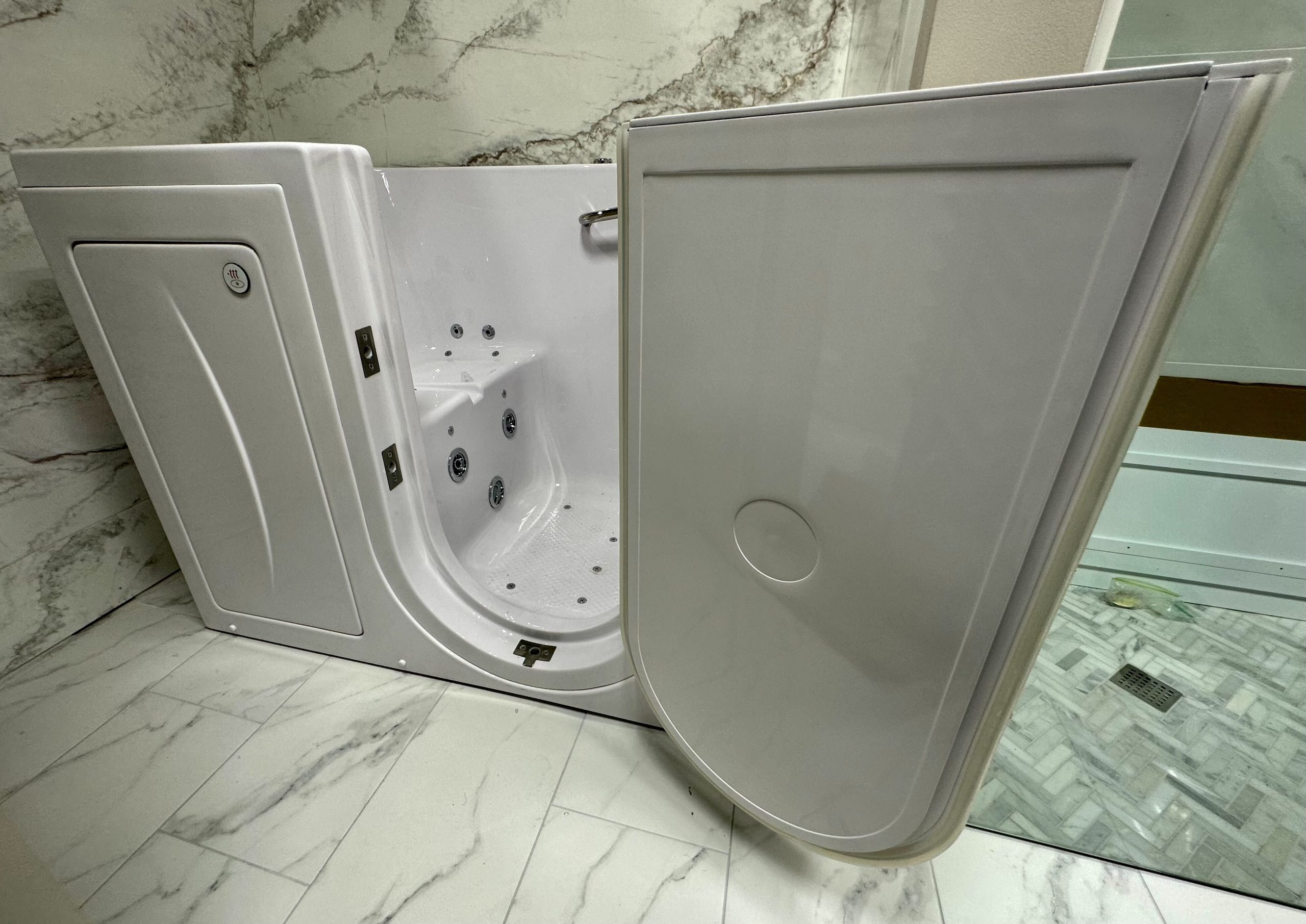
- Position and secure the tub. Measure doorways and hallways to confirm the tub can reach the bathroom. Check that its entry door can open freely without hitting nearby fixtures. The installer then levels and secures the tub. See our walk-in tub dimensions guide for measurement tips.
- Connect plumbing and electrical systems. A plumber connects the water supply and drain, then checks that the tub fills and drains properly. Models with powered features may require an electrician to follow local codes and the manufacturer’s instructions.
- Install fixtures and check temperature controls. Fit the faucet, showerhead, grab bars, and other fixtures. Position controls where they’re easy to reach while seated. Check whether the tub has anti-scald or temperature-limiting protection to help prevent burns.
- Seal and test the tub. Install any required wall panels and waterproof the surrounding surfaces according to the manufacturer’s instructions. Seal joints to help prevent hidden leaks. Before use, fill and drain the tub, inspect the plumbing for leaks, and check that the door locks and seals properly. Test the controls and any powered features, and have the installer correct any problems before using the tub.
Walk-In Tub Installation Costs
A walk-in tub and installation typically cost $4,000 to $15,000 combined. The total depends on the tub model, labor, and any bathroom modifications needed.
Replacing an existing tub may cost less than a project that requires plumbing changes, electrical upgrades, floor repairs, or new tile. Optional features, such as hydrotherapy jets and heated seats, can also increase the price. Ask for an itemized quote that separates the tub, installation labor, and additional work.
The amount of work also affects the timeline. A straightforward replacement may take a day, while plumbing changes or bathroom repairs can extend installation. Ask your installer for an estimated completion time based on your bathroom and chosen tub.
Walk-In Tub Maintenance
Clean your walk-in tub after each use to prevent soap residue and mineral deposits from building up. Rinse the surfaces, wipe them with a soft cloth, and use a non-abrasive cleaner approved by the manufacturer. Avoid harsh cleaners and scouring pads that can damage the finish.
If your tub has water or air jets, clean them according to the manufacturer’s instructions. Some models require monthly jet-line cleaning to remove residue, but schedules vary.
Check the door seal regularly for cracks, wear, or leaks. Keep it clean and free of debris so the door closes properly. If you notice leaks, a damaged seal, or malfunctioning jets, contact the manufacturer or a qualified service technician.
Why Consider a Walk-In Tub?
A walk-in tub may suit older adults and people with limited mobility who find it difficult to step over a standard bathtub wall. A built-in seat, grab bars, and a low-entry door can make bathing easier.
Optional features, such as heated seating and water jets, may add comfort, depending on the model. Walk-in tubs don’t eliminate fall risks, so consider the user’s mobility and support needs when choosing a tub.
If you’re still comparing options, visit our guide to the best walk-in tubs to explore models and find one that fits your needs and budget.
Frequently Asked Questions (FAQs) About Walk-In Tub Installation
Not always. It depends on the tub’s capacity, how much hot water your household uses, and your water heater’s size. Check the tub’s specifications and your heater’s usable hot-water capacity before installation.
It may. Requirements depend on the tub model and your bathroom’s existing plumbing. A plumber should check the drain size and location, water supply, and drainage capacity before installation. Some bathrooms may need plumbing changes to accommodate the new tub.
It’s possible, but professional installation is usually the safer choice. The work may involve plumbing changes, electrical connections, and waterproofing. Incorrect installation can cause leaks, damage, or safety issues, and may affect the manufacturer’s warranty.
Help us improve our guides! If you’ve recently installed a walk-in tub, we’d love to hear about your experience. Share your insights with us at [email protected]. Your personal details will stay completely confidential.