
Retirement Living takes an unbiased approach to our reviews. We may earn money when you click a partner link. Learn More
Outdoor Elevators: Cost, Installation, & Capabilities
Outdoor lifts start at around $4,000, while custom elevators can exceed $100,000


Updated:
AT A GLANCE:
- Outdoor wheelchair platform lifts generally range from $12,000 to $35,000 installed, while enclosed elevators can start at closer to $30,000 and reach $100,000 or more.
- The price can fluctuate based on travel height, the structural modifications your home requires, cab materials, weather protection, and any desired upgrades or accessories.
- While equipment makes up the majority of the bill, labor and structural updates like rewiring can increase the total.
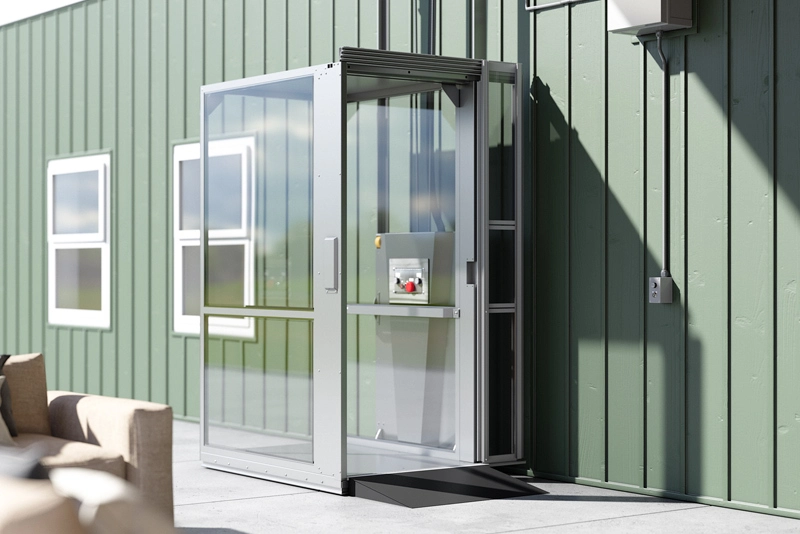
Outdoor elevators can make parts of a home, like a raised deck or upper floor, accessible without the need to climb stairs. For older adults and those with mobility limitations, an elevator can mean getting to stay in the multilevel home they love.
However, an “outdoor elevator” can mean different things depending on which company and product you choose. A basic outdoor stair lift comes with a lower starting price point than a fully enclosed elevator, while wheelchair lifts tend to fall in the middle of the price range.
As you prepare to make your choice, be sure to compare the equipment, features, installation requirements, and ongoing maintenance demands of any elevator you’re considering. This guide explains what your budget should look like and which factors have the biggest effect on your final bill.
Outdoor Elevator Cost Ranges and Averages
The budget for an outdoor elevator is most often in the tens of thousands, but the price can vary significantly. Outdoor stair lifts might cost less than $10,000 even with premium upgrades. The price for this elevator variety tends to be lower because they provide a moving seat to travel along stairs rather than vertical elevator access. This means fewer parts and less structural modification.
A fully enclosed elevator typically requires a much larger budget. Some guides place prices for residential elevators at $30,000 on the low end, and high-end outdoor elevator lift prices of $100,000 or more bring the average up to around $65,000.
| Elevator Type | Installed Cost Range | Travel Height | Best For |
|---|---|---|---|
| Vertical Platform Lift | $12,000 to $35,000+ | Approximately 14 feet | Wheelchair or mobility access to porches and decks |
| Enclosed Outdoor Elevator | $30,000 to $100,000+ | One or more floors | Access to multiple levels of a home |
| Shaftless Elevator | $30,000 to $50,000+ | One floor between two stops | Homes where a conventional shaft doesn’t work |
| Outdoor Stair Lift | $4,000 to $25,000 | Along an existing staircase | People who can transfer into a seat |
Every elevator system is unique based on the model’s functionality, with more complex products costing more in both parts and labor. The basic differences are:
- Vertical platform lifts (VPLs) carry someone, such as a wheelchair user, up and down between two levels on an open platform.
- Enclosed outdoor elevators use protected cabins and can serve multiple floors, so they’re often used inside homes and when multiple people need to ride the same elevator.
- Shaftless elevators travel through an opening between two floors without an entire hoistway structure.
- Outdoor stair lifts travel along a staircase like a moving chair.
Outdoor Home Elevator Cost Factors
The same elevator model may cost thousands more or less than average depending on the installation details. The main outdoor elevator cost factors to consider are:
Height and Travel Distance
Tall elevators require more tracks or rails, longer and stronger structural supports, more nuanced safety systems and longer work hours to get the job done. All of these elements result in higher costs; some sources indicate that adding an extra stop on the elevator’s path can increase the cost by $10,000 or more.
Installation Complexity and Site Preparation
An elevator must be securely attached to the home in order to comply with safety regulations, which means modifications to the home itself are almost a given. The more modifications, the greater the cost.
Some of the changes your home might need to undergo in order to be ready for an elevator installation include:
- Pouring a reinforced concrete pad
- Excavating or leveling
- Adding support posts
- Building a structural frame
- Creating openings through walls or floors
- Installing drainage
- Modifying railings or steps
The cost comes not just from retrofitting a home with the modifications it needs but also (potentially) hiring a structural engineer to evaluate the installation.
Cab Materials and Weather Protection
The “cab” is the part of the elevator you step into. Outdoor elevators need to withstand exposure to the elements, which means manufacturers create the cab with materials that tend to be more expensive than those used for indoor elevators. Powder-coated steel, galvanized components, aluminum framing, and polycarbonate panels stand up to the weather, though coastal areas may require specific materials to account for salt-related corrosion.
The materials themselves impact the price, but they’re not the only factor. Your elevator might need a roof and enclosed shaft, or it would require a water management and drainage system that demands additional labor.
Permits, Electrical, and Inspections
Unless your home has had an elevator before, you’ll likely need permits and inspections from multiple professionals (e.g., an electrician, a structural engineer). A permit may cost a few hundred to more than a thousand dollars depending on your municipality and the type of equipment you’re installing.
It’s common to need electrical rewiring as part of installing an outdoor elevator. Lifts may use your standard household voltage but require their own circuit, but larger elevators often need a source of additional electrical capacity. The cost reflects how much additional work needs to go into the installation in these areas.
Outdoor Elevator Installation Cost Breakdown
When you request a quote for an outdoor elevator, make sure it includes more than the unit itself. While equipment is generally the largest individual expense, installation can be a close second. Some estimates place installation costs at up to 25% of the total cost of the project.
The following table offers an example of how a platform lift project costing $30,000 might be divided across expense factors.
| Cost Item | What It Covers | Share of Budget |
|---|---|---|
| Elevator Unit | The elevator itself, platform, controls, safety gates | 60% ($18,000) |
| Structural Work | Foundation, concrete pad, landing modifications | 12% ($3,600) |
| Electrical Work | Dedicated circuit, new or modified wiring, electrical connections, grounding | 4% ($1,200) |
| Permits and Inspections | Approvals and inspections | 2% ($600) |
| Labor and Installation | Equipment assembly, mounting, testing, modification | 20% ($6,000) |
| Weatherproofing | Supplemental covers, finishes, seals, other protections | 2% ($600) |
| Total | The entire completed project | 100% ($30,000) |
These numbers aren’t guaranteed; they’re based on reported averages. Your cost could be lower or higher depending on your circumstances.
Outdoor Elevator Maintenance and Lifetime Costs
Owning an outdoor elevator means preparing for expenses beyond the initial installation. For safety reasons, scheduling regular inspections and maintenance should be a part of your routine. This can also save you money, as you may identify equipment that is wearing out before it fails and becomes more expensive to replace.
The cost of a service call depends on the team you’re using. If you schedule maintenance every six months, you may pay a few hundred dollars each time. Though regular service will likely be your largest ongoing expense, be prepared for:
- Parts: Even durable parts will need care at some point
- Corrosion: Elevators come with protective coatings that need to be cleaned to prevent corrosion
- Weather maintenance: You may need to call someone to remove ice or handle trapped moisture
- Electricity: Your elevator will add another source of electricity consumption to your home, and you may need to invest in a whole-house generator to make sure you’re not trapped in the event of a power outage
- Emergencies: Some people choose to invest in optional monitoring services
Bottom Line: Outdoor Elevator Costs Depend on the Type and Installation
Outdoor elevator costs vary, starting at a few thousand and extending up to $100,000 and beyond. Toward the bottom end are basic vertical lift platforms, shaftless elevators occupy the middle tier, and fully enclosed outdoor elevators trend toward the top.
The biggest factors in price are the product you choose, how high it needs to travel, how many stops it needs to make, and the amount of site preparation required. If you need local permits or weather protection, those will increase the bill as well.
Don’t forget to budget for regular maintenance, inspections and occasional repairs. By properly caring for your elevator from the beginning, you may extend its usable life and decrease the risk you’ll need to pay for a replacement.
Frequently Asked Questions (FAQs) About Outdoor Elevators
Residential elevator costs vary, but in general, expect anywhere from $4,000 for a stairlift to $100,000+ for a fully enclosed outdoor elevator.
The 3/4 rule is a compliance requirement stating that the distance between the elevator door and the hallway door can’t be more than 3/4 inch. This keeps people from getting body parts, like fingers, stuck.
Original Medicare doesn’t usually pay for home elevators because they count as home modifications, not durable medical equipment. However, if you have Medicare Advantage or another assistance program, check the benefits to see if elevators may be covered.
Yes, as long as the property has enough space and structural support, you can add an outdoor elevator to your home at any time.
Article Sources
Retirement Living writers primarily rely on government data, industry experts, and original research from other reputable publications to inform their work. Specific sources for this guide include:
- Retirement Living, “How Much Does a Home Elevator Cost.” Accessed Nov. 6, 2026.
- HomeGuide, “How much does a home elevator cost?” Accessed Nov. 6, 2026.
- Consumers Unified, LLC DBA ConsumerAffairs, “Best Whole-House Generators.” Accessed Nov. 6, 2026.
- International Code Council, “Chapter 3 Building Planning – 2024 North Carolina State Building Code: Residential Code.” Accessed Nov. 6, 2026.
- U.S. Centers for Medicare and Medicaid Services, “What’s Not Covered?.” Accessed Nov. 6, 2026.
- Lifeway Mobility, “2026 Platform Lift Guide.” Accessed Nov. 6, 2026.
- Vacuum Elevators, “Outdoor Home Elevators: Installation, Enclosures, & What to Know.” Accessed Nov. 6, 2026.
Help us improve our cost data! If you’ve recently received a quote for an outdoor elevator or had one installed, email the details to [email protected]. Rest assured, your personal details will remain completely confidential.