
Retirement Living takes an unbiased approach to our reviews. We may earn money when you click a partner link. Learn More
Best Outdoor Elevators for Wheelchairs of 2026
We compared safety, costs, capacity, and weather resistance to help you choose the right outdoor wheelchair lift for your home.


Updated:
Our top picks for outdoor elevators for wheelchairs are Bruno, Harmar, and Arrow Lift. We compared safety features, weight capacity, travel height, weather protection, and installation options to help you choose the right lift.

Bruno Home Elevators provides reliable and stylish home elevator solutions. Bruno elevators are available in multiple models, including residential and small commercial lifts. They are ideal for individuals who need assistance navigating stairs due to aging, injury, or limited mobility.
- Customizable designs
- Versatile models
- Professional installation

Harmar’s platform lifts offer safe, compact access for wheelchairs and scooters. They offer durable designs, safety features, and options for indoors and outdoors. They’re a reliable choice instead of ramps.
- Vertical travel up to 14 feet
- Compact design fits spaces as small as 36” x 48”
- Compatible with mobility devices for indoor and outdoor use
Arrow Lift has showrooms in the Midwest and California. You can visit one to shop for stair lifts, luxury home elevators, and custom wheelchair lifts. Arrow Lift also offers comprehensive service and maintenance plans on all products. You can also explore their extended warranty options.
- Knowledgeable technicians and representatives
- Test-drive lifts in showrooms
- Professional installation included

Lifeway Mobility offers a range of options, from traditional styles to through-the-floor elevators. They help you choose the best for your needs, with elevators that blend seamlessly into your home. Lifeway installs home elevators from top manufacturers, offering robust warranties. They also offer service and maintenance plans for your peace of mind.
- Multiple elevator types & design options
- Professional installation and service after install
- Test ride elevators in a local Lifeway showroom
- Good Value
- Customizable
- 30+ Years Experience
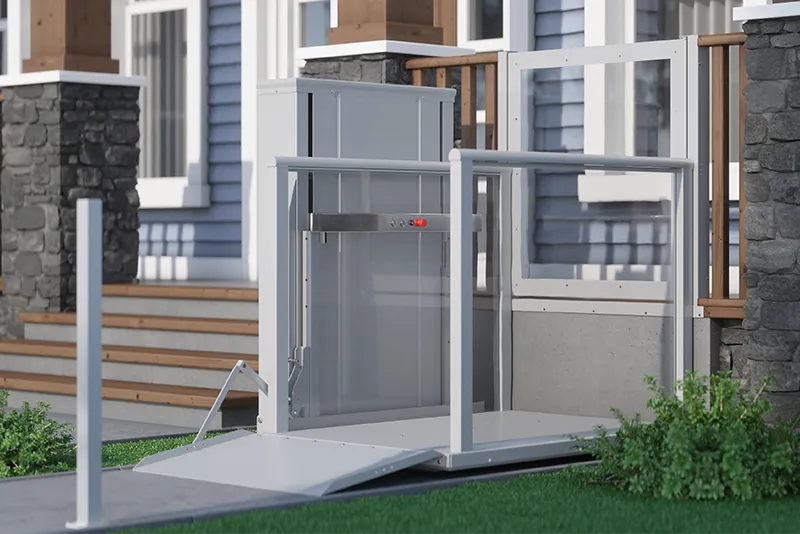
Outdoor elevators for wheelchairs, also called vertical platform lifts (VPLs) or porch lifts, help wheelchair and scooter users access raised entrances, porches and decks. They offer an alternative to ramps when space is limited, or the rise is too steep.
This guide compares leading providers and explains costs, installation requirements, and key features. Check our methodology to learn how we selected our top picks. For indoor options, see our best home elevators guide.
Comparison Table: Best Outdoor Elevators for Wheelchairs
| Provider | Outdoor lift models and types | Weight capacity | Maximum travel | Outdoor and safety features | Best for |
|---|---|---|---|---|---|
| Bruno | 3100 and 3200B residential VPLs | Up to 750 lbs | Up to 14 ft 3 in (3200B series) | Weather-protected controls, safety panel, battery options | Residential porch and deck access |
| Harmar | VPL400-X and Highlander II VPL | 750 lbs | 53 in on VPL400-X; varies by Highlander II model | Gate interlocks, emergency stop, manual lowering | Short rises or higher access with the appropriate model |
| Arrow Lift | Unenclosed, shaftway, enclosed, and hybrid VPLs | Typically 750 lbs; confirm model | Up to 14 ft on listed VPL offering | Weather-resistant options, obstruction sensors, non-skid platform | Custom configurations and commercial or residential access |
| Lifeway Mobility | Outdoor VPLs from multiple manufacturers | Model-dependent | Model-dependent | Product selection, installation, and service | Buyers who want help choosing and installing a lift |
| Savaria | Multi-lift VPL, including enclosed options | 750 lbs | 4 ft standard; 6 ft optional | Weather-resistant finish, obstruction sensing, optional battery backup | Short rises to porches and decks |
Outdoor Elevators for Wheelchairs Reviews
Bruno Home Elevator Review
Customizable designs
|
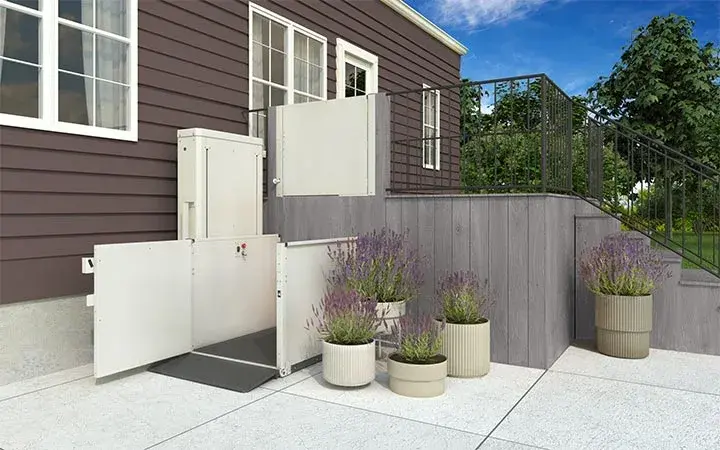
Bruno’s VPL-3100 and VPL-3200B residential vertical platform lifts provide wheelchair and scooter access to porches, decks, garages, and raised entrances. The 3100 series serves shorter rises, while the 3200B series is designed for higher entrances, with models offering different travel heights.
Key Specifications
- Weight capacity: Up to 750 lb
- Maximum travel: Up to 14 ft on the 3200B series, depending on model
- Platform sizes: 36 × 48, 36 × 54, 36 × 60 and 42 × 60 in, depending on configuration
- Outdoor options: Weather-resistant design, integrated safety sensor, low-threshold entry, and optional platform and landing gates
Installation, Warranty, and Service
Bruno’s vertical platform lifts are installed and serviced through authorized dealers. Installation requirements depend on the platform configuration and property layout. Bruno’s published warranty covers parts for one year and major components for two years, with labor covered for the first 30 days after installation.
Pros
- The compact footprint can work where a long wheelchair ramp would take up too much outdoor space.
- Multiple entry configurations accommodate different porch and deck layouts.
- Battery-powered configurations can continue operating during power outages.
Cons
- The 3100 series has less lifting height than the taller 3200B models.
- Platform gates and other accessories may increase the installation cost.
- The taller 3200B models require more vertical transportation clearance and suitable structural support.
For more information, read our full Bruno review.
Harmar Home Elevators Review
Vertical travel up to 14 feet
|
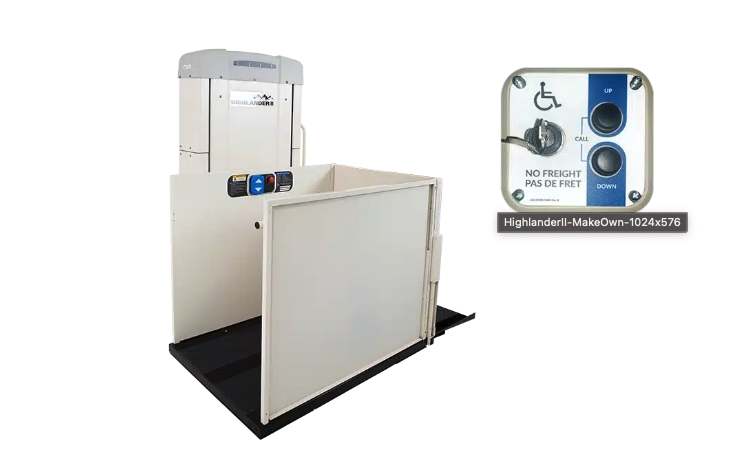
Harmar offers the VPL400-X for shorter rises and the Highlander II range for higher porches, decks, and other entrances. The Highlander II includes residential and commercial configurations, with different travel heights and platform dimensions.
Key Specifications
- Weight capacity: 750 lb
- Maximum travel: 53 in on the VPL400-X; up to 171 in on the Highlander II VPL1400
- Platform sizes: 36 × 48, 36 × 54, 36 × 60, 42 × 54 and 42 × 60 in, depending on model
- Outdoor and safety features: Powder-coated finish, stainless steel hardware, safety interlocks, emergency stop, overspeed brake, and manual lowering tool
Installation, Warranty, and Service
Harmar lifts are installed and serviced through authorized dealers. The VPL400-X has a two-year parts warranty. The Highlander II has a three-year parts warranty and a one-year battery warranty when a battery is included. Installation and service are handled through Harmar’s dealer network.
Pros
- The Highlander II’s range of travel heights accommodates entrances that exceed the VPL400-X’s 53-inch limit.
- Five platform sizes offer flexibility for different wheelchairs and scooters.
- An enclosure kit is available for compatible Highlander II configurations.
Cons
- The VPL400-X is unsuitable for entrances requiring more than 53 inches of travel.
- Battery backup is optional on the Highlander II.
- Taller configurations require more space and may involve more extensive installation work.
For more information, read our full Harmar review.
Arrow Lift Home Elevators Review
Knowledgeable technicians and representatives
|
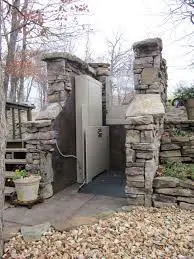
Arrow Lift offers residential elevators in unenclosed, shaftway, and enclosed configurations. These lifts provide access to raised porches, decks, and garage entrances. The company also offers hybrid platform lifts, which have a more elevator-like design.
Key Specifications
- Weight capacity: Typically 750 lb, depending on model
- Maximum travel: Up to 14 ft
- Platform sizes: Vary by model and installation requirements
- Outdoor and safety features: Weather-resistant models, powder-coated steel construction, obstruction detection sensors, grab rail, non-skid platform, emergency stop, and upper limit switch
- Controls: Constant-pressure platform controls and landing call controls
Installation, Warranty, and Service
Arrow Lift provides site consultations, lift design, installation, and maintenance services. Its residential wheelchair lift maintenance plans include scheduled maintenance and safety testing. The Performance Basic plan includes priority repair scheduling and discounts on parts and labor, while the Performance Plus plan covers most system performance issues subject to exclusions.
Pros
- Enclosed, shaftway, and unenclosed configurations suit different property layouts.
- Hybrid designs offer a more elevator-like alternative to an open platform.
- Maintenance plans include safety testing and scheduled servicing.
Cons
- The 14-foot travel limit makes these lifts unsuitable for some full-floor or multi-story outdoor applications.
- Custom configurations can increase installation costs.
- Warranty coverage depends on the lift manufacturer and model.
For more information, read our full Arrow Lift review.
Lifeway Mobility Home Elevators Review
Multiple elevator types & design options
|
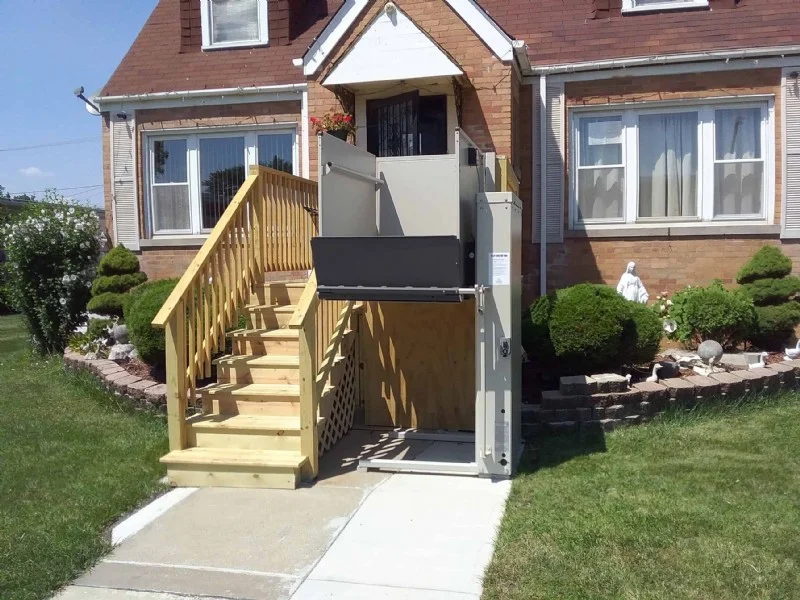
Lifeway Mobility is an accessibility provider and installer rather than a single lift manufacturer. Its outdoor wheelchair lift range includes models from Bruno, Harmar, and Savaria, such as the Bruno 3100 and 3200 series, Harmar Highlander II, Savaria Multilift, and Savaria V-1504.
Key Specifications
- Lift types: Outdoor vertical platform lifts, including residential and commercial models
- Weight capacity: Depends on the selected model; several residential options support up to 750 lb
- Maximum travel: Model-dependent, from short porch rises to taller enclosed lifts
- Platform sizes: Vary by manufacturer and model
- Outdoor and safety features: Depending on the lift, features include weather-resistant finishes, safety gates, interlocks, emergency stops, and manual lowering
Installation, Warranty, and Service
Lifeway Mobility provides home assessments, lift selection, professional installation, and maintenance. Its published wheelchair platform lift guide lists two years of coverage for major components and one year for parts and labor on newly installed lifts. Coverage and service arrangements may differ by product and location.
Pros
- Offers outdoor lifts from several manufacturers through one provider.
- Provides installation and maintenance alongside product selection.
- Its range includes both low-rise residential lifts and taller enclosed options.
Cons
- Product specifications, warranties and available features differ by manufacturer.
- The range doesn’t have one standard price or travel height.
- Service coverage varies by location.
For more information, read our full Lifeway Mobility review.
Savaria Home Elevators Review
Good Value
|
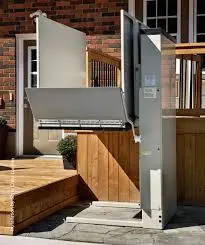
Savaria’s Multilift vertical platform lift is designed for low-rise access to porches, decks, and raised entrances. It is available in unenclosed and factory-enclosed configurations, with several platform sizes and entry arrangements.
Key Specifications
- Weight capacity: 750 lb
- Maximum travel: 48 in standard; up to 72 in with the optional configuration
- Platform sizes: 34 × 48, 34 × 54 and 34 × 60 in standard; 36- and 42-in-wide options are available
- Outdoor and safety features: Powder-coated finish, non-skid platform, automatic access ramp, obstruction sensor, emergency stop, manual lowering device, and optional weather-resistant lock
Installation, Warranty, and Service
The Multilift has a self-supporting tower secured to a concrete pad and requires a suitable electrical connection. The 42-inch-wide platform requires additional tower support. Savaria’s published product brochure lists a 36-month parts warranty.
Pros
- Multiple platform sizes and entry configurations accommodate different property layouts.
- The optional enclosure provides more protection from outdoor conditions.
- Optional travel to 72 inches extends its use beyond the standard 48-inch rise.
Cons
- The standard 48-inch travel height is too short for some raised entrances.
- The 42-inch-wide platform requires additional structural support.
- Installation requires a suitable concrete pad and electrical service.
For more information, read our full Savaria review.
Methodology: How We Chose the Best Outdoor Elevators for Wheelchairs
We reviewed 15 brands offering outdoor wheelchair lifts and selected our top picks based on product specifications, accessibility, safety, and customer support.
We compared:
- Lift types and configurations: Available vertical platform lifts, enclosed and unenclosed designs, platform sizes, and customization options
- Safety and accessibility: Weight capacity, travel height, safety features, and access for wheelchair and scooter users
- Installation and maintenance: Installation requirements, site preparation, maintenance services, and local service availability
- Cost and long-term value: Equipment and installation costs, warranty coverage, ongoing maintenance, and power requirements
- Product quality and reputation: Verified customer reviews, product reliability, and the clarity of company-provided information
We prioritized providers with suitable outdoor lift options, clear product information, useful safety features and reliable installation and service support. We excluded providers that lacked clear product specifications or sufficient information about warranties and service support.
Types of Outdoor Elevators for Wheelchairs
Here are the main types of elevators for outdoor wheelchair access.
Vertical Platform Lifts (VPLs)
VPLs, also called a porch lift, let you stay in your wheelchair or scooter while moving between ground level and a raised entrance. It’s a practical option for reaching a porch, deck, or garage when a long wheelchair ramp won’t fit in your outdoor space.
Most residential VPLs have an open platform with safety gates and controls. Depending on the model, a lift can handle rises of around 4 to 6 feet or reach up to 14 feet for higher entrances.
Enclosed Vertical Lifts
An enclosed vertical platform lift surrounds the platform with walls and gates, giving you a more protected ride to a porch, deck, or raised entrance. The enclosure can help shield you and the lift from rain, wind and other outdoor conditions. Some models also offer glass or acrylic panels and a roof for added weather protection.
The travel height of an enclosure VPL depends on the model. For example, Savaria’s enclosed V-1504 can travel up to 14 feet, subject to applicable code requirements. Enclosed lifts generally require more installation planning than open platforms because they need a suitable base and structural support.
Inclined Platform Lifts
An inclined platform lift carries a person in their wheelchair or scooter along a staircase on a fixed rail. It can provide outdoor access when a ramp or vertical platform lift doesn’t suit the property layout.
The right stair lift depends on the staircase design. Savaria’s Delta travels up to 80 feet on straight stairs, while its Pegasus handles staircases with turns or intermediate landings, with travel up to 164 feet. Check the manufacturer’s specifications to confirm outdoor suitability for your climate and installation.
Cost of an Outdoor Elevator for Wheelchairs
Outdoor wheelchair lifts typically cost $5,000 to $35,000, averaging around $20,000 with installation.
The price depends on the following factors:
- Lift type and specifications: Taller lifts, larger platforms, and enclosed models can cost more than basic porch lifts.
- Installation: Installation typically accounts for 15% to 25% of the total project cost. The amount depends on the complexity of the job.
- Site preparation and electrical work: A concrete pad, structural modifications, or new electrical wiring may add to the cost.
- Permits and inspections: Fees depend on local requirements and whether the installation needs additional approvals.
- Maintenance: Budget for routine servicing and potential repairs to keep the lift operating safely outdoors.
Installation Requirements for Outdoor Wheelchair Elevators
Before installation, the provider should assess your property and confirm the following:
- Site assessment: Measure the rise height and available space at the upper and lower landings.
- Foundation and anchoring: Determine whether the lift needs a level concrete pad, anchoring, or additional structural support.
- Electrical service and drainage: Confirm the required power supply and ensure water drains away from the lift’s base.
- Landings and clearances: Ensure wheelchair users can approach, enter, and exit the lift safely.
Choosing the Right Outdoor Elevator for Wheelchairs
Consider these factors when choosing an outdoor wheelchair lift for your home.
Choose the Right Lift Type
Start by assessing the height you need to reach and the space available around your entrance. A wheelchair ramp needs enough room to meet applicable slope and landing requirements, while a lift may be a better fit when space is limited.
Also consider construction needs, daily convenience, and whether the user can access the entrance independently or needs caregiver assistance.
Check Weight Capacity and Platform Fit
Check the lift’s maximum weight capacity, including the user and their wheelchair or scooter. Compare the platform’s usable dimensions with the mobility device’s full length and width, including footrests or other protruding parts.
Make sure there is enough room to enter, exit, and position the device safely. If a caregiver will assist, check that the platform and entrance layout allow enough room for them too.
Compare Safety Features and Code Compliance
Before buying, ask the installer to confirm that the lift includes the safety protections required for its model and installation. Check these features:
- Safety gates and interlocks: Gates should prevent access to dangerous areas, and interlocks should prevent lift movement when required gates are open or unsecured.
- Obstruction protection: Sensors or other safety devices should stop movement if an obstruction is detected in a protected area.
- Emergency stop: Check how to stop the lift if it malfunctions and whether the control is reachable from the platform.
- Emergency alarm or communication: Ask how to call for help if the lift stops while someone is on it and whether an alarm or communication system is required.
Match Weather Protection to Your Climate
Choose a lift designed for your local weather conditions.
- Coastal areas: Ask about corrosion-resistant materials and protective finishes.
- Snowy or icy areas: Check how the lift handles snow and ice and whether drainage prevents water from freezing.
- Hot or sunny areas: Confirm that materials and components can withstand prolonged sun exposure and heat.
- Wet or humid areas: Look for corrosion protection and effective drainage.
A canopy or enclosure may offer extra protection from rain, snow, and sunlight. Confirm that it is compatible with the lift and suitable for your climate.
Understand Power and Emergency Operation
Check how the lift operates during a power outage and how to lower it safely if it stops.
- Battery-powered operation: Ask how often the battery needs charging and how long it lasts between charges.
- Battery backup: Confirm how many trips the backup battery supports during an outage.
- Manual emergency lowering: Ask who can operate the mechanism and how to lower the platform safely.
If the lift is your main entrance, confirm that you can reach ground level during a power failure. Ask what happens if the battery runs out or the lift stops between levels, and how to call for help.
Review Warranty and Local Service
Before buying, check how long the warranty lasts, whether it covers parts and labor and whether it excludes corrosion, water damage, or other weather-related wear. Ask what routine maintenance the manufacturer recommends, how often a technician should service the lift and whether the manufacturer recommends or requires periodic inspections.
Confirm that a qualified local technician can service your model and that replacement parts are available. Ask what a maintenance contract includes, such as checking gates, interlocks, controls, and corrosion protection and which repairs cost extra.
Permits and Safety Standards for Outdoor Wheelchair Lifts
Depending on your location and property, outdoor wheelchair lift installation may require a building permit and a final inspection to verify compliance with applicable requirements. Ask your installer who will handle these approvals.
Safety standards also depend on the lift and how the property is used. ASME A18.1 covers platform lifts and stairway chairlifts, while ADA accessibility requirements may apply to businesses and other covered facilities, not automatically to every private home. Before purchasing, ask the installer which codes apply to your lift and confirm who will provide the required compliance documentation.
Frequently Asked Questions (FAQs) about Outdoor Elevators for Wheelchairs
Original Medicare generally doesn’t cover outdoor wheelchair lifts because they are home modifications rather than covered durable medical equipment. Some Medicare Advantage plans may offer additional benefits, so check your plan before assuming you must pay the full cost.
Yes, other ways to pay for a wheelchair lift may include Medicaid home- and community-based services waivers, state assistive technology programs, home modification grants and veterans’ housing benefits. Eligibility and coverage vary by program and location. Dealer financing can also spread payments over time, but check interest rates, fees, and repayment terms.
Installing an outdoor wheelchair lift can take different amounts of time depending on the model, site conditions, and required approvals. A straightforward installation may take less time than a project requiring a concrete pad, structural changes, or electrical work. Ask the provider for an estimated schedule that includes site preparation, installation, and any required inspections.
Concluding Thoughts on Outdoor Elevators for Wheelchairs
Choosing an outdoor wheelchair lift is a long-term investment in home accessibility. The right lift can provide a practical accessibility solution based on your entrance, mobility needs, and budget.
Compare the providers in our guide and request a home assessment to determine which models suit your property. Get an itemized quote before committing so you understand the full cost and any work required.