
Retirement Living takes an unbiased approach to our reviews. We may earn money when you click a partner link. Learn More
How to Buy a Stair Lift
Buying a new stair lift is as simple as finding a trusted manufacturer, reviewing the best models for your home, considering financing options, and investing in professional installation.


Updated:
At a glance:
- Different model types, including indoor, outdoor, straight, and curved stair lifts, all have unique costs and installation requirements. Consider the right stair lift for your home before you make a purchase.
- Reliable stair lift companies can guide you through most of the process, including choosing the best stair lift type, measurements, installation, and even financing.
- If you have budget constraints, local dealers and nonprofits can help senior homeowners access and install a cost-effective used stair lift.
Types of Stair Lifts: How To Choose a Stair Lift Model
Stair lifts aren’t one-size-fits-all, with different types designed to address specific staircases, locations, and mobility needs. Some companies also specialize in certain types, so if you can identify the best one for your situation, you can simplify your research.
For example, if you have a straight staircase, a traditional indoor stair lift with a straight rail is the most cost-effective installation. On the other hand, curved staircases will require a more expensive, customized rail.
From straight and curved models to stair chair lifts that include a built-in platform for wheelchairs, here are some of the most common stair lift types:
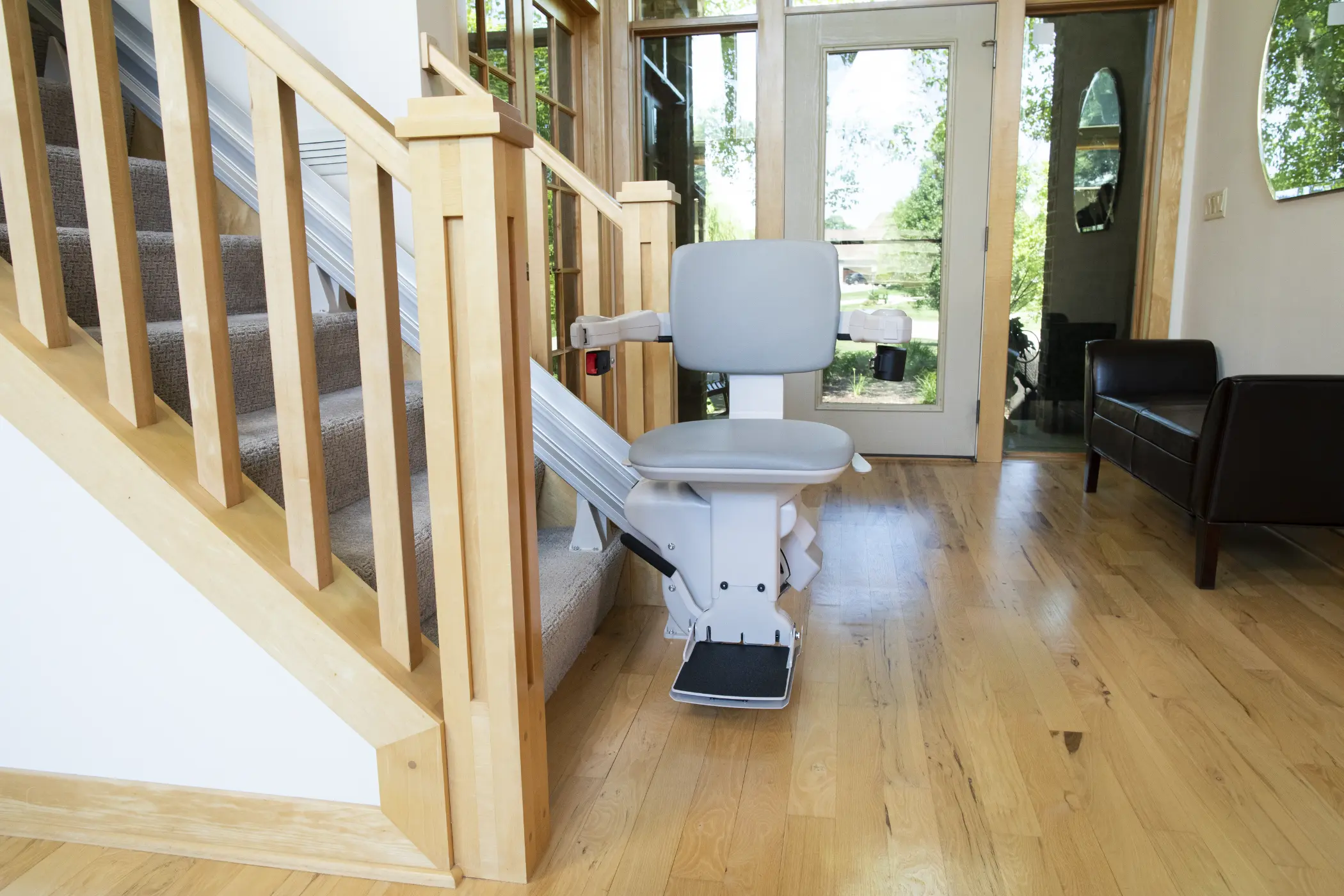
- Straight stair lifts: A battery-powered, motorized chair that moves on a railing anchored to the stair treads. When you have a straight staircase, these lifts are the most affordable option and can usually be cut to size and installed in less than a day. For an extra cost, the chair can also be fitted with additional safety features such as power-swivel seats, armrests, footrests, and retractable seat belts.
- Curved stair lifts: Work similarly to a straight lift, but with a custom-built railing designed to turn tight corners or navigate spiral staircases. Because they require personalized measurements, these lifts typically cost more and take longer to manufacture and install.
- Chair lifts: These heavier-duty stair lifts replace the motorized chair with a wider lift platform, allowing seniors with wheelchairs, scooters, and walkers to bring their mobility aids with them as they travel. They’re more likely to have a high weight capacity.
- Outdoor stair lifts: Can be any of the three models mentioned above, but are weatherproofed specifically for outdoor use. Vertical platform lifts (VPLs) are a common example and can be designed to address porches, decks, and basements.
Stair Lift Costs by Type
| Lift Type | Average Cost |
|---|---|
| Straight Stair Lift | $2,500 – $9,000 |
| Curved Stair Lift | $10,000 – $14,000 |
| Chair Lift (Wheelchair Lift) | $3,500 – $15,000 |
| Outdoor Stair Lift | $5,000 – $10,000 |
| Used Stair Lift | $1,000 – $10,000 |
How To Purchase a New Stair Lift: Step by Step
1. Identify Your Mobility Challenges
Before you start calling companies, take some time to assess your specific mobility needs and home layout. Do you have trouble transitioning between sitting and standing? Or rely on a wheelchair? Traditional straight stair lifts are the most affordable, but chair lifts are more effective when you regularly rely on mobility aids. You should also consider that your mobility issues might worsen over time.
Additionally, it’s important to take a closer look at your staircase. Note whether it is straight or curved, how many steps it has, and how wide it is. Having this information ready before you speak with a company will make the process faster and help you ask the right questions.
2. Call a Reputable Stair Lift Company
Once you’ve identified your needs, it’s time to research the companies that serve your area. Reputable manufacturers will have strong customer reviews, transparent pricing, and experience installing the type of lift you need. For example, Bruno, Savaria, Lifeway Mobility, Arrow Lift, Harmar, Stannah, and Mobility123 are all well-known options. Local dealers may also provide competitive pricing and faster service.
When you call, the company will walk you through their available models, explain extra safety features you might want, and answer any questions you have. Always wait to make a purchase until after the company assesses your home.
3. Schedule an In-Home Consultation
Reliable stair lift companies offer free in-home consultations, where a trained technician measures your staircase and assesses the surrounding structure to determine the best stair lift model. This is also a great time to discuss which specific features, swivel seats, remote controls, folding rail, etc., will help you address your mobility challenges. After the consultation, the company should provide you with a detailed written quote.
4. Consider Financing Options
New stair lifts cost anywhere from $2,500 to $15,000+, so it’s important to explore financial resources before you purchase one. Luckily, certain healthcare programs and nonprofits can help you get a lift for free.
Original Medicare (parts A and B) doesn’t usually cover stair lifts, but check whether you qualify for assistance through Medicare Advantage, Medicaid, or the Department of Veterans Affairs (VA). Many of these programs cover stair lifts as supplemental benefits or home safety modifications, sparing you from upfront or monthly payments.
If you’re a homeowner, you might be able to take advantage of a home equity loan or line of credit. Many stair lift companies also offer in-house financing plans with monthly payments. However, we recommend reaching out to the programs mentioned above first to avoid going into debt.
5. Book Professional Installation Services
After selecting your model and considering your financing options, the last step is scheduling professional installation. Most likely, the company you’re working with already factored the installation cost into their quoted price, and one of their certified technicians will handle the process. Stair lifts are fairly quick and easy to install, being anchored to the stair treads with sturdy brackets and then connected to a power source.
After installation, the technician should walk you and any caregivers through how to operate the lift safely. This includes how to use the remote control, engage the safety belt, and troubleshoot basic issues. If your lift comes with a warranty, make sure you receive a written confirmation and know who to contact for maintenance or repairs down the line.
Used Stair Lift Buying Guide
When you’re looking to save some money, used stair lifts are a great option. Buying one is often a similar process, but comes with a few caveats:
1. Contact Local Dealer or Nonprofit
When considering used lifts, the safest option is to buy from dealers authorized to sell certified refurbished models. For example, Bruno, Stannah, and other major brands sometimes offer refurbished units directly. These lifts have been professionally inspected, cleaned, and restored to working condition.
Local nonprofits are another great option. Sometimes your Area Agencies on Aging can help you access a used stair lift at little to no cost. Other organizations specialize in refurbishing and redistributing home medical equipment to seniors in need. It just takes a little research into the resources available in your area.
Avoid purchasing from online marketplaces like Facebook Marketplace or Craigslist unless you can verify the seller’s credibility, confirm the lift’s service history, and have a professional inspect it before making the investment.
2. Verify Condition & Compatibility With Your Home
Unlike a new stair lift that’s manufactured to fit your exact staircase, a used stair lift may not be a perfect fit. Rails can always be cut to size, but before you agree to a purchase, it’s important to confirm that the lift is compatible with your staircase dimensions. Given the custom nature of curved lifts, this also means that it’s easier to find used straight stair lifts than it is to find curved ones.
Overall, if you’re buying from a dealer, request documentation showing that the unit has been tested and serviced. If you’re buying privately, hire a certified technician to evaluate the lift.
3. Review Pricing and Coverage
Used stair lifts typically cost between $1,000 and $10,000, depending on the model, condition, and whether installation is included. This can be a meaningful discount compared to new units, but you also need to factor in any additional costs for parts, repairs, or modifications.
One important trade-off to be aware of is warranty coverage. One-year, three-year, and even lifetime warranties are all common for new lifts but rare for used options. So, when buying a refurbished unit through a dealer, ask whether any limited warranty is included.
Aside from these tips, most of the same financing options remain available to you if you choose a used stair lift.
4. Schedule Installation Services
Even if you’re purchasing a used stair lift, professional installation is strongly recommended. Improper installation can create serious safety risks and will void most warranties.
First, try identifying the stair lift model/brand so you can contact the original manufacturer. Some companies won’t install equipment they didn’t sell, but it’s worth asking. Independent stair lift technicians are also a viable option; just make sure you ask for a full walkthrough of the unit’s operation and safety features after installation.
The Bottom Line: Buying a Stair Lift Is Simple with the Right Company and Preparation
Buying a new stair lift is as simple as finding a trusted manufacturer, reviewing the best installation type for your home, considering financing options, and having a certified technician install it. You can also access affordable used lifts through local dealers and nonprofits, though you may need to contact an independent installer.
Overall, as long as you choose a reliable stair lift company, they can help guide you through most of the process. Having the knowledge yourself just helps ensure that you get a good deal.
Frequently Asked Questions (FAQs) About Buying a Stair Lift
Including parts and installation, a new stair lift costs an average of $8,250 ($2,500 to $14,000). Straight lifts are generally on the lower end of the price range, while custom-built curved lifts are more expensive.
Many stair lift companies offer warranties, including one-year, three-year, five-year, and even lifetime warranties. Coverage for parts and components is common, while you should double-check if labor or batteries are covered.
Some of the best stair lift companies include Bruno, Savaria, Lifeway Mobility, Arrow Lift, Harmar, Stannah, and Mobility123. These brands are all well-reviewed, offer warranties, and provide a variety of stair lift types.
No, Original Medicare does not usually cover the cost of stair lift installation. However, you may be able to cover the cost through other healthcare programs such as Medicare Advantage, Medicaid, and Veterans Benefits.
Most straight stair lifts don’t require much customization, other than cutting the rail to size before installation. Curved rails, on the other hand, need to be custom-built to your staircase.
Help us improve our cost data! Email your latest stair lift quote to [email protected]. Rest assured, your personal details will remain completely confidential.