
Retirement Living takes an unbiased approach to our reviews. We may earn money when you click a partner link. Learn More
How to Install a Wheelchair Lift
Installing a wheelchair lift involves choosing the right lift type, preparing the installation site, completing electrical work, securing components, and testing safety features to ensure proper operation.


Updated:
At a glance:
- Installing a wheelchair lift typically involves planning, permits, site preparation, electrical work, assembly, testing, and final inspection.
- Most residential wheelchair lifts require a dedicated 110-volt electrical circuit, while some commercial models have different power requirements.
- Regular inspections and preventive maintenance help extend lift life, reduce repairs, and keep manufacturer warranties valid.
Wheelchair Lift Installation Process
Installing a lift goes beyond just assembling equipment. Before commissioning the lift for use, it is necessary to ensure adequate structural integrity, prepare the installation site, carry out electrical wiring, assemble the lift, and calibrate the safety system, among other steps. While installing the lift yourself may seem easy for some homeowners, it is recommended to let professionals do the job, as improper installation can pose safety risks and void the manufacturer’s warranty.
The installation time frame will vary depending on the type of lift and the condition of the installation site. Once the site is ready, installation of most vertical platform lifts can take one day to complete. Others, such as inclined platform lifts and those requiring concrete work and electrical wiring, will take several days to complete.
Confirm the Lift Type and Travel Height
The first step is identifying the type of wheelchair lift that best fits the home and the user’s mobility needs. Installation varies depending on whether you’re installing a vertical platform lift (VPL) or an inclined platform lift (IPL).
| Lift Type | Best For | Typical Travel | Installation Considerations |
|---|---|---|---|
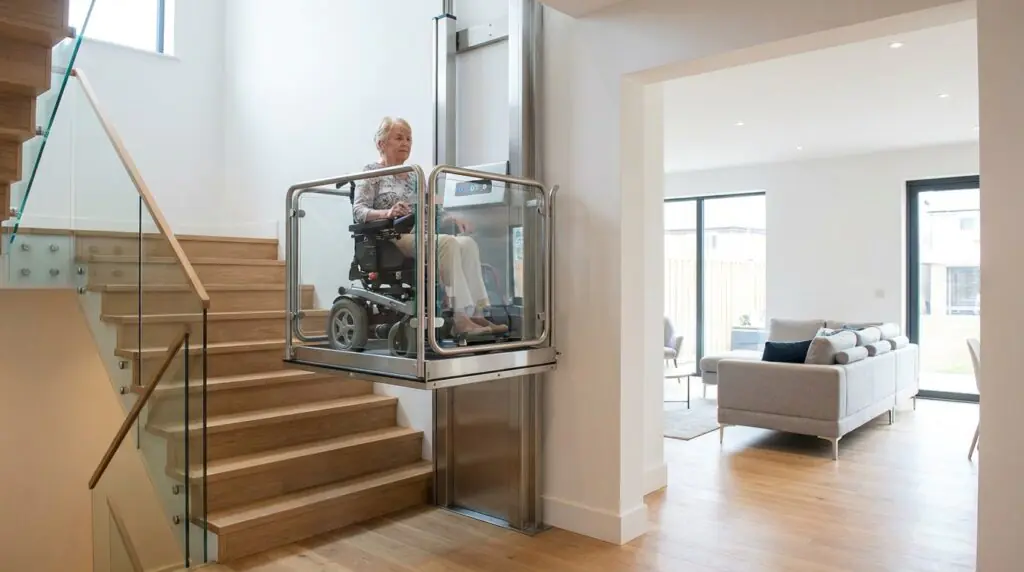
| Vertical Platform Lift (VPL) | Porches, decks, garages, and short stairways | 4–14 feet | Requires a level concrete pad or other stable foundation and adequate landing space. |
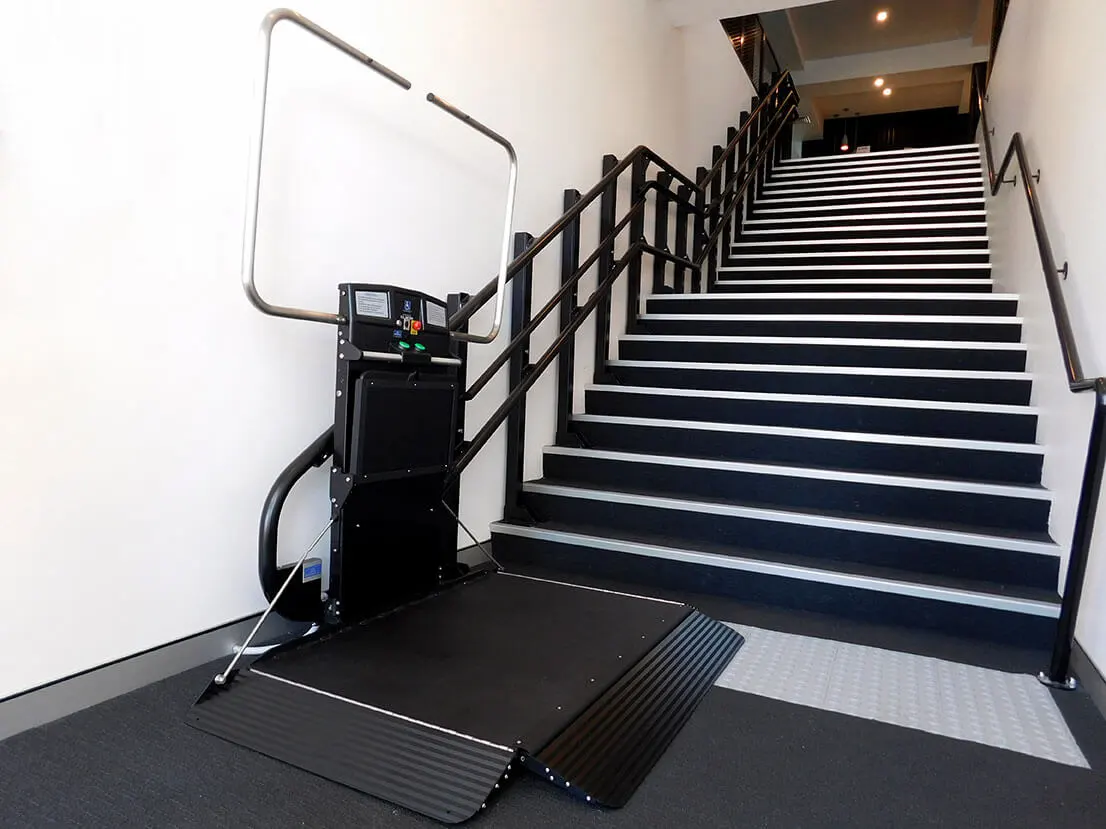
| Inclined Platform Lift (IPL) | Existing stairways | Follows the length of the staircase | Requires rails mounted to the stairs. Curved staircases usually need custom rails and longer installation times. |
Once you’ve selected the lift type, the installer takes detailed measurements to ensure the system fits the available space. During this visit, they’ll typically measure:
- Travel height
- Upper and lower landing dimensions
- Platform size needed for the wheelchair or scooter
- Available clearance around the lift
- Weight capacity requirements
Prepare the Site and Base
Preparing the installation site is usually the most time-consuming part of the project. However, even the best-quality wheelchair lift cannot operate safely or properly without adequate foundation preparation and sufficient structural support or supported walls.
Outdoor Installations
Outdoor vertical platform lifts typically require:
- A reinforced, level concrete pad (often around 5 by 5 feet, depending on the manufacturer)
- Adequate drainage around the foundation
- Clearance for the lift tower and platform
- Time for the concrete to fully cure before installation
Indoor Installations
Indoor installations may require:
- Reinforcing floor framing and digging out a pit
- Modifying walls or structural supports
- Verifying adequate landing space on each level
- Removing obstacles that interfere with platform travel
Proper site preparation, like a lift’s upper landing, helps ensure the lift operates smoothly and reduces the likelihood of future repairs.
Obtain Permits Before Installation
Many wheelchair lift installations require permits before work begins. Requirements vary by municipality and depend on the type of lift and where it’s being installed. Common permits include:
- Building permit: Required for structural work or installing the lift.
- Electrical permit: Needed when installing a dedicated electrical circuit or new wiring.
- Commercial permits: Additional approvals may be required for ADA compliance in commercial buildings.
Run Electrical Service
Most residential wheelchair lifts require a dedicated 110-volt electrical circuit to power the motor and control system. A dedicated circuit helps ensure consistent performance and reduces the risk of overloaded breakers.
Before installation, a licensed electrician typically installs:
- A dedicated electrical circuit
- An outlet that meets manufacturer specifications
- A disconnect switch for maintenance
- Battery backup (if included with the lift)
Some larger residential and commercial lifts require 220-volt service, so installers always follow the manufacturer’s electrical specifications outlined in the owner’s manual. Completing the electrical work before installation helps avoid delays once the lift arrives.
Assemble and Anchor the Lift
After the site is prepared and electrical work is complete, technicians assemble the wheelchair lift according to the manufacturer’s instructions.
Vertical Platform Lift (VPL)
Installers typically:
- Secure the lift tower to the concrete foundation.
- Install the drive system and guide rails.
- Attach the platform.
- Connect the electrical components.
- Verify the tower is level.
Inclined Platform Lift (IPL)
Installers generally:
- Mount the rail system to the staircase.
- Install the platform.
- Attach the motor and drive system.
- Connect the controls.
- Test alignment along the full rail.
Install Gates and Landing Doors
Safety gates and doors are crucial parts of any wheelchair lift system installation. They prevent people from falling while being lifted and ensure passengers remain protected throughout the lifting process.
In most cases, vertical platform lifts installed at home have gates at the bottom and upper landing. Gates are always locked until the platform reaches its correct position at that landing. Mechanical interlocks prevent the lift from starting unless all the gates are closed.
Automatic or power-operated doors are required due to limited installation space or because the lift serves multiple landings. The correct placement of doors is tested before the system is used.
Test Safety Features and Operation
Once the assembly is complete, the installers thoroughly test the lift to ensure it operates safely under normal conditions. Also, most installations require a shaftway, an enclosed vertical space housing the lift platform and moving components, which provides added safety, stability, and protection during operation.
A typical post-installation inspection includes testing the:
- Emergency stop button
- Obstruction sensors
- Platform leveling system
- Gate and door interlocks
- Emergency lowering function
- Battery backup
- Call/send controls
- Weight capacity using simulated loads
Most installers even run load tests on the lifts with simulated loads to confirm that it safely carries the intended weight.
Before they leave the house, the technician will show the homeowner how to use the lift safely.
Schedule Inspection and Final Approval
The final step involves scheduling inspections, if necessary, from the local building authority.
During the inspection, the officials ensure that the wheelchair lift complies with building codes, electrical specifications, and the manufacturer’s installation instructions. If all requirements are met during inspection, the permit is approved, and the lift is placed into normal use.
Homeowners should keep copies of all inspection details, warranty details, and maintenance reports for future service appointments. Also, many manufacturers recommend an annual inspection to detect wear.
Wheelchair Lift Electrical and Code Needs
Before using a wheelchair lift, ensure it complies with the electrical, building, and accessibility standards. Although specific standards may differ from one lift to another or from one building code to another, a typical residential lift is expected to have a separate electrical supply, safety interlocks, and properly installed gates and doors. Working with a licensed installer and electrician helps ensure the lift complies with local regulations and manufacturer specifications.
110-Volt Power and Disconnect
Most residential lifts operate on a dedicated 110-volt electrical circuit. Some larger commercial lifts will require a 220-volt electrical circuit. A dedicated electrical circuit will ensure that the lift is not operating on the same circuit as other household appliances.
Other requirements include having a disconnect switch at the lift location, as required by many building accessibility codes. This will enable the service technician to disconnect the power supply during repairs safely. Outdoor installations may also require weatherproof electrical components and ground-fault circuit-interrupter (GFCI) protection, depending on local electrical codes.
Electrical requirements differ between manufacturers. Homeowners should never assume that their current electrical outlet will work since different manufacturers have different requirements.
Phone Line and Emergency Communication
An emergency communications system is needed for some wheelchair lifts, especially those that operate through the hoistway or serve more than one floor. In cases of emergency, such as a power outage or a mechanical problem, the communication system will help a person trapped in the lift contact someone to assist them.
Traditional landline telephone services were used in older wheelchair lifts, but now many manufacturers provide a cell phone communications system that does not need a separate telephone line. This type of communication system automatically connects with the emergency contact center as soon as the emergency button is pressed.
However, not all home wheelchair lifts need an emergency communication system.
Landing Doors and Gate Requirements
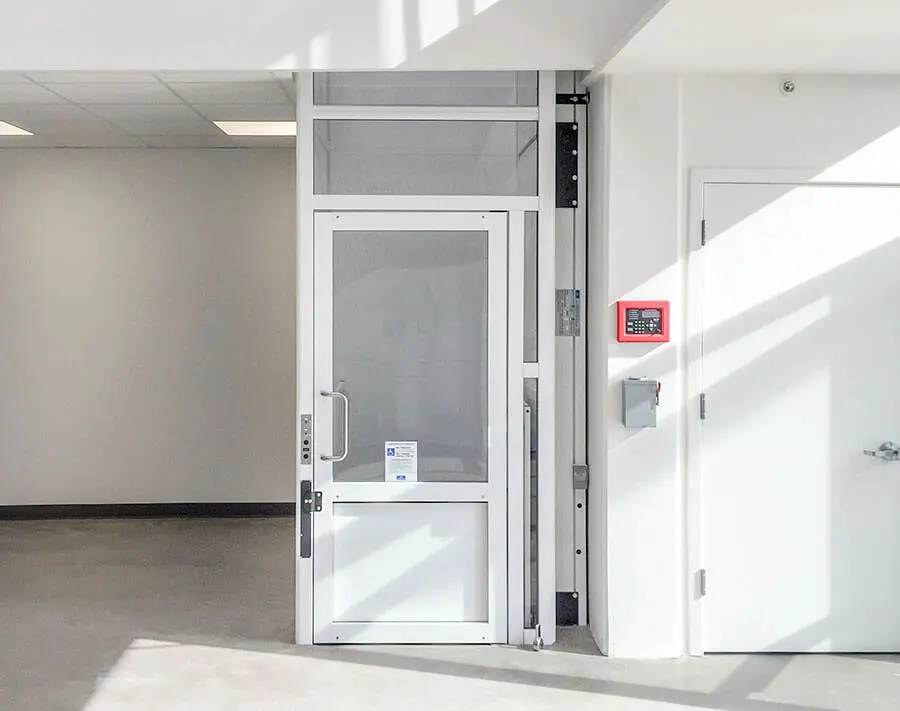
The landing gate and door are important safety features that prevent falls when the lift is in operation. Generally, all wheelchair lifts that rise more than 23 inches above the floor have a gate or landing door that should always be closed unless the lift is in use.
Most gates usually have the following:
- Interlock mechanisms for preventing the movement of the lift when the gate is opened
- Self-closing hinges
- Bottom panel for avoiding feet and mobility aids from going beyond the platform
- Flange or flush threshold to reduce any tripping hazard
Proper alignment of the gate is equally as important as the lift itself. In some cases, even if the gate is not aligned properly, the lift may not function at all.
When Power-Operated Doors Are Required
For some installations, automatic doors or power-operated doors could be beneficial. As most home wheelchair lifts use manual gates, automatic doors would offer improved accessibility for individuals with limited mobility, upper-body strength, or dexterity.
Automatic doors would be required or suggested under the following conditions:
- The lift serves more than one landing.
- There is insufficient space to maneuver around the lift platform.
- There is a need for 90-degree entry or exit to the lift.
- There are requirements for commercial accessibility.
- Individuals are unable to operate manual gates safely.
Automatic doors make entering and exiting the lift less taxing by reducing the necessary force for these operations.
Door functions need to be checked before putting the lift into use to ensure the doors open, close, and lock properly during each trip.
Wheelchair Lift Testing and Maintenance
Installing a wheelchair lift is only the beginning. Regular inspections and preventive maintenance help keep the lift operating safely while reducing the likelihood of unexpected repairs. Most manufacturers recommend annual professional service, although outdoor lifts and high-use systems may require more frequent inspections.
Routine maintenance also helps preserve manufacturer warranties, as many companies require documented service to maintain coverage.
Post-Installation Testing
Several tests have to be conducted by technicians before installing the lift. Some of the tests performed during the final check include:
- Platform level at each landing
- Starting and stopping smoothly
- Emergency stop button test
- Obstruction detection sensors underneath the platform
- Interlocking gates and doors
- Emergency lowering mechanism
- Operation of battery back-up system
- Load test
If any of the components fail the test, the technicians make the necessary modifications before putting the lift into service. Lift users must be trained to use the device effectively.
Routine Maintenance
The wheelchair lift has many motors, screw drives, and moving parts that require regular maintenance to ensure proper functioning.
Regular maintenance includes:
- Inspection of gates, doors, and safety devices
- Lubrication of rails, hinges, and moving parts as per manufacturer’s recommendations
- Hydraulic fluid level check in hydraulic units
- Tightening of mounting bolts and other fasteners
- Emergency button testing and battery backup system checkup
- Cleaning of dirt, debris, and fallen leaves from platform and guide rails
- Inspection of electrical wires for any damage
- Annual inspection by an authorized technician
Homeowners should not use heavy grease or other lubricants unless recommended by the manufacturer, as they can attract dirt and accelerate wear.
Seasonal Care for Outdoor Lifts
Outdoor lifts require more maintenance because they are exposed to changing weather conditions year-round.
In the winter, it is necessary to remove snow and ice from the platform before operating the lift. The accumulation of ice in the vicinity of the lift’s base, gate hinges, or drive will make operating the lift difficult and place extra stress on the motor.
In the case of lifts situated in salty coastal air, rust can form more quickly. Regularly washing the lift with water and checking for damaged paint on painted elements may extend the lift’s lifespan.
It is also essential to ensure that drainage areas are not clogged by accumulated water after the rains.
Warranty Coverage and Maintenance Plans
Most wheelchair lift manufacturers offer warranties on major components, such as the structure and mechanical parts, though these vary by model. Warranties usually cover:
- Motors and drivetrain
- Structure
- Electrical parts
- Control systems installed by the factory
In addition, many approved dealers offer labor warranties covering any installation problems within the first year.
Some owners may want to consider buying a prepaid maintenance contract that includes yearly inspections, lubrication, tuning, and fast-track service. While optional, service contracts might help identify potential problems that could lead to expensive repairs in the future.
Even if you have a warranty, it’s best to stick to your manufacturer’s recommended maintenance plan to extend the life of your wheelchair lift.
Bottom Line: Installing a Wheelchair Lift Safely and Correctly
The process of installing a wheelchair lift entails many considerations, such as site preparation, electrical considerations, and assembly. No matter whether you choose to install vertical or inclined platform lifts, collaborating with a skilled installer is an important step that helps avoid expensive errors and provides calibration needed for the long-term usage of the lift.
While the installation process may vary depending on the lift type, location, and accessibility requirements, maintenance and regular inspections are key to keeping your wheelchair lift safe and durable for many years.
Frequently Asked Questions (FAQs) About How to Install a Wheelchair Lift
The cost of installing a wheelchair lift at the residence is between $9,000 and $20,000 for a vertical platform lift. The installation cost of a more complex inclined platform lift is higher, ranging from $12,000 to $35,000 or more, especially when structural modifications are required.
No, you shouldn’t install a wheelchair lift yourself. Most manufacturers require their lifts to be professionally installed because installations must comply with specific building standards and safety regulations.
No, Original Medicare will not cover the cost of a wheelchair lift, as it is considered a home modification rather than durable medical equipment (DME). Certain Medicare Advantage plans, Medicaid waiver plans, VA programs, and state aid programs may cover part of the costs for eligible individuals.
Residential wheelchair lifts can generally move distances of 4 to 14 feet. Travel distances for commercial lifts will depend on the number of landings and other accessibility needs.
Residential wheelchair lifts usually have a weight capacity between 600 and 750 pounds. Commercial models may have greater weight capacity; however, the weight limit for any lift should comply with the manufacturer’s recommendations.
Help us improve our cost data! Email your latest wheelchair lift quote to [email protected]. Rest assured, your personal details will remain completely confidential.