
Retirement Living takes an unbiased approach to our reviews. We may earn money when you click a partner link. Learn More
Pros and Cons of Wheelchair Lifts
If you can manage installation and ongoing expenses, home modifications like wheelchair lifts are a great way for wheelchair, power chair, walker, and scooter users to address mobility issues at home.


Updated:
AT A GLANCE:
- Wheelchair lifts have a higher weight capacity than regular stairlifts, improving safety and independence for wheelchair users, but also generally have higher upfront costs and ongoing maintenance needs.
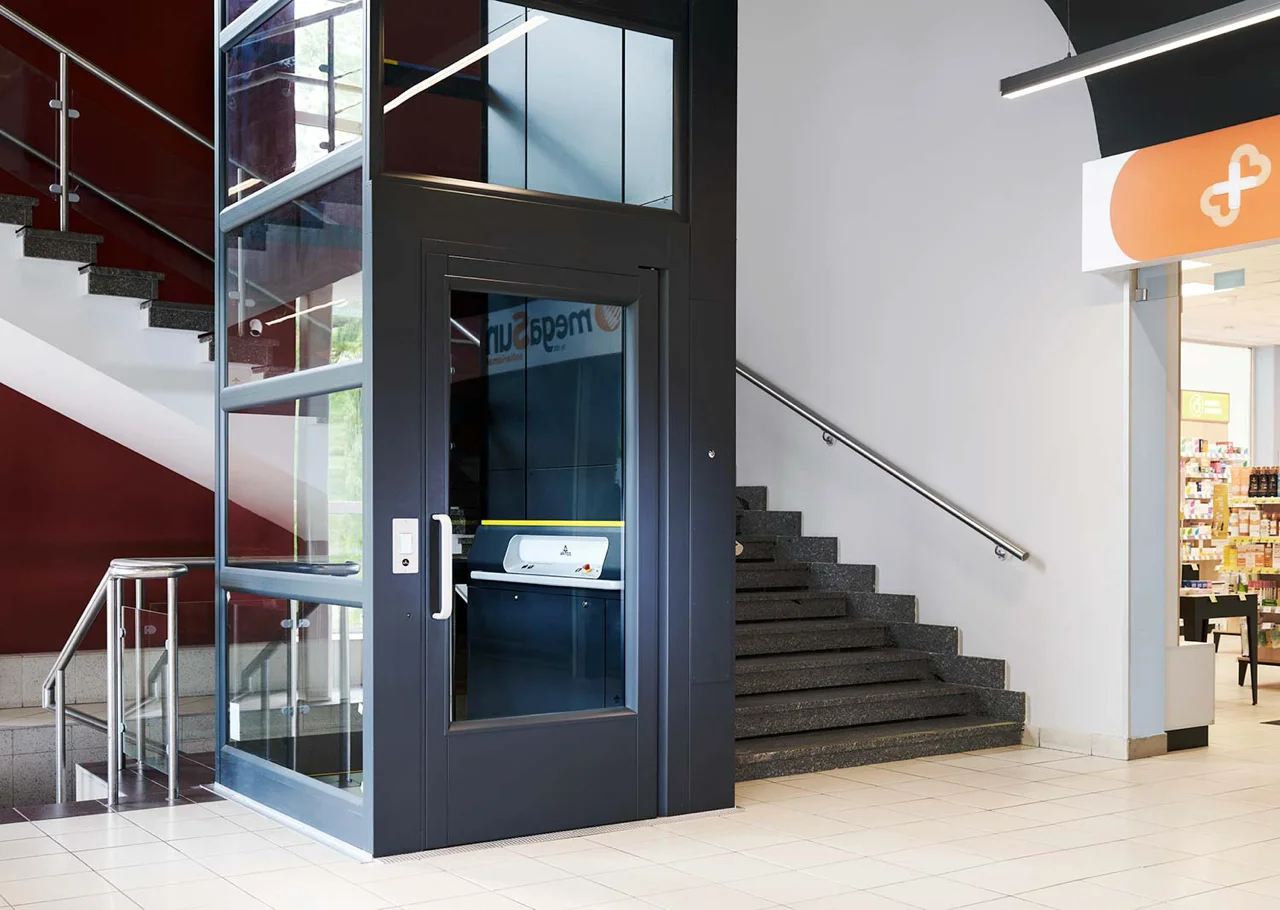
- Choosing the right type of lift depends on the home’s layout, budget, and staircase compatibility. Inclined platform lifts (IPLs) use a track to travel along the stairs, while vertical platform lifts (VPLs) work similarly to a shaftless residential elevator.
- Total cost of wheelchair lift ownership includes not just the purchase price but also installation, permits, and long-term upkeep.
When you rely on a mobility aid full-time, aging in place safely becomes even more challenging. Luckily, there are accessibility products that help you navigate between floors, specifically designed with large platform sizes and additional safety features that accommodate wheelchair users. These options range from portable wheelchair lifts to permanent inclined platform lift (IPL) or vertical platform lift (VPL) installations.
Of course, from costs to ease of use, every option has pros and cons. Read on to see if the pros outweigh the cons for the new installation you’re considering.
Wheelchair Lift Pros and Cons Outlined
| Factor | Pros | Cons |
|---|---|---|
| Safety | Eliminating the need for a transfer reduces fall risk, with most models including safety rails, barriers, sensors, a battery backup for power outages, and emergency stop controls. | Obstructions and electrical issues can cause the lift to malfunction, and unenclosed platforms can leave riders more exposed than a residential elevator. |
| Independence | Easy-to-use controls allow most seniors to move between floors without caregiver assistance. | Users with severe cognitive or physical impairments may not be able to operate the lift independently. |
| Space | Much more compact than a wheelchair ramp or home elevator that requires a separate machine room, with VPLs having a minimum platform size of 48 inches L x 36 inches W and IPLs using the existing staircase. | IPLs can block the staircase for other household members when parked or in use. VPLs may demand structural modifications. |
| Cost | The average cost of a wheelchair lift is $14,500, which is half that of the average starting cost for home elevators (30,000). Financial assistance is available. | Higher upfront cost than ramps and standard stairlifts ($8,450). Original Medicare generally doesn’t cover wheelchair lift expenses. |
| Installation | Most models, especially portable and vehicle wheelchair lifts, require no structural changes to the home. Installation only takes a few days or weeks, compared to several months for a home elevator. | Permanent lift installations may require permits, electrical work, structural reinforcement, or a concrete pad. |
| Maintenance | Quality units are durable with routine care. Many manufacturers and dealers offer service plans and warranties. | Requires regular professional servicing. Mechanical or electrical failures can leave the user without access to another floor until repairs are made. |
Quick takeaway: Wheelchair lifts are one of the best, cheapest options for mobility aid users who have the ability to operate the controls and manage upfront and ongoing expenses. That said, home elevators might be the better option for seniors with larger budgets, while ramps are workable when you have a limited budget. Those who can transfer in and out of a chair safely might want to consider a traditional stairlift.
Understanding Wheelchair Lift Types For Homes
The best wheelchair lift for your home depends on where you need it installed, the number of floors, how much space you have, and your personal mobility aid. Our table compares your options:
| Lift type | Best for | Key limitations | Typical location |
|---|---|---|---|
| Vertical platform lift (VPL) | Homes with space adjacent to the stairs and seniors who want fast, direct travel to the next floor (up to 14 feet). | May require structural changes (a shaft, pit, or reinforcement) and has a limited travel distance. | Between floors and beside an existing staircase. |
| Inclined platform lift (IPL) | Homes with a staircase that’s wide enough to accommodate the track and platform. | Limits stair access for other household members, and curved or multi-landing staircases might require expensive custom designs. | Fixed to the existing staircase. |
| Porch lift | Short rises at front or back entries, where a ramp would take up too much yard space. | Might need a concrete pad and more regular upkeep to withstand outdoor conditions. Usually can’t rise more than 6 feet. | Raised outdoor entry points (porches, decks, etc.) |
| Garage lift | Raised garage entryways or garage-to-basement access, allowing users to safely exit wheelchair-accessible vans and enter the home. | Garage layouts can conflict with required platform clearance. Vehicles and stored items can interfere with operation. | Garage entryways or basement access points |
All of these solutions work well for manual wheelchair users, but seniors with larger, heavier power chairs or scooters need to make sure that the platform is both strong enough to lift them and provides enough room to turn safely. We always recommend comparing each model’s platform dimensions and weight ratings to your specific mobility aid, plus your own weight, before making a purchase.
Wheelchair Lift Costs and Ongoing Maintenance
The average wheelchair lift costs about $14,500, ranging from $4,000 for simple vehicle attachments to over $25,000 for a fully enclosed vertical wheelchair lift. However, your personal quote will ultimately depend on lift type, additional safety features and whether structural changes are needed. Ongoing maintenance also adds to the overall cost of ownership.
What Impacts Wheelchair Lift Price?
- Lift type: Portable lifts are more affordable (over three times less expensive) than enclosed VPLs or IPLs built around curved staircases.
- Travel distance: Lifts that need to travel higher or stop at multiple landings require more materials and installation work, making them more expensive.
- Indoor vs. outdoor use: Outdoor models usually cost more because they need special weather-resistant materials and more frequent maintenance.
- Platform size and weight capacity: Wider platforms and higher capacities use more material and need stronger drive systems, increasing overall costs.
- Added features: Powered gates and automatic controls add electrical components and wiring. Battery backups and folding seats add to the price as well.
Installation and Permit Cost Factors
In most cases, installation accounts for 15% to 25% of the total project cost. Some dealers include this cost as part of your quoted price, but others bill it separately, so it’s important to get an itemized quote for proper comparison.
Aside from hourly labor costs, which vary by region, component, and site requirements add the most to the overall price tag. Many VPLs and porch lifts need a concrete pad or a pit, depending on the rise, while some IPLs will need to account for expensive custom rail pieces. Lifts also run on power, so some need a licensed electrician to set up a new, dedicated electrical circuit.
Building code and permit requirements are another factor to keep in mind. While residential models are less regulated than commercial lifts, permit and inspection laws will still vary by state and municipality. Reputable dealers build lifts to the ASME A18.1 platform lift code and can help you manage local regulations and navigate their additional costs.
Maintenance Schedules and Common Repairs
Whether caused by a worn component or obstruction, you never know when something might break. This can make upkeep costs hard to estimate, but we generally suggest following the manufacturer’s recommended maintenance schedule to avoid costly repairs and shortened lifespans. You can also do your part by keeping the platform clear of debris and wiping it down every week or so between visits.
Here are some useful maintenance budgeting expectations:
- Annual maintenance: Typically $100 to $500 for inspections and routine servicing by a certified technician.
- Minor and major repairs: Simple sensor cleanings can be as little as $150, while a major drive system failure can cost $2,500 or more.
- Replacement parts: Battery and control panel replacements are the most common, with most replacement parts ranging from $50 to $500.
Warranty and Service Plan Considerations
Every manufacturer offers a unique warranty, with some covering parts for only one or two years, while others offer limited lifetime coverage on major components. A more impressive warranty can increase the upfront cost but potentially save you money on repairs in the long run.
Service plans generally come in two forms. Basic plans that cover scheduled inspections and minor repairs are generally between $200 and $500 a year. On the other hand, comprehensive plans that include parts and repairs might cost over $1,000 in the same period.
Always check the details of the warranty carefully before you attempt to use it. Sometimes labor costs are included; sometimes they’re separate. Additionally, skipping out on regular servicing or losing the documents associated with that servicing can void the warranty.
Is Your Home Prepared? Safety Feature and Site Requirements
US residential wheelchair lifts are built to the ASME A18.1 safety code, based on its design, installation, operation, testing, inspection, maintenance, and repair standards. First and foremost, your lift should include safety features like:
- An emergency stop button that’s clearly labeled and within reach from the platform.
- Obstacle sensors that stop the lift immediately when an obstacle is detected near the track.
- Interlocked gates and barriers that secure users while the lift is moving. Inclined lifts may use passenger retaining arms instead of a full enclosure.
- A non-slip platform surface that prevents wheelchair wheels or shoes from losing traction.
- Wheel locks or restraints like seatbelts for additional rider security and stability.
Site and Structural Requirements
To make it easier to decide whether a new wheelchair lift is worth the pros, confirm your home is compatible with these common model requirements:
- Platform fit and landing space: IPLs typically require a minimum platform footprint of 48 inches L x 30 inches W. VPLs require interior platform dimensions between 48 inches and 60 inches L x 36 inches and 42 inches W. Measure your mobility aid and account for turning room and clearance to determine if the platform, as well as nearby hallways and doorways, are wide enough for a good fit.
- Overhead clearance: ASME A18.1 states that there should be at least 6 feet 8 inches of clear overhead at the upper landing of a vertical lift.
- Rise and travel distance: Confirm your floor-to-floor height. VPLs are limited to a maximum travel distance of 14 feet, and porch or garage lifts can usually travel around half that distance. IPLs need to follow the staircase, and you might need to have two separate tracks if you have multiple landings.
- Floor and wall support: The floor, pad, or wall must support your weight, plus the weight of your mobility aid. Load-bearing structures must meet local building code requirements, and outdoor wheelchair lifts specifically need a level concrete pad.
- Staircase details (IPLs): Measure stair width, length, and any landings or curves and compare them to the model’s dimensions.
- Local permits and inspections: Ask your building department about permit and inspection rules. Some states require a permit before work begins and a formal acceptance test report afterward.
- Power access: Identify where a dedicated circuit and disconnect can go and whether your current electrical panel can support them.
When it comes to power access, it’s vital to plan for outages. Ask whether the lift includes a battery backup or emergency lowering system, as many do. Without this feature, a power failure can leave senior riders stranded on the platform or a level they can’t leave.
Why Professional Installation Matters
Looking to save money on a DIY installation? Remember that wheelchair lifts are safety equipment, so mistakes can have far-reaching consequences compared to building something like a shelf. Poor anchoring and alignment or faulty wiring can cause serious injury. That’s not to mention the fact that your self-installed lift may not pass inspection or qualify for the manufacturer’s warranty.
Instead, we suggest choosing a certified technician to oversee installation and maintenance. An installer who works directly with the dealer will understand the specific model and code compliance, making sure everything is well-tested before use.
Frequently Asked Questions (FAQs) About the Pros and Cons of Wheelchair Lifts
Wheelchair lifts are well worth the cost for seniors who rely on mobility aids but also want to age in place. They’re cheaper than a home elevator while providing easy-to-use transportation from one floor to the next.
Wheelchair ramps take up a lot of space, not only creating an inconvenient detour for seniors but also reducing the curb appeal of your porch or deck. Conversely, wheelchair lifts are more compact in the sense that they either use an existing staircase or rise vertically in one location.
Stairlifts and wheelchair lifts are not covered by Original Medicare because they’re considered home modifications rather than durable medical equipment (DME). Medicare Advantage, Medicaid, the Department of Veterans Affairs, or a local Area Agency on Aging are all more likely to provide assistance, given you meet the eligibility requirements for their plans/programs.
Most wheelchair lift installations only take a few days. If structural changes are needed, that timeline might extend out to a week or more.
Wheelchair lifts and stairlifts have a few key differences based on the type of wheelchair lift. IPLs are very similar to the best stairlifts but carry users on a platform rather than in a chair. Unlike stairlifts, VPLs rise straight up and down, rather than diagonally along the staircase.
Help us improve our guides! If you’ve recently purchased or installed a platform lift or have insights on how yours works, we’d love to hear from you. Share your experience with us at [email protected]. Your personal details will stay completely confidential.