
Retirement Living takes an unbiased approach to our reviews. We may earn money when you click a partner link. Learn More
Does a Walk-In Tub Devalue Your Home?
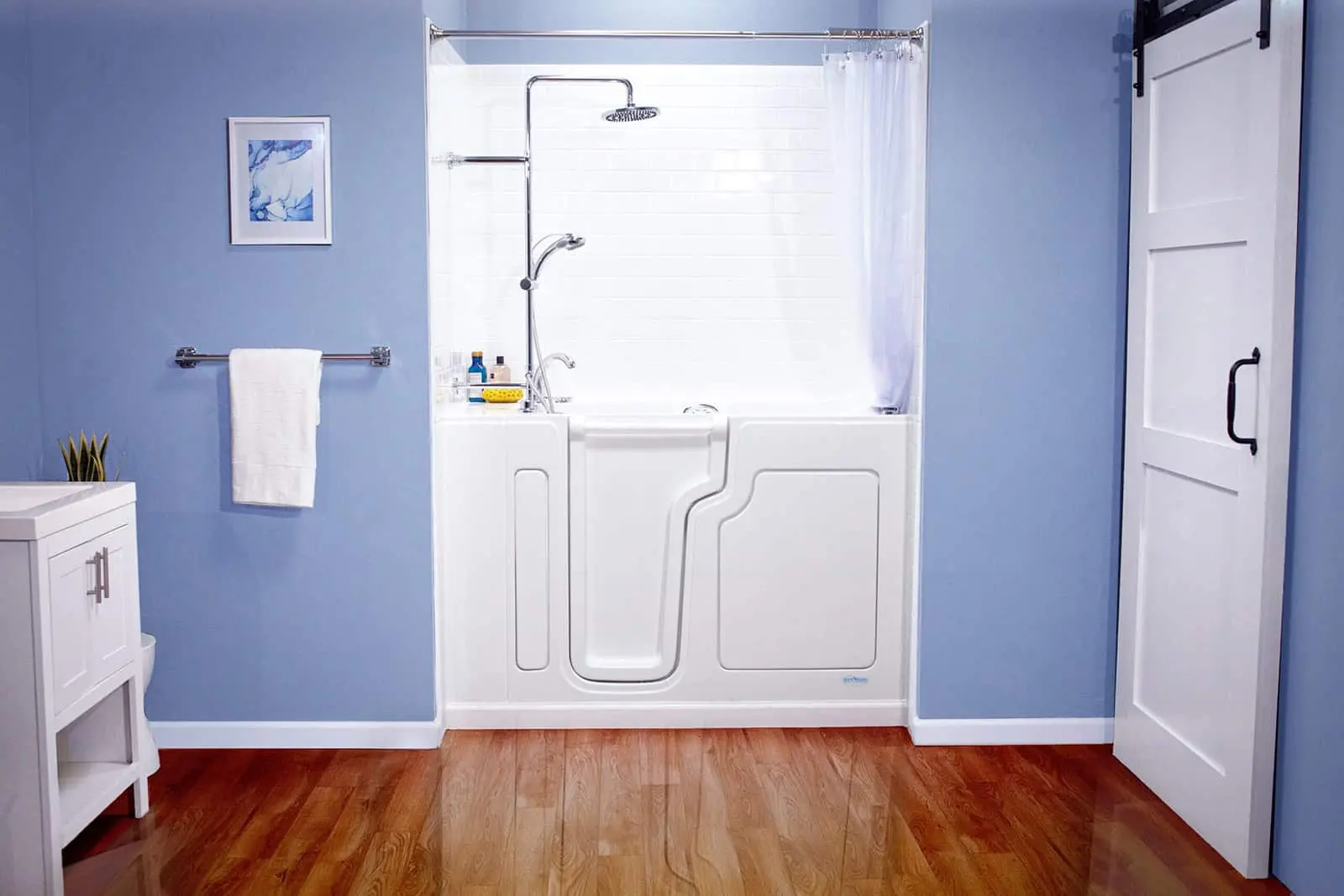
A walk-in tub rarely lowers your home’s value, but its resale impact depends on your buyer pool, bathroom setup, and installation costs.


Updated:
At a glance:
- A walk-in tub typically holds or boosts home value, but the outcome depends on your neighborhood, buyer pool, and existing bathroom layout.
- Older buyers and multigenerational families tend to value walk-in tubs, while families with young children often see them as a drawback.
- Removing your only standard tub or skipping a shower option are common resale mistakes that can turn buyers away.
If you or a senior loved one struggles with mobility issues, a walk-in tub can make bathing safer and easier. But before you install one, it’s natural to wonder how the fixture will affect your home’s resale value down the road, especially given the upfront cost. Our team analyzed how walk-in tubs affect buyer demand, resale outcomes, and return on investment, so homeowners can decide with confidence.
Walk-In Tubs and Home Value Impact
A walk-in tub does not typically devalue a home. Industry professionals consistently say a walk-in tub hardly ever lowers a home’s overall value outright. In most cases, the impact is neutral to positive, especially when the buyer pool includes older adults or multigenerational households. The exceptions tend to show up in family-oriented markets or when a walk-in tub replaces the only standard bathing option in the house.
Because the effect depends as much on buyer demographics as on the fixture itself, it helps to look at value impact in three tiers: neutral, increased, and decreased.
When Value Is Neutral
Value impact tends to stay flat when a walk-in tub sits in a secondary bathroom, and the home still offers at least one standard tub or shower elsewhere. In that setup, the tub reads as a bonus accessibility feature rather than a replacement for something buyers expect. It doesn’t shrink the pool of interested buyers because everyone’s baseline bathing needs are still covered.
When Value Increases
Value tends to rise in neighborhoods with a higher share of retirees, aging-in-place residents, or multigenerational households. Buyers in those markets often view a walk-in tub as a built-in safety upgrade rather than an odd feature, since it lowers fall risk and adds independence for anyone with limited mobility. A well-installed tub paired with a renovated, modern-looking bathroom tends to perform best.
When Value Can Decrease
Value can slip when a walk-in tub becomes the home’s only bathing option, particularly in a market full of young families who want a standard tub for bathing kids. It can also hurt appeal when the surrounding bathroom looks dated, or when the tub was installed without a shower or shower attachment. In those cases, the drawback usually comes from the tradeoffs around the tub, not the tub itself.
Walk-In Tub Buyer Demand By Market
Buyer reaction to a walk-in tub varies sharply by who’s shopping. Retirees and older adults often see it as a meaningful safety feature that reduces the risk of a bathroom fall. Multigenerational households tend to value it as one more aging-in-place feature that supports relatives of different ages living under one roof.
Families with young children lean the other way. They typically want a standard tub for bathing kids and may see a walk-in tub as a fixture they’d need to replace. Investors and flippers usually prioritize broad appeal over specialty features, so they tend to favor keeping at least one conventional tub in the home.
| Buyer Type | Typical Reaction | Best Setup |
|---|---|---|
| Older adults | Positive; values safety and independence | Walk-in tub in the most-used or primary bathroom |
| Retirees | Positive; sees it as a practical aging-in-place upgrade | Paired with grab bars and slip-resistant flooring |
| Multigenerational families | Positive to neutral; useful for aging relatives | Installed in a bathroom used by the older resident |
| Familes with young children | Negative to neutral; prefers a standard tub | Walk-in tub in a secondary bathroom only |
| Investors and flippers | Neutral to cautious; prioritizes broad appeal | At least one standard tub kept elsewhere in the home |
Walk-In Tub Resale Drawbacks to Avoid
Most resale problems with walk-in tubs come from how the project was done, not the fixture itself. A few common mistakes can shrink your buyer pool or make the bathroom feel like a project buyers have to fix before moving in.
Common resale objections and how to address them:
- No standard tub left in the home. Keep at least one conventional tub or tub-shower combo in another bathroom to protect appeal with families.
- No shower option. Add a shower attachment or handheld sprayer to the walk-in tub so daily showering is still possible.
- A dated surrounding bathroom. Update the tile, vanity, and lighting alongside the tub so the room doesn’t look like an unfinished renovation.
- Slow-draining or long-wait designs. Choose a model with a quick-drain feature so buyers don’t view the tub as inconvenient.
- Overly clinical or medical-looking fixtures. Look for a model with a residential design rather than one that reads as institutional.
- Mismatched grab bars or safety hardware. Choose finishes that match the rest of the bathroom’s fixtures, not generic hospital-style bars.
- Overspending on features the local market won’t pay for. Skip high-end add-ons such as chromotherapy lighting in markets where buyers won’t recognize the value.
- Poor plumbing or electrical documentation. Keep permits and installation records on hand, since buyers and inspectors often ask about them for a specialty fixture.
Walk-In Tub Cost vs. Resale Return
A basic walk-in tub unit starts around $2,000 to $4,000, and pricing climbs from there based on size, hydrotherapy jets, whirlpool jets, and other features. A full installation with plumbing work, electrical upgrades and add-on features can run from about $8,000 to $15,000 or more, depending on your market and the scope of the project.
Bathroom renovation or home modification projects recoup roughly 50% to 60% of their cost at resale on average, according to national bathroom remodeling data, though a walk-in tub alone doesn’t guarantee that return. Plumbing changes, electrical upgrades, and premium add-ons increase both the upfront cost and how much buyers are likely to notice and value.
| Cost Factor | Typical Range | Notes for Resale |
|---|---|---|
| Tub unit | $2,000 – $15,000+ | Basic soaking tub models hold value better than heavily customized units in most markets |
| Installation labor | $2,500 – $8,000 | Straightforward swaps cost less and disrupt the bathroom’s layout less |
| Plumbing changes | Included above to $5,000+ | Larger water capacity may require a water heater upgrade |
| Electrical upgrades | Varies by feature | Needed for jets, heated backrests, or lighting features |
| Add-on features | Varies widely | Match features to what local buyers actually expect |
| Repair and maintenance | Ongoing | Well-maintained tubs with service records reassure buyers |
Insurance, Medicaid, or veteran benefits may offset some of the upfront cost for homeowners who need a walk-in tub for medical reasons, but that assistance doesn’t factor into resale value calculations, since buyers evaluate the finished bathroom on its own merits.
Frequently Asked Questions (FAQs) About If a Walk-In Tub Devalues a Home
The main negatives of a walk-in tub are its high upfront cost, the wait time for the tub to drain before you can exit, and the risk of narrowing your buyer pool if it replaces your only standard tub.
Walk-in tubs can be tax-deductible in some cases if a doctor prescribes one as a medical necessity, though homeowners should confirm eligibility with a tax professional since rules vary.
No, walk-in tubs rarely hurt home value on their own; the risk comes mainly from removing a home’s only standard tub or skipping a tub-to-shower conversion.
A walk-in tub can be a good return on investment (ROI) for homeowners who need the safety and accessibility benefits, especially in neighborhoods with older or multigenerational buyers.
Walk-in tubs are worth it for people with mobility issues or a household member who needs safer bathing access, though the resale return isn’t guaranteed.
Replacing a walk-in bathtub or regular tub with a walk-in shower does not automatically devalue a house, especially if another tub remains elsewhere in the home, but it can narrow appeal to buyers with young children.
A walk-in tub typically costs between $2,000 and $15,000 for the unit, plus $2,500 to $8,000 or more for installation, depending on features and project complexity.
Help us improve our cost data! Email your latest walk-in tub quote to [email protected]. Rest assured, your personal details will remain completely confidential.