
Retirement Living takes an unbiased approach to our reviews. We may earn money when you click a partner link. Learn More
Does Medicaid Pay for Walk-In Tubs?
Medicaid coverage for walk-in tubs varies by state, but waivers may also help with costs.


Updated:
At a glance:
- Medicare doesn’t cover walk-in tubs, while Medicaid coverage depends on benefits offered by individual states.
- State coverage may be available under various home modification benefits.
- Home and Community-Based Services (HCBS) waivers offered by the state can help seniors upgrade their home to avoid moving to an institution.
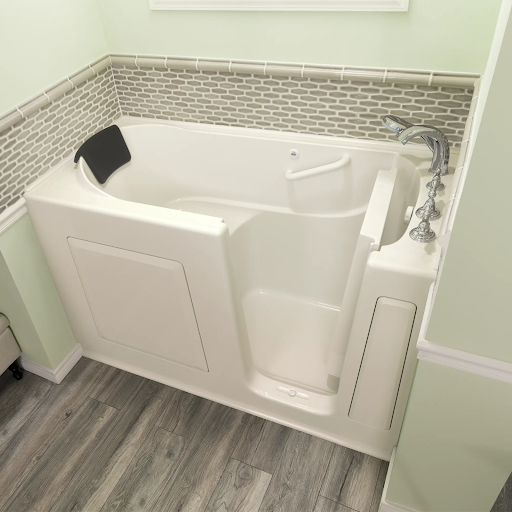
Installing a walk-in tub is a crucial part of aging in place for seniors who are at higher risk for falling, particularly in such a slippery area. But cost is a major consideration, especially if you’re on a fixed income.
Depending on the type you’re looking at, equipment and installation costs can range from $5,500 to $33,000 or more for the best walk-in tubs. The median annual income for an individual age 65 or older is just $33,310, so even the cheapest walk-in tub represents nearly 17% of the average senior’s income.
This problem leads many people to wonder, “Does Medicaid pay for walk-in tubs?” Because Medicaid is administered by states, the answer to this question largely depends on where you live.
Does Medicaid Pay for Walk-In Tubs?
Medicaid is partially funded by the federal government, but the administration of benefits is left to individual states. That means there’s no nationally standardized coverage for Medicaid. Each state has its own program with different benefit categories.
Why Medicare Won’t Cover Walk-In Tubs
Although Part B of Medicare covers durable medical equipment, eligible expenses must meet five very specific qualifications:
- Withstands repeated use
- Has a medical purpose
- Only useful to someone sick or injured
- Used in the home
- Should last three years or more
Unfortunately, a walk-in bathtub could be useful to anyone living in the house, not just someone who is sick and injured. Because of that, Medicare is unlikely to cover bathtub costs.
Does Medicaid Cover Walk-In Tubs?
Some state Medicaid programs may cover the cost of walk-in tubs, but only if it’s deemed medically necessary. That means you’ll likely need a letter signed by your physician outlining why you need a walk-in tub to stay safe. Photos showing the hazards in your current bathroom setup may also help your case.
However, there’s no guarantee of coverage even with physician-approved documentation. While the federal government has some mandatory Medicaid benefits that states must offer, states have a lot of flexibility in what other benefits they provide participants. Walk-in tubs could potentially be covered under assistive technology, home modification, or environmental accessibility categories.
Instead of getting coverage through a standard state Medicaid plan, you may be more likely to get it through a waiver program. Confirm eligibility by contacting the Center for Medicaid and CHIP Services (CMCS) or the state Medicaid office.
Medicaid Walk-In Tub Coverage By State
Not only does Medicaid coverage vary state by state, but waivers offering additional benefits are different across states as well. Here’s how to explore available programs to find out whether or not walk-in tubs are covered.
State Plan vs. Waiver Coverage
Medicaid eligibility can vary state by state, but coverage usually applies to lower-income households that have children, pregnant women, people with disabilities, and elderly individuals. Coverage for a walk-in tub really depends on your state’s benefits program.
But some states also offer waiver programs for certain individuals who don’t typically qualify for Medicaid. A home and community-based services (HCBS) waiver, for instance, often includes coverage for specialized medical equipment or environmental accessibility modifications. In many cases, a walk-in tub could qualify under one of these waiver programs.
Home Modification Benefit Names
When researching whether Medicaid pays for walk-in tubs in your state, keep an eye out for waiver program benefits and the different coverage categories that could apply to a walk-in tub. Common examples include:
- Home modification services
- Environmental accessibility adaptations
- Assistive technology
- Medical equipment and supplies
- Adaptive aids
Each state may also have its own definitions of what purchases, such as a walk-in tub, are included in its waiver program.
Where to Verify Your Benefits
Most states have local or regional offices designed to help individuals navigate their waiver application process. It could be through Medicaid, community services, health authorities, or other agencies. Your state Medicaid office can be a good starting point if you’re not sure where to look.
From there, you can determine your state’s specific eligibility, income limits, and application processes. Here are a few examples of state Medicaid waiver programs that may cover walk-in tub purchases and installation for eligible seniors.
| State | Program type | What may be covered | Who may qualify | How to apply |
|---|---|---|---|---|
| Virginia | Virginia Family and Individual Support Waiver | – Assistive technology – Environmental modifications | – Diagnosis of developmental disability – Income that’s no more than 300% of the Supplemental Security Income rate | Contact your local Community Services Board or Behavioral Health Authority |
| Colorado | Elderly, Blind, or Disabled Waiver | – Home accessibility modifications and waivers | – 65+ with a significant functional impairment – Income is less than three times the Supplemental Security Income limit per month | Enroll in Health First Colorado, then contact your local case management agency |
| Michigan | HCBS Elderly and Disabled Waiver | – Environmental accessibility adaptations – Goods and services – Specialized medical equipment and supplies | – 65+ and at risk of needing to live in a nursing home – Income that’s no more than 300% of the Supplemental Security Income rate – $9,950 asset limit | Contact your local MI Choice Waiver Agency |
| Texas | STAR+PLUS | – Adaptive aids – Medical supplies – Transition assistance services when returning home from a nursing facility | – Approved for Medicaid, plus one of several income/SSI requirements | Apply for Medicaid online or call 2-1-1 |
| New York | The Nursing Home Transition and Diversion Medicaid Waiver Program | – Eligible individuals can create their own service plan based on their needs | – 65+ and eligible for Medicaid – Requiring nursing home level of care | Reach out to Regional Resource Development Centers for availability updates |
| Ohio | PASSPORT | – Minor home modification – Medical equipment and supplies | – 60+ and eligible for Medicaid – Health needs can be met in-home – Person-centered services plan approved by a medical practitioner | Contact your local PASSPORT Administrative Agency |
HCBS Waivers That May Cover Tubs
Some elderly individuals could qualify for state Home and Community-Based Services (HCBS) waivers. Like Medicaid benefits, these programs are administered at the state level, so walk-in tub coverage varies depending on where you live.
What Are HCBS Waivers?
HCBS waivers are designed to help individuals remain in their homes when they require long-term care services, instead of having to live in an institutional facility. Most states have HCBS Waiver programs, and each one may have its own eligibility criteria for populations served.
Medicaid requires HCBS waiver programs to meet the following qualifications:
- Cost of services won’t outweigh the cost of institutional care
- Protects the health and welfare of individuals
- Meets provider standards for the target population
- Focuses on a person-centered care plan
Who Typically Qualifies?
Each state makes its own qualifications for eligibility, but typically each HCBS waiver program targets a specific group, often based on age or diagnosis. Program participants usually need to meet certain levels of care standards, and there may be income and asset limits in place as well.
What Costs May Be Included?
Potential coverage from an HCBS waiver could include medical and non-medical services, such as case management, adult day health services, and respite care. Waiver programs may also provide help to participants with transitioning back into their homes after staying in an institution. In some cases, these services could include the cost of walk-in tubs and installation, particularly if there’s a medical need.
The best way to see what’s covered under your local waiver programs is to call your state Medicaid office. They’ll walk you through eligibility, the application process, and whether a walk-in tub is covered.
How to Get Medicaid Approval For a Walk-In Tub
Here’s an overview of the steps it takes to get approved for a walk-in tub, either through Medicaid or a state waiver program. Plus, discover more details below on the documentation requirements, assessment process, and appeals process.
- Contact your state Medicaid office to check funding availability, particularly through waiver programs.
- Submit an application for the relevant Medicaid or waiver program.
- If approved, your case manager will schedule a home evaluation with an occupational therapist.
- The occupational therapist makes home modification recommendations, which may include a walk-in tub.
- Receive a list of approved contractors from your case manager.
- Get two to three project estimates and share with your case manager.
- Choose a contractor to begin the work.
Medical Necessity Documentation
Whether you’re seeking to pay for a walk-in tub through Medicaid or a waiver, you’ll likely need to meet medical necessity requirements. You can prove you meet those qualifications by submitting a Letter of Medical Necessity (LMN) from your primary physician.
As noted above, your state Medicaid office may also require an in-home visit by an occupational therapist (OT) who can make personalized recommendations based on your actual living space. Getting an assessment of your daily living limitations can strengthen your request, especially when it’s from an OT assigned through the local Medicaid office.
Assessments and Prior Authorization
Getting that in-home assessment is a crucial part of the funding process. Once that’s done, your case manager can help you navigate the contractor bid process. You can’t hire anyone to complete the work until that contractor receives a Prior Authorization Request (PAR), so make sure you don’t skip any steps in the approval process.
Denials, Appeals, and Alternatives
States typically have an appeals process you can follow if your Medicaid or waiver request is denied. First, check to make sure you meet all of the eligibility requirements. If you think you’ve been unfairly denied, you can file an appeal. Be sure to complete the process within the state’s deadline and submit as much evidence as possible to support your application.
If denied even after an appeal, consider exploring alternative funding for a walk-in tub, such as grants, financing, or nonprofit assistance. Potential options include:
- USDA Section 504 Home Repair Program
- Medicare Advantage plans
- VA benefits
- Local government or nonprofit organizations
Depending on your circumstances, you may also be able to deduct certain walk-in tub expenses on your taxes. Learn more about whether walk-in tubs are tax-deductible and what requirements apply.
Frequently Asked Questions (FAQs) On If Medicaid Pays for Walk-In Tubs
You may be able to qualify for a free walk-in tub if you meet certain Medicaid or HCBS waiver requirements. Typically, you must meet age and income requirements, while also demonstrating a medical need for the walk-in tub.
A doctor can write a prescription for a walk-in tub through a Letter of Medical Necessity.
A walk-in tub costs the full amount if you’re on Medicare because it doesn’t meet the definition of durable medical equipment typically covered by Part B.
Get a free walk-in tub for seniors by calling your state Medicaid office. You can find out if any programs offer home modification assistance. If not, consider other options, including grants, financing, or nonprofit assistance.
Article Sources
Retirement Living writers primarily rely on government data, industry experts, and original research from other reputable publications to inform their work. Specific sources for this article include:
- National Council on Aging, Inc., “How Much Do Walk-In Tubs Cost?.” Accessed Nov. 4, 2026.
- Pension Rights Center, “Income of Today’s Older Adults.” Accessed Nov. 4, 2026.
- [Organization Missing], “Will Medicare Pay For a Walk-In Tub?.” Accessed Nov. 4, 2026.
- Affordable Walk-In Tubs, “Letter of Medical Necessity for Paying for Walk-In Tubs: How It Works & Ways to Help Pay.” Accessed Nov. 4, 2026.
- U.S. Department of Health and Human Services, “Who is eligible for Medicaid?.” Accessed Nov. 4, 2026.
- Kohler Co., “Does Medicaid Pay for Walk-In Tubs?.” Accessed Nov. 4, 2026.
- Centers for Medicare & Medicaid Services, “Virginia Waiver Description Factsheet.” Accessed Nov. 4, 2026.
- Colorado Department of Health Care Policy and Financing, “Elderly, Blind, and Disabled Waiver (EBD).” Accessed Nov. 4, 2026.
- American Council on Aging, “Michigan’s MI Choice Medicaid Waiver Program: Benefits & Eligibility.” Accessed Nov. 4, 2026.
- Texas Health and Human Services Commission, “STAR+PLUS.” Accessed Nov. 4, 2026.
- New York State Department of Health, “The Nursing Home Transition and Diversion (NHTD) Medicaid Waiver Program.” Accessed Nov. 4, 2026.
- Ohio Department of Aging, “PASSPORT.” Accessed Nov. 4, 2026.
- Ohio Laws, “Rule 5160-31-03 | PASSPORT HCBS waiver program: eligibility and enrollment..” Accessed Nov. 4, 2026.
- Centers for Medicare & Medicaid Services, “Home & Community Based Services 1915(c).” Accessed Nov. 4, 2026.
- Lifeway Mobility, “Medicaid Home Modifications Funding Guide.” Accessed Nov. 4, 2026.
- Everhome Mobility Inc., “Letter of Medical Necessity for Home Modifications: How to Get Approved.” Accessed Nov. 4, 2026.
- The Arc of Indiana, “Appealing an HCBS LOC Denial.” Accessed Nov. 4, 2026.
Help us improve our Medicaid coverage information! Have you received Medicaid assistance for a walk-in tub? Email your experience to [email protected]. Rest assured, your personal details will remain completely confidential.