
Retirement Living takes an unbiased approach to our reviews. We may earn money when you click a partner link. Learn More
Does Medicare Cover Walk-In Tubs?
Learn what Medicare covers, when exceptions may apply, and what you may have to pay for a walk-in tub.


Updated:
At a glance:
- Medicare Advantage plans may offer home safety benefits, but coverage, limits, and requirements vary by plan.
- Other programs may help cover costs, including HCBS waivers, VA programs, USDA assistance, and long-term care insurance.
- Lower-cost alternatives and tax deductions may reduce your out-of-pocket costs if a walk-in tub isn’t fully covered.
Original Medicare generally does not cover walk-in tubs because they are not considered durable medical equipment (DME). Some Medicare Advantage plans may offer benefits for home modifications, depending on the plan.
This guide explains Medicare coverage for walk-in tubs and other ways to help pay for one.
Medicare Walk-In Tub Coverage
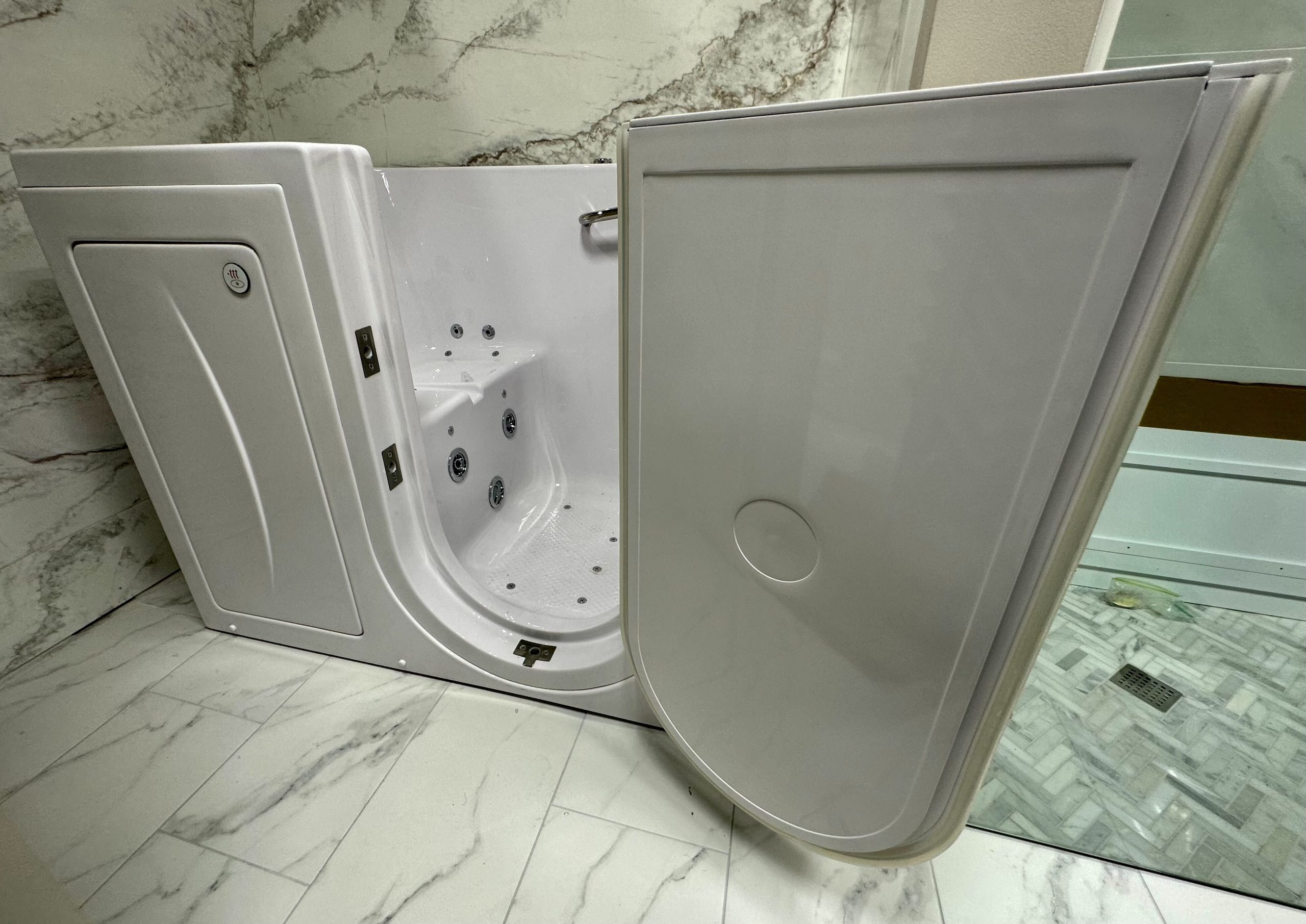
Original Medicare (Parts A and B) generally does not cover walk-in tubs. Part B covers medically necessary DME, but a permanently installed walk-in tub does not generally meet Medicare’s DME requirements.
For example, Medicare classifies bathtub lifts and bathtub seats as convenience items rather than covered DME. Some therapeutic whirlpool equipment may qualify when you meet specific medical requirements, but that does not mean a standard walk-in tub qualifies.
In rare cases, you may find information about Part B reimbursement for a medically necessary walk-in tub. If you pursue a claim, check whether the supplier is a Medicare-enrolled supplier before paying for the tub. Medicare may not approve the claim.
What Documentation May Be Needed?
Your doctor may need to provide a prescription and letter of medical necessity explaining your diagnosis or medical condition and why you need the tub.
The documentation may also need to describe the specific safety or therapeutic features you require. A prescription does not guarantee coverage, and Medicare’s DME requirements still apply. You may need additional documentation if you appeal a denied claim.
Medicare Advantage Coverage for Walk-In Tubs
Medicare Advantage (Part C) plans are offered by private insurers and provide Medicare-covered benefits. Some plans also offer supplemental benefits for home safety modifications, which may include certain bathroom changes.
If your plan offers this benefit, coverage for a walk-in tub may depend on medical necessity, prior authorization, and a benefit limit. Your plan may also require you to use a specific supplier or contractor. A doctor’s prescription does not guarantee coverage.
How to Check Your Medicare Advantage Benefits
Review your plan’s Evidence of Coverage and Summary of Benefits. Search for terms such as “home safety modifications,” “environmental accessibility adaptations,” or “home modifications.”
Then call your plan before buying a tub. Ask whether walk-in bathtubs, installation, or bathroom modifications are covered, whether you need prior authorization, what the benefit limit is, and whether you must use a specific contractor or supplier.
Does Medigap Cover Walk-In Tubs?
Medigap generally doesn’t cover walk-in tubs. These policies help pay some out-of-pocket costs left by Original Medicare, such as deductibles and coinsurance, but they don’t usually add benefits for home modifications or bathroom equipment.
Are Walk-In Tubs Covered By Medicaid?
Some Medicaid programs may help cover home modifications such as walk-in tubs through Home and Community-Based Services (HCBS) waivers or other programs. These programs may cover modifications that help eligible people live safely and independently at home.
Coverage varies by state. Some Medicaid programs may also offer Community Transition or Institutional Diversion Programs that help eligible people move into or remain safely in their homes. Check your state’s Medicaid program or waiver requirements to see whether walk-in tubs, bathroom modifications, or specialized medical equipment qualify.
Does the Department of Veterans Affairs (VA) Cover Walk-In Tubs?
Veterans may qualify for VA home modification programs when a disability creates a medical need for changes to their home. The Home Improvements and Structural Alterations (HISA) benefit can help with medically necessary bathroom modifications, including roll-in or barrier-free showers. However, current VA guidance excludes walk-in, sit-down, hydrotherapy jets, spa, and Jacuzzi-style tubs from HISA coverage.
Other VA housing programs, including Specially Adapted Housing (SAH) and Special Housing Adaptation (SHA) grants, may help qualifying veterans modify their homes. Eligibility and covered modifications depend on the specific program and the veteran’s disability.
Other Ways to Cover Walk-In Tub Costs
If Medicare doesn’t cover your walk-in tub, these options may provide financial assistance or help reduce your out-of-pocket costs:
- U.S. Department of Agriculture (USDA) Section 504 Home Repair: This program may help eligible low-income homeowners in qualifying rural areas pay for home repairs and improvements. Grants are available to eligible homeowners age 62 and older who need to remove health and safety hazards, while loans can fund broader repairs and improvements.
- Long-term care insurance: Some policies may cover medically necessary home modifications or accessibility equipment. Check your policy for coverage details.
- Nonprofit assistance: Organizations such as Habitat for Humanity and Rebuilding Together may help eligible homeowners with accessibility modifications in some areas.
- Financing plans: Some walk-in tub companies offer financing options that let you spread the cost over monthly payments. Compare the interest rate, fees, and repayment period before choosing a plan.
Lower-Cost Alternatives to a Walk-In Tub
If a walk-in tub is too expensive, lower-cost bathroom safety products may help reduce fall risks and make bathing easier. The right option depends on your mobility, disabilities, and bathroom setup.
- Shower chairs: Let you sit while showering and may help if standing for long periods is difficult.
- Transfer benches: Help you move safely from outside the tub to a seated position inside.
- Bath lifts: Lower you into a bathtub and raise you back up, which can make getting in and out easier.
- Grab bars: Provide support when you enter, exit, or move around the bathroom.
- Non-slip mats: Add traction to wet bathroom floors and surfaces.
What to Check Before Buying a Walk-In Tub
Before buying a walk-in tub, compare the types, installation requirements, and safety features. A lower tub price may not mean a lower final cost if you need plumbing, electrical work, or bathroom changes.
Here are some key things to check before you buy:
- Total cost: Compare the tub price, shipping, installation, and any additional equipment or accessories. Even if a program helps pay for the tub, it may not cover installation or remodeling costs.
- Installation: Ask for separate written estimates for the tub and installation. Check whether installation includes labor, plumbing, electrical work, demolition, or other bathroom remodeling.
- Safety and accessibility: Look for features that match your needs, such as grab bars, transfer benches, low-step entry, and wheelchair access.
- Warranty: Check what the warranty covers and how long it lasts for the tub, parts, and installation.
- Financing options: Compare financing plans, including interest rates, fees, monthly payments, and repayment periods.
- Insurance and benefits: Confirm whether Medicare Advantage, veterans benefits, long-term care insurance, or other programs can help with the cost before you purchase.
If you need a safer bathing option with more features, explore our best walk-in tubs guide to compare top models, safety features, and pricing.
Can a Walk-In Tub Be Tax-Deductible?
A medically necessary walk-in tub or bathroom modification may qualify as a medical expense under IRS rules. If you itemize deductions on Schedule A, you can generally deduct unreimbursed medical expenses that exceed 7.5% of your adjusted gross income (AGI). The deductible amount for a home improvement may also depend on whether it increases your home’s value.
Keep your prescription, receipts, and records showing the medical need and cost. A tax deduction is separate from Medicare coverage and doesn’t mean Medicare will pay for the tub. Consider speaking with a tax professional to determine whether your specific tub or bathroom modification qualifies under current IRS rules.
Frequently Asked Questions (FAQs) About Does Medicare Cover Walk-In Tubs
Yes. If Medicare makes a coverage or payment decision you disagree with, you can file an appeal. For Original Medicare, the first appeal is called a redetermination. Your Medicare Summary Notice explains the decision and provides instructions for starting an appeal.
In some situations, you can submit your own Medicare claim after paying out of pocket. Medicare says you may need to do this if your provider or supplier doesn’t submit the claim. However, paying upfront doesn’t mean Medicare will reimburse you.
Help us improve our cost data! Email your latest walk-in tub quote to [email protected]. Rest assured, your personal details will remain completely confidential.