
Retirement Living takes an unbiased approach to our reviews. We may earn money when you click a partner link. Learn More
Does Medicare Cover Stair Lifts?
No, Original Medicare (Parts A and B) does not cover the cost of stair lifts, but programs like Medicaid and Veterans Administration grants might.


Updated:
At a glance:
- Neither Medicare nor most Medicare Advantage Plans cover the cost of a stair lift, but you can find financial assistance through other programs and insurances.
- Certain state-based programs, including Medicaid and assistance programs offered by the Department of Veterans Affairs, might cover the cost of a stair lift.
- If you pay out-of-pocket for your stair lift, you may be able to reimburse the cost through tax deductions, as stair lifts usually qualify under IRS Publication 502.
Over 68.5 million Americans rely on Medicare Coverage in 2025, according to the Centers for Medicare & Medicaid Services Data, but unfortunately, the program doesn’t cover stair lifts. Medicare pays for Durable Medical Equipment (DME)—a category stair lifts don’t fall under.
However, that doesn’t mean you can’t find health insurance coverage. Some Medicare Advantage plans do cover home modifications, like stair lifts. You can also find help through long-term care insurance and Medicaid programs in certain states. Read on to discover what options are available to you as an older adult.
Understanding Durable Medical Equipment (DME)
Will Medicare pay for stair lifts? For the most part, no. Medicare plans don’t cover stairlifts because they aren’t considered Durable Medical Equipment (DME). Examples of DME include:
- Wheelchairs
- Hospital beds
- Special monitoring equipment
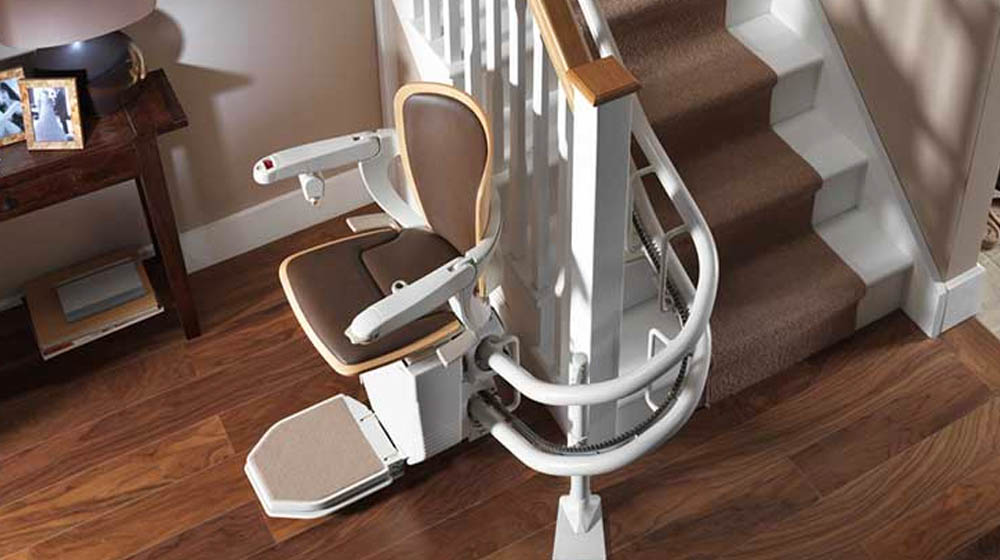
Because stair lifts are in-home devices that alter the home’s structure, they’re considered either home modifications or assistive devices. Neither of these is covered by Medicare or Medicare Supplement Insurance (Medigap).
Can I Get Coverage Through Medicare Advantage Plans?
Medicare Advantage (Part C) is a private option that sometimes includes additional coverage when compared to Original Medicare. For example, many plans include Medicare Part D (drug coverage), and some cover medically necessary home modifications—like chair lifts.
However, whether your Medicare Advantage plan offers funding options for stair lifts largely depends on your home state, as plans vary from region to region. Before committing to deductibles and copays, check if your state offers coverage by exploring options on Medicare.gov.
Want to know what you might pay for insurance plans? Medicare Advantage premiums for 2024 were:
| Plan Type | 2024 Average Monthly Premium | 2024 Annual Equivalent |
|---|---|---|
| Local PPO | $16/month | $192/year |
| Regional PPO | $55/month | $660/year |
| HMO | $12/month | $144/year |
| All Plans | $14/month | $168/year |
Source: Kaiser Family Foundation
Will Medicaid Pay For Stair Lifts?
Medicaid might pay for your stair lift in some instances, especially when deemed medically-necessary by a doctor. Start your search for full or partial reimbursement through:
- Home and Community-Based Services (HCBS) Waivers: These are one of the most reliable ways to get healthcare coverage for stair lifts, as they allow seniors to choose in-home assisted living services instead of nursing homes. As long as the stair lift is deemed medically-necessary by your doctor and insurance provider, you may be able to get coverage in some states.
- Money Follows the Person (MFP): These programs offer transitional assistance for seniors returning home from institutional care or surgery. However, coverage is still determined by whether the stair lift is deemed medically-necessary.
- Medicaid state plan personal care attendant programs: These provide Medicaid recipients with personal care and related services. Each program varies by state, with some of those on Medicaid qualifying for stair lift reimbursement.
Other Financing Options For Your Stair Lift
If you can’t get your stair lift covered through Medicare Advantage or Medicaid, there may be other options available to you. These include, but aren’t limited to:
- Long-Term Care Insurance may cover stair lifts if they are deemed medically necessary and part of a home care or mobility support plan. Coverage varies, so review your policy or speak with your provider to confirm eligibility.
- Veterans Administration (VA) Benefits such as Veterans Directed Home and Community-Based Services (VD-HCBS), Home Improvements and Structural Alterations (HISA) grants, and Specially Adapted Housing (SAH) grants can all assist seniors who’ve served in the military. You will likely qualify if you have disabilities, illnesses, or injuries related to your service.
- Area Agencies on Aging (AAA) and other nonprofit organizations can help fund stair lifts as a home modification or refer you to other options.
- Home Equity Loans or HELOCs can be an option for seniors with high home equity who want to age in place while finding an effective way to pay for their stair lift.
- Financing plans from either your personal bank or the stair lift manufacturer can be a fast and easy way to access funds. However, always compare interest rates to ensure you’re getting the best deal.
- Tax Deductions sometimes apply to stair lifts if they fall under IRS Publication 502’s list of deductible medical expenses.
Bottom Line
While Original Medicare doesn’t cover stair lifts, you’re not out of options. From certain Medicare Advantage plans and Medicaid waivers to Veterans Administration grants and long-term care insurance, there are several potential ways to offset the cost. Even if you end up paying out of pocket, tax deductions and financing plans can help make a stair lift more affordable. Before making a purchase, take time to explore all your available resources—your mobility and safety at home are worth the effort.
Frequently Asked Questions
No, Original Medicare (Parts A and B) doesn’t cover stair lifts, as it categorizes them as home modifications, rather than covered Durable Medical Equipment (DME).
Yes, there are some health insurance plans that cover stair lifts, including Medicare Advantage, Medicaid, and some long-term care plans. However, every state and private company is different, so you should always do your research before committing to a plan.
Depending on the state you live in, you might be able to get your stair lift covered by proving that it’s medically-necessary. You’ll likely need a doctor’s prescription and documentation showing that the installation is essential.
The best way to pay for your new stair lift without insurance is to understand what options are available to you. For example, veterans can benefit from Veterans Administration (VA) grants, while seniors with paid off homes can always fall back on a Home Equity Loan.
Installing a new stair lift costs between $2,500 to $14,000, depending on the type of stair lift, home layout, and more. For example, curved staircases often require custom, curved lifts—which are more expensive.
Help us improve our cost data! Email your latest stair lift quote to [email protected]. Rest assured, your personal details will remain completely confidential.