
Retirement Living takes an unbiased approach to our reviews. We may earn money when you click a partner link. Learn More
The Difference Between a Lift and an Elevator
Understand how lifts and elevators differ in design, use, cost, and terminology to choose the right option.


Updated:
At a glance:
- Enclosed elevators and platform lifts differ in layout, controls, and available space, but their weight capacities can overlap.
- Home elevators may require a hoistway, pit, overhead clearance, and structural changes.
- Stairlifts and platform lifts address accessibility needs, while residential, passenger, and freight elevators serve different settings and purposes.
A lift and an elevator usually refer to the same device, but their meanings can differ in some contexts. American English uses “elevator,” while British English uses “lift.” This guide explains when the terms are interchangeable and how their meanings differ depending on the context.
Lift vs. Elevator: Key Differences
A lift is a device that transports people or loads between levels. An elevator is a type of lift designed to carry passengers or goods vertically between floors. Both terms can describe similar equipment, and their technical meanings may overlap.
The following factors explain what to consider when comparing different systems.
Design and Operation
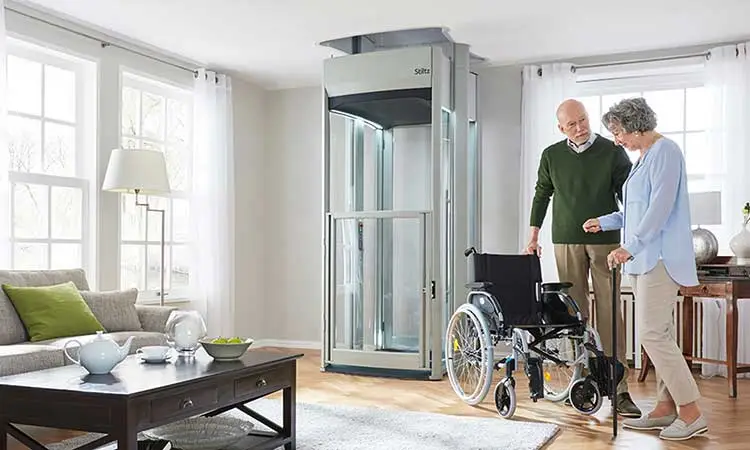
A residential elevator usually has an enclosed cab inside a hoistway, with controls to select a floor. Some residential lifts use an open platform or a cabin that travels through a floor opening. Their controls may require users to hold a button while the unit moves, rather than select a floor for automatic travel.
Most US residential elevators travel at 32 to 40 feet per minute, with some models reaching 50 feet per minute where local codes permit. Lift speeds vary by design, so there is no single range for all lifts. Check the manufacturer’s specifications for the unit’s rated speed and operating method before comparing systems.
Intended Use and Capacity
The right lift or elevator depends on who will use it and what it needs to carry. Residential lifts may have weight limits of around 550 to 750 pounds, while some heavy-duty models support more. Residential elevators commonly support 500 to 1,000 pounds, with some models rated for higher loads.
These ranges overlap, so an elevator doesn’t always carry more weight than a lift. Usable space matters, too. If the equipment needs to accommodate a wheelchair user, mobility scooter, or several passengers, both the cab or platform dimensions and the maximum rated load determine what will fit safely.
Space and Installation
Stair-mounted systems use the existing staircase, while vertical transportation systems need room for the platform and access at each landing. A conventional residential elevator also needs space for its hoistway, which typically measures 5 × 5 to 5 × 7 feet.
Before installation, check whether your home can accommodate these requirements:
- Pit depth: Conventional residential elevators may need a pit 6 to 12 inches deep below the lowest floor.
- Overhead clearance: Many models need 7.5 to 9 feet above the top landing.
- Structural work: Floor openings, supports, electrical connections, or doorway changes may be necessary.
- Machine room: Some elevators need a separate room for drive equipment, while machine-room-less (MRL) models house it within the hoistway.
Safety and Maintenance
Lifts and elevators use safety features suited to their design. These may include door interlocks, obstruction sensors, emergency stops, and systems that lower passengers safely during a power failure. Enclosed elevators may also have alarms and two-way communication systems.
Regular servicing helps keep these features working properly. Maintenance requirements depend on the equipment, but checks commonly cover:
- Doors and gates: Confirm that they close and lock correctly before operation.
- Drive systems and emergency brakes: Check for worn parts, unusual movement, and hydraulic fluid leaks where applicable.
- Controls and emergency systems: Test sensors, emergency stops, backup power, and emergency communication where fitted.
Outdoor equipment may need more frequent checks because exposure to rain, moisture, and temperature changes can affect its components.
Cost
In the US, residential lifts typically cost $2,000 to $35,000, while residential elevators often cost $30,000 to $60,000. Custom elevator installations can exceed $100,000. The price difference largely reflects the equipment, travel distance, weight capacity, and construction needed for installation.
When budgeting for a lift or elevator, include these additional costs:
- Installation: Structural work, floor openings and electrical upgrades can add $5,000 to $25,000 or more to a residential elevator project.
- Maintenance: Budget around $300 to $760 per year for routine home elevator maintenance.
- Repairs: A routine service visit may cost $150 to $500, excluding major replacement parts or extensive repairs.
If you’re looking for elevators for your home, visit our guide to the best home elevators to compare leading options, features, and prices.
What Types of Lifts Are Available for Home Accessibility?
Common types of lifts for aging in place include:
- Wheelchair lifts: Carry you and your wheelchair between levels on a platform, reducing the need to transfer out of your chair.
- Stairlifts: Carry you up and down a staircase on a rail. Seated models suit people who can transfer safely into a seat, while platform models carry a wheelchair.
- Vertical platform lifts: Move straight up or down between levels, such as from a porch to a raised entrance. They can provide access without requiring you to navigate steps.
- Inclined platform lifts: Follow the slope of a staircase while carrying a wheelchair. They can help where a ramp or vertical lift isn’t practical.
- Portable lifts: Provide access where a permanent installation isn’t suitable. Their travel height, capacity, and stability depend on the model.
- Vehicle lifts: Raise a wheelchair or mobility scooter into a vehicle, helping with transportation rather than access between floors inside the home.
What Types of Residential Elevators Are Available?
Common types of residential elevators include:
- Hydraulic elevators: Use pressurized fluid to raise and lower the cab. Their lifting mechanism can support substantial loads, but the system needs space for hydraulic equipment.
- Traction elevators: Use a motor and cables or belts, often with a counterweight, to move the cab. Their drive system affects the equipment’s layout, performance and maintenance needs.
- Pneumatic or vacuum elevators: Use air pressure to move the cab through a cylindrical structure. Their design can reduce construction requirements, although capacity and travel may be more limited than conventional systems.
- Shaftless elevators: Travel between floors without a conventional full elevator shaft. They can suit some existing two-story homes, but their travel distance and capacity depend on the model.
- Winding-drum elevators: Use a motor to wind a cable around a drum, raising and lowering the cab. Their design can suit certain residential layouts, depending on the available space and installation requirements.
What Do Passenger, Freight, and Residential Elevators Mean?
Passenger elevators transport people between floors in residential and commercial buildings, while freight elevators move goods, equipment and heavy loads. Their designs reflect these different purposes, from passenger comfort and access to the durability needed for moving cargo.
Residential elevators are designed for private homes, where they provide access between floors. They usually serve fewer people at a time than commercial elevators and must fit the home’s available space.
Depending on the model, they can also accommodate wheelchairs or mobility scooters. A residential elevator is therefore a type of passenger elevator, while a freight elevator is designed primarily for transporting goods.
Frequently Asked Questions (FAQs) About the Difference Between a Lift and an Elevator
Yes. The terms often refer to the same equipment, and the preferred word depends on the context. In technical documents, the manufacturer’s terminology and the equipment’s classification matter more than the name alone.
A home elevator may appeal to buyers who want easier access between floors, including older adults and people with mobility limitations. However, its effect on resale value depends on local demand, the home’s layout, installation quality, and buyer preferences. An increase in property value is not guaranteed.
Yes. Applicable requirements depend on the equipment, installation and local jurisdiction. In the United States, different standards may apply to elevators and platform lifts, so confirm the relevant requirements with your installer and local building authority before purchasing equipment.
Help us improve our guides! If you’ve recently installed a home lift or elevator, or have insights on how yours works, we’d love to hear from you. Share your experience with us at [email protected]. Your personal details will stay completely confidential.