
Retirement Living takes an unbiased approach to our reviews. We may earn money when you click a partner link. Learn More
Best Small Home Elevators of 2026
We selected home elevators designed for safety, comfort, and independence.


Updated:
Through our research, we’ve identified the best home elevators that use a smaller footprint to accommodate tight layouts while still meeting your mobility needs.
Our research reveals the three best small home elevator brands, such as Stannah and Bruno. Our picks have a smaller cab capacity, lower weight limits, and less power requirements, keeping costs to a minimum while still meeting safety and reliability needs.

ACME, a division of Stannah, offers custom elevators for your home. Stannah Elevators come in two varieties: pitless or shaftless. Stannah Elevators are perfect for those who find stairs challenging. This includes people dealing with aging, pain, limited mobility, or disabilities.
- Great Configuration Options
- Custom Designed
- Professional Installation

Bruno Home Elevators provides reliable and stylish home elevator solutions. Bruno elevators are available in multiple models, including residential and small commercial lifts. They are ideal for individuals who need assistance navigating stairs due to aging, injury, or limited mobility.
- Customizable designs
- Versatile models
- Professional installation

Pneumatic Vacuum Elevators LLC
4.5
Pneumatic makes three models of air-driven home elevators. The cylindrical shape of the cabs takes up less room. Usually, they are 30 to 52 inches in diameter, depending on the model. The vacuum elevators use air pressure to raise and lower the cab. They use no electricity during the descent and about 4.7 kilowatts during the ascent. This makes them an energy-efficient option for you to use in your own home.
- Most Eco-friendly
- Air-driven, low-energy cost elevators
- Low-maintenance. Service calls every five years
How We Chose the Best Small Home Elevators
Drawing on the research we’ve already conducted for our article, the 9 Best Home Elevators, we took those top picks a step further. Since we already know those nine brands meet our safety and reliability requirements, we then compared their manufacturer specs to identify the most compact models, including cab dimensions, weight capacities, and power requirements. We also reviewed installation considerations, construction demands, and customer feedback.
The result? The three brands below have the smallest footprint and work well in smaller homes with tight spaces, while still meeting your aging-in-place needs.
Comparing Small Home Elevators
| Brand | Starting Cab Size | Weight Capacity | Power Requirement |
|---|---|---|---|
| Stannah Home Elevators | 29 x 30 inches | Up to 2 people | Standard home outlet |
| Bruno | 21.3 x 29.5 inches | Up to 500 pounds | Single-phase 110V outlet |
| Pneumatic Vacuum Elevators | 30 inches in diameter | Up to 350 pounds | 220V single-phase power, 25 amp dedicated circuit |
Small Home Elevator Reviews
Stannah Home Elevators Review
Great Configuration Options
|
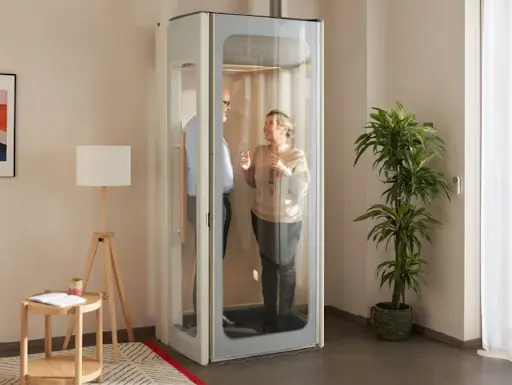
Stannah elevator company offers compact residential elevators designed for homeowners who want a smaller footprint without sacrificing accessibility. Its Uplifts home elevator line uses self-supporting elevator designs that eliminate the need for a traditional shaft, machine room, or separate control cabinet. Because of this, installation is generally more straightforward than many traditional home elevators and works well in existing homes.
The Stannah Uplifts S2 model is the smallest and is designed for up to two passengers. The compact cabin size starts at 30 inches by 29 inches. It’s powered by standard residential single-phase power, meaning simple electrical requirements during installation. The system also features low energy consumption and a small footprint, making it easier to fit into tighter floor plans.The fully enclosed system has safety features, including obstruction sensors, battery-backed lowering during power outages, and emergency stop controls. While pricing varies based on customization and installation needs, the simple construction requirements and compact design reduce overall installation costs compared to larger traditional elevators.
To learn more, read our comprehensive Stannah review.
Bruno Home Elevator Review
Customizable designs
|
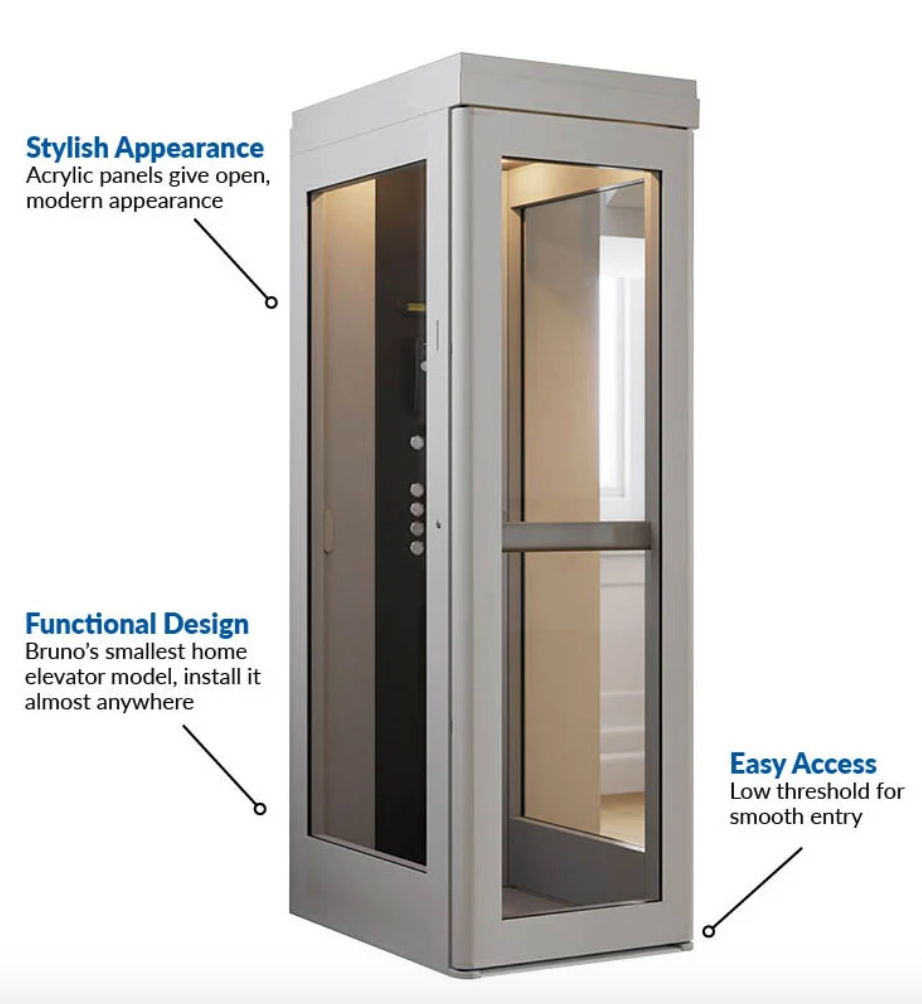
Bruno’s compact residential elevator line – Connect has three home elevator systems that focus on space efficiency, although the largest model provides enough room for multi-person use.
Bruno home elevators are available in three sizes. The smallest model, the Connect Compact home elevator, has a cab space of 21.3 inches by 29.5 inches. This is perfect for tight residential layouts. All three Bruno elevators have a weight capacity of up to 500 pounds. Bruno systems operate on residential electrical service.
Safety features include battery backup, an emergency phone, and interlocking doors. Pricing depends on your home’s layout and any customization options you choose. The company’s compact elevator option reduces the need for major structural modifications, thereby lowering costs.
To learn more, read our comprehensive Bruno review.
Pneumatic Vacuum Elevators LLC Review
Most Eco-friendly
|
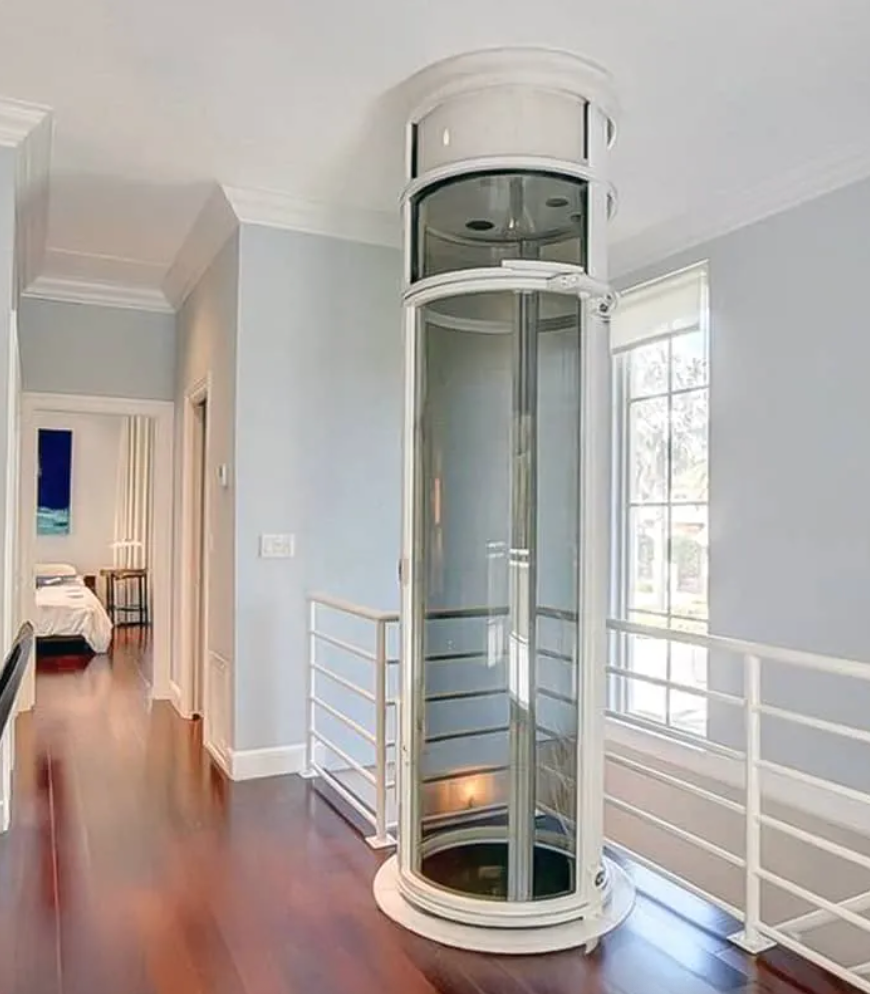
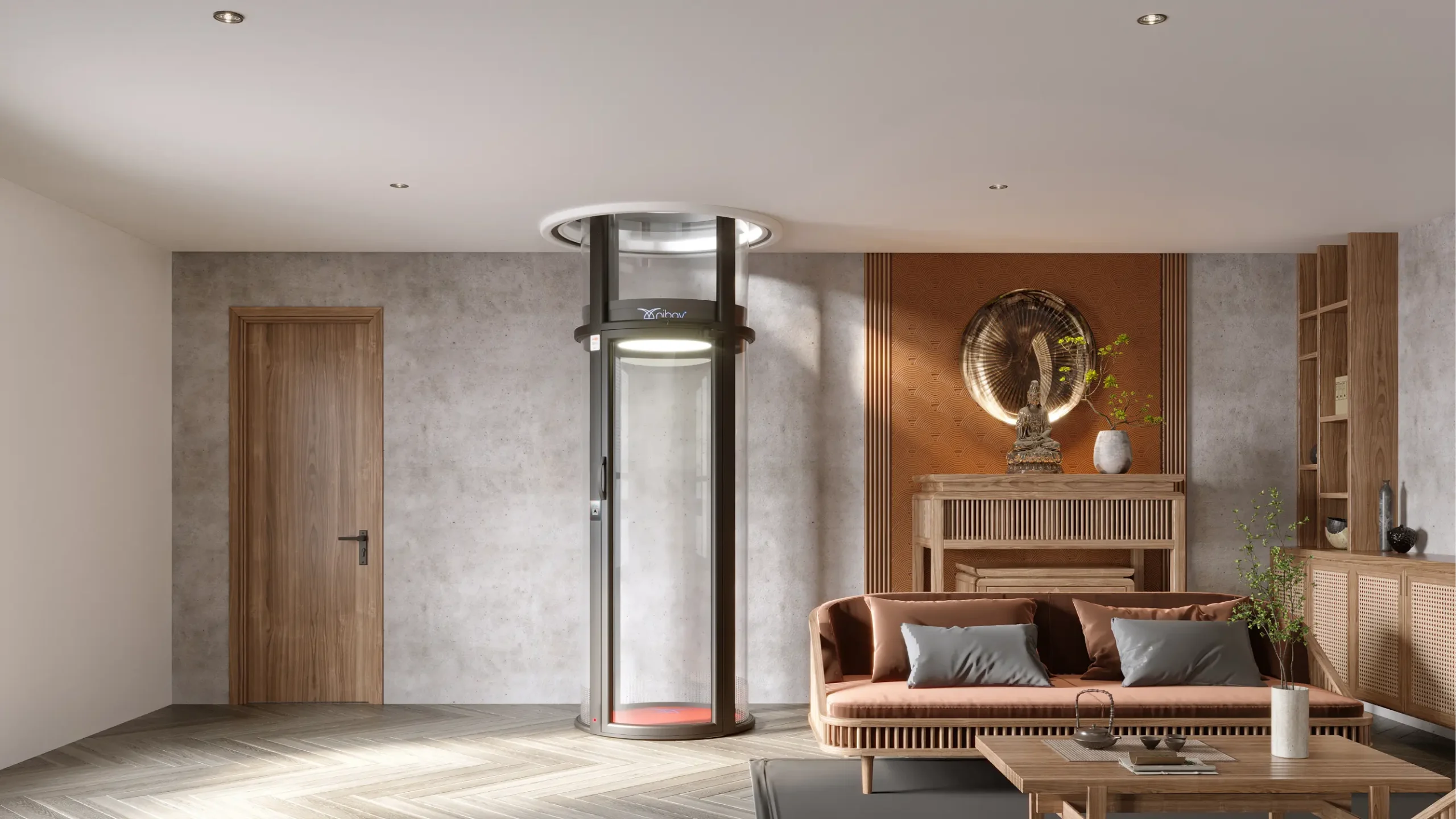
Pneumatic Vacuum Elevators specializes in compact residential elevators that use air-pressure technology instead of hydraulics. The company is known for the smallest residential elevator, the PVE30, which has a 30-inch-diameter interior cab and is designed for single-passenger use.
The PVE30 is well-suited for homes with limited space. It supports up to 350 pounds and operates using a 220V single-phase power supply with a dedicated 25-amp circuit – the type of outlet your washer or dryer would use.
Safety features include a battery backup system, mechanical braking system, emergency telephone, and fully enclosed construction. Pneumatic Vacuum Elevators also emphasize energy efficiency, noting that the system uses power primarily during upward travel. Pricing varies, but the compact footprint and reduced construction needs lower installation costs.
Home Elevator vs. Home Lift
The terms “home elevator” and “home lift” are often used interchangeably, but don’t have the same functionality. A home elevator is a fully enclosed residential elevator system that travels within a shaft between the floors of your home. It’s designed to carry multiple passengers and, in some cases, is wheelchair accessible. Because they’re enclosed systems, they often require more construction space and can accommodate higher weight capacities.
A residential lift system is a broader category that describes a platform lift design that still transports you between floors, but isn’t necessarily enclosed. Think of a stair lift or a wheelchair lift. Home lifts typically have a smaller footprint, lower weight capacity, and simpler installation. Many homeowners choose a home lift when space is limited or when they want a more affordable aging-in-place solution without major home renovations.
That said, many newer home elevators are small and fit into compact spaces. They use standard power, making installation more realistic in existing homes than many homeowners realize. They have become a practical solution for older adults, people with mobility issues, or homeowners planning to age in place.
Types of Home Elevators
There are several types of home elevators. They range from full-size traditional residential elevators to compact shaftless elevators designed for tight spaces. The right option depends on your space, mobility needs, and budget. Take a look:
- Hydraulic Elevators: Traditional elevator systems that use hydraulic fluid to lift the system. They’re larger, quieter systems with smooth rides and higher weight capacities.
- Traction Home Elevators: They use cables and counterweights instead of hydraulics. They’re energy efficient and found in higher-end residential areas.
- Machine Room-Less (MRL) Elevators: MRL elevators eliminate the need for a separate machine room, saving space.
- Winding Drum Elevators: These elevators use a motorized drum-and-cable system to raise and lower the cab. They’re compact and can work well in existing homes.
- Shaftless Home Elevators: A compact elevator that travels through a floor opening without a full shaft. They’re popular for smaller homes and have simpler installations.
- Pneumatic Vacuum Elevators: These use air pressure instead of cables to hoist the elevator between floors. Many models don’t require a pit, hoistway, or machine room.
- Glass Home Elevators: Primarily for aesthetics, offering panoramic views rather than a compact design. They’re commonly installed in luxury homes as a design feature.
Features that Define Small Home Elevators
When comparing residential elevators, a few features make the biggest difference in the amount of space the system requires and how easily it fits into your existing home.
Most home elevators require about 25 square feet of space, though compact models can fit into smaller footprints depending on the design.
Standard residential elevator cabs typically range from 36 to 60 inches deep and 48 to 60 inches wide, whereas the compact options on our list are much smaller. The smallest, a Pneumatic model, starts at just 30 inches in diameter. If wheelchair accessibility is a priority, you’ll need a larger cab that meets ADA accessibility guidelines: 51 inches deep by 68 inches wide, with a 36-inch door. In addition to the safety features established in our previous research, we also considered the following features when defining small home elevators.
Cab Size
Small home elevators are designed with compact cabin dimensions that fit into tighter floor plans. Some of the smallest models start around 30 inches wide. Larger traditional elevators require full enclosed shafts and significantly more interior space.
Weight Capacity
Smaller home elevators usually support lower weight capacities than traditional residential elevators. Compact models can carry one or two passengers with a weight capacity of 350 to 500 pounds. By comparison, larger systems that accommodate wheelchairs, caregivers, or multiple riders at once range from 500 to 1,000 pounds.
Power Requirements
Many small home elevators operate using standard residential electrical service, which can simplify installation and keep electric bills lower. Larger hydraulic or traditional elevator systems often require dedicated higher-voltage power and additional mechanical equipment.
Home Elevator Cost Considerations
Home elevators range in cost from $30,000 to $100,000, including installation. Because they take up less space and often use standard residential power, many homeowners find that smaller home elevators are more cost-effective and still meet their needs. They’re a more realistic option for aging in place without major home renovations. Regardless, even a home elevator for small spaces is an investment. The following are cost considerations as you make this decision:
- Elevator size: Compact home elevators, such as shaftless lifts, through-the-floor models, and pneumatic elevators, are usually among the most affordable options and have a small footprint. Larger models, including those that accommodate wheelchair users, have higher cab capacities and cost more overall due to their size, space requirements, installation, and power needs.
- Installation: All home elevators, regardless of size, need to be installed by a professional. And that adds to the cost. Smaller systems require less floor space and may not need retrofitting, a full hoistway, a machine room, a pit, or a full elevator shaft, thereby reducing labor costs.
- Number of floors: Most small home elevators only travel between two floors. Need more than that, expect a price increase.
- Electrical requirements: Choosing a small elevator that runs on a standard home outlet keeps installation costs lower and reduces your electric bills in the long run. By comparison, larger elevators that require a dedicated outlet cost more.
- Customizations: Customizations always cost more. If you’re on a budget, opt for a simple, frill-free model.Challenging layouts: If you have a small space or a home with a challenging layout, it may require additional construction work.
Frequently Asked Questions (FAQs) About Small Home Elevators
Home elevators typically cost between $20,000 and $100,000. This includes installation. Smaller systems are on the lower end, while larger, customized systems cost more. Final pricing depends on the type of elevator, customizations, and the number of floors.
Most small home elevators take 2 to 14 days to install once construction begins. Complex projects with structural modifications can take longer.
Yes, small home elevators are worth it to many homeowners. They improve accessibility, safety, and long-term aging-in-place planning, while increasing convenience and home value.
The smallest size residential home elevator we found is the Pneumatic Vacuum Elevator, model PVE30. It has an interior cab space with a 30-inch diameter.
No, Medicare doesn’t cover home elevators because they’re considered home modifications rather than durable medical equipment.
Concluding Thoughts on Small Home Elevators
Bottom Line: Small home elevators are a practical solution to meet accessibility and mobility needs without the space commitment of large traditional elevators.
Compact home elevators, including shaftless, pneumatic, and through-the-floor elevators, are designed for tighter layouts while still offering important safety and accessibility features. When deciding on a brand and model, focus on the footprint, cab size, weight capacity, and power requirement to find the right fit for your home. Typically, smaller home elevators are also cheaper to install than their larger counterparts.