
Retirement Living takes an unbiased approach to our reviews. We may earn money when you click a partner link. Learn More
Best Stair Lifts for Split-Level Homes of 2026
Top three companies for navigating split-level staircases with turns and landings


Updated:
We reviewed and tested many brands and models, and consulted experts to create a list of three manufacturers that make curved lifts for stairs with landings and turns. Below, we compare Stannah, Bruno, and Acorn on weight capacity, stairlift installation time, warranty, and cost.
Stannah Stairlifts

4.4
- Ample customizations
- Cost-conscious options
- Rental options available
See More
Stannah Stairlifts, Inc. is a manufacturer and installer of stairlifts for consumers who have difficulty using stairs in their homes due to aging, pain, limited mobility or disability. Established in 1867, Stannah is a fifth-generation family-owned business with US headquarters in Massachusetts. It operates across the US and in 40 countries worldwide through a network of authorized dealers. Since its inception, the company has provided stairlifts to over 750,000 consumers.
Bruno Independent Living Aids

4.6
- Great warranty
- Made in USA
- High customer satisfaction rating
See More
Bruno Independent Living Aids is a third-generation family business located in Wisconsin, dedicated to making products for people with mobility challenges. Bruno manufactures straight and custom-curved rail stair lifts for both indoor and outdoor use. It also makes vertical platform lifts, scooter and power chair vehicle lifts.
Acorn Stair Lifts
4
- Great installation process
- FastTrack® installation system
- Budget-friendly options
See More
For over 25 years, Acorn has worked to set new standards in both quality and innovation in the stairlift industry. Acorn Stairlifts has grown to become the world’s leading independent company specializing solely in the manufacture and installation of stairlifts, pioneering designs and high engineering standards. Acorn was the first company to introduce DC batteries to power their stairlifts during a power outage.
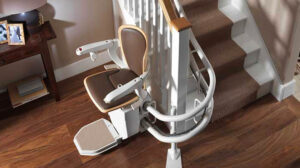
Split-level homes put a short flight of stairs between almost every part of the house. A few steps lead up to the bedrooms and a few more down to the family room, often with a landing or turn in between. For anyone with limited mobility, that layout can make a comfortable home hard to get around.
According to the Centers for Disease Control and Prevention (CDC), falls are the leading cause of injury among adults 65 and older. And stairs carry a high risk. A stair lift can be an accessibility solution in this case. But split-level homes need more than a basic straight stair lift.
Compare Our Top Stair Lift Picks
| Company | Customer Rating | Best For | Installation Timeline | Availability |
|---|---|---|---|---|
| Stannah | 4.4 | Complex turns | About 4 hours | Nationwide |
| Bruno | 4.6 | Heavy riders | 4 to 8 hours | North America |
| Acorn | 4.0 | Quick installation | Within days with a next-day option | U.S. |
How We Chose the Best Stair Lifts for Split-Level Homes
Our team spent 200 hours researching stair lifts for our original guide on the best stair lifts. In that guide, we reviewed 11 companies, tested 18 models, and visited a showroom to try lifts in person. We also analyzed more than 300 customer reviews and spoke with four aging-in-place and accessibility experts.
From that guide, we narrowed the list down even further to companies that make their own lifts, since manufacturers control how a curved rail is measured and built. We then checked each brand’s website for its current curved models, weight capacity, safety features, battery backup, warranty, and installation process. Split-level stairs usually need a lift that can handle a turn or landing, so we focused on curved options.
Stair Lifts for Split-Level Homes Reviews
Stannah Stairlifts Review
Ample customizations
|
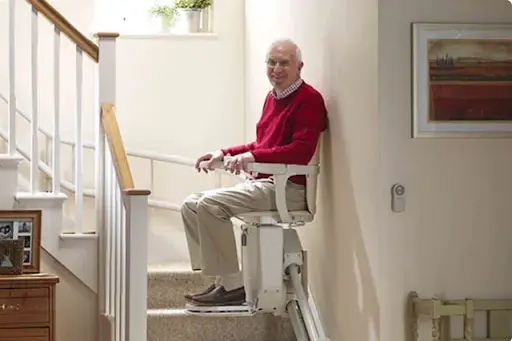
- Weight capacity: Up to 352 lbs on curved stairs (Siena)
- Curved rail option: Yes
- Battery backup: Yes
- Warranty length: Lifetime on the carriage motor gearbox
Why we chose it
Stannah sells three curved stair lifts in the U.S. The Siena is its best-seller and holds up to 352 lbs on stairs that turn. The Starla is the most customizable, with fabric options and optional wood trim. The Sadler lets the rider perch in a standing position, which helps on narrow staircases.
Every Stannah curved rail is measured and built for one staircase. Its rails can follow anything from a single 90-degree turn to a long spiral staircase, which matters in a split-level home, where a landing or turn often sits between levels.
Pros
- Custom curved rails for turns, landings, and spirals
- Three curved chair styles, including a standing option
- Rails are assembled and tested before installation
Cons
- Curved models top out at 352 lbs
- Full warranty terms apply only when you buy directly from Stannah
Safety features
Every Stannah curved lift has a seatbelt and safety sensors that bring the chair to a gentle stop if something is in the way. The Starla adds a seat load sensor. All Stannah chairs swivel at the top of the stairs, and a power swivel seat is available if turning by hand is hard.
What reviewers say
In our research, Stannah stood out for its customization options and stair lift rental program. It also holds an A+ rating with the Better Business Bureau (BBB).
For more information, read our full Stannah review.
Bruno Independent Living Aids Review
Great warranty
|
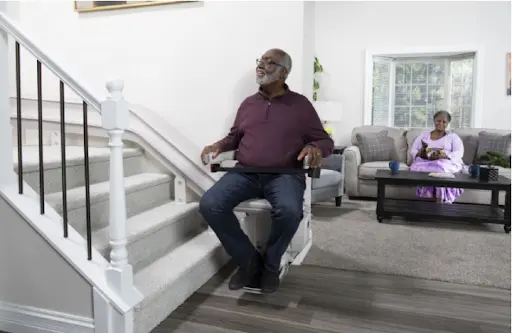
- Weight capacity: 400 lbs
- Curved rail option: Yes
- Battery backup: Yes
- Warranty length: Limited lifetime (Elite Curved Indoor)
Why we chose it
Bruno’s curved lifts are part of its Elite series. There are two curved models: the Elite Curved Indoor and the Elite Curved Outdoor. Both carry up to 400 lbs.
Each rail is custom-made to follow the angles and turns of your stairs. The outdoor model can help at split-level entries, like steps down from a deck. Bruno builds its lifts in the U.S., and local Bruno dealers measure, install, and service them.
Pros
- 400-pound weight capacity
- Limited lifetime warranty on the Elite Curved Indoor
- Curved options for indoor and outdoor stairs
Cons
- The Elite Curved Outdoor has a shorter limited 5-year warranty
- Warranty coverage requires professional installation by a Bruno dealer
Safety features
Obstruction sensors on the carriage and footrest stop the lift if something blocks its path. The controls stop the chair as soon as you let go, and every lift has a seatbelt. The seat locks in place for getting on and off at the top of the stairs, and a power swivel seat is optional. Backup batteries provide several trips during a power outage.
What reviewers say
Our research shows customers praise Bruno’s quality, performance, and innovation.
For more information, read our full Bruno review.
Acorn Stair Lifts Review
Great installation process
|
- Weight capacity: 265 lbs
- Curved rail option: Yes
- Battery backup: Yes
- Warranty length: Lifetime on the motor and gearbox
Why we chose it
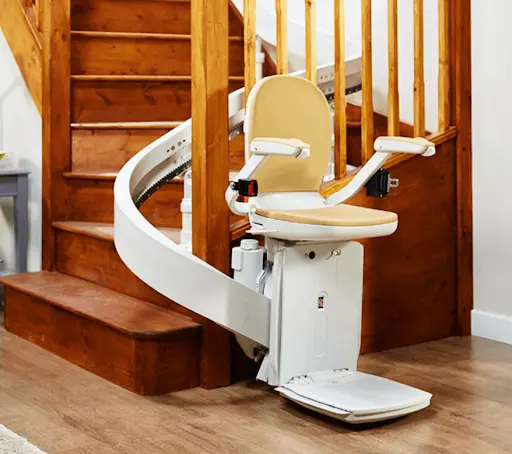
Acorn makes two stair lifts. The Acorn 180 is specifically for curved stairs. It uses a modular aluminum rail fitted to your stairs, so you don’t have to wait for a rail built from scratch.
Acorn says installation can happen within days of the free home survey. A next-day option is also available. The lift attaches to the stairs, not the wall, so your home doesn’t need structural changes.
Pros
- Installation within days, with a next-day option
- Runs on a 24-volt DC battery, so it works during power outages
- Optional hinged rail clears a trip hazard at the bottom of the stairs
Cons
- Maximum weight capacity of 265 lbs
- Only one curved model to choose from
Safety features
The Acorn 180 includes a seatbelt, power folding rail, power folding footrest, diagnostic display, and remote control. It meets the ASME A18.1 safety standard for stair lifts.
What reviewers say
Installation is the main theme in Acorn reviews. Acorn is also the only manufacturer to earn the Arthritis Foundation’s Ease of Use Commendation.
For more information, read our full Acorn review.
Stair Lifts for Split-Level Homes Buyer’s Guide
The right stair lift for a split-level home depends on the shape of your stairs and how you’ll use the lift day-to-day. Start with the staircase, then look at features, fit, and cost.
Types of Stair Lift Companies
You can buy a stair lift from three main types of companies. Each one handles measuring, installation, and service a little differently.
National Mobility Equipment Manufacturers
Manufacturers design and build their own lifts. Some sell and install directly, while others work through trained local dealers. A manufacturer controls how a curved rail is measured and built, which matters most for stairs with turns and landings.
Local and Regional Installation and Service Dealers
Dealers don’t just work with one brand. They can install and repair lifts made by different manufacturers. A good local dealer responds fast for repairs.
Medical Supply Retailers
Medical supply stores don’t just sell stair lifts. They sell home care equipment from many different brands. Their offerings vary, and not all of them handle installation or service appointments.
Features to Look for In Stair Lifts for Split-Level Homes
If you’re wondering whether stair lifts can turn corners, the answer is yes, but they cost more. Most split-level homes need a curved stair lift. Straight staircases run in one straight line with no landing. A straight stair lift costs less and installs faster. Once a staircase turns, stops at a landing, or doubles back in a 180-degree bend, you’ll usually need a curved stair lift with a rail built to follow it.
The following reviews what features you should look for in a stair lift for a split-level home, including standard safety features, seatbelts, and obstruction sensors.
Ease of Use
Split-level homes mean traveling between levels often, so simple controls on your stair lift matter. Most stair lifts use a joystick or button on the armrest. Many also come with call and send remotes, so you can bring the chair to whichever level you’re on.
Getting on and off takes a little practice. The seat swivels at the top of the stairs so you can step off onto the landing instead of the top step. A powered swivel helps if turning the seat by hand is hard. Folding seats, arms, and footrests keep the stairs clear for others when the lift isn’t in use.
Features
A few features matter more on stairs with turns and short flights.
- Obstruction sensors: Sensors on the footrest and carriage stop the lift if something is in the way. This is important in busy split-level stairwells, where shoes, bags, or pets can end up on the steps.
- Smooth starts and stops: A lift that speeds up and slows down gently gives a more comfortable ride, especially around bends. Ask to see the lift move through a turn if you visit a showroom.
- Battery backup: Most lifts run on batteries that recharge while the chair is parked. If the power goes out, you can still make a few trips. Ask how many trips a full charge covers.
- Outdoor-rated models: Many split-level homes have steps up from a garage or down from a deck. Outdoor stair lifts have weather-resistant features built for exterior steps.
Stair Lifts for Split-Level Homes Requirements
If you’re trying to choose a stair lift for a split-level home, you should check the following requirements to make sure your specific measurements match the model you choose.
- Weight limits: our picks range from 265 to 400 pounds.
- Staircase width: most curved stair lifts need a staircase width of a minimum stair lift width of 29 to 34 inches.
- Rail requirements: stair lift rails typically attach to stair treads instead of a wall, so structural work isn’t required.
Costs and Pricing of Stair Lifts for Split-Level Homes
Stair lifts typically cost from $1,500 to $15,000, while installation can add 15% to 30% to that price. Curved lifts cost much more because each curved rail is measured and made for one staircase. They average about $10,000 to $14,000. Straight lifts average about $2,500 to $9,000.
Two of our picks publish starting prices. Stannah straight lifts start at $4,700, and curved lifts start at about $10,800. Bruno says its straight lifts usually start around $4,000, and curved lifts with a basic bend start around $13,000. Bruno notes that its dealer price generally includes delivery and installation. Acorn doesn’t publish prices, but it offers a free home survey and quote. Plan for some ongoing costs too. Annual maintenance runs about $100 to $300, and replacement batteries cost about $30 to $50.
Original Medicare doesn’t cover stair lifts, since it treats them as home modifications. Some Medicare Advantage plans may cover part of the cost. Some Medicaid waiver programs in some states can help pay for one. Veterans may also qualify for help through the U.S. Department of Veterans Affairs (VA).
Limitations of Stair Lifts for Split-Level Homes
Stair lifts don’t work for wheelchair users who can’t transfer safely into and out of the lift. Those users will need a vertical platform lift or home elevator instead. And if your mobility challenges are changing quickly, a lift that works today may not meet your needs in a year.
Very tight turns can also be a challenge. Some narrow curved staircases with sharp 180-degree bends don’t leave enough room for a seated rider. A standing or perch-style lift can sometimes help.
Avoid DIY installation. Curved rails have to be measured and fitted precisely, and a poor installation can make the lift unsafe. It can also void your warranty. For example, Bruno requires installation by a Bruno dealer for its warranty to apply.
Pros and Cons of Stair Lifts for Split-Level Homes
A stair lift can make every level of a split-level home usable again without a major renovation. It also comes with trade-offs, especially for curved models.
| Pros | Cons |
|---|---|
| Structural work is not usually required | Costs more than a straight stair lift |
| Curved rails run through landings and turns | Usually custom models are required |
| Footrests and seats fold up to keep stairs clear | You must be able to transfer to and from the seat |
| Battery backup means the lift can run in a power outage | Separate flights of stairs might need two straight lifts or a long curved lift |
Frequently Asked Questions (FAQs) about Stair Lifts for Split-Level Homes
No. Original Medicare doesn’t cover stair lifts because they’re considered home modifications rather than durable medical equipment. Stannah notes that stair lifts are different from the patient lifts Medicare does cover. Some Medicare Advantage plans may cover part of the cost. Medicaid waiver programs in some states can also help, though enrollment is often limited.
Yes. Platform wheelchair lifts and home elevators work for wheelchair users and people who can’t safely transfer to a seat. They usually need more space and more installation work. Some people in split-level homes also move their bedroom to the main level. Others decide a single-level home is the better long-term fit.
Stair lifts typically cost $1,500 to $15,000, and installation can add 15% to 30%. Straight lifts fall at the lower end of that range. Curved lifts for split-level stairs cost more. Stannah’s curved lifts start at about $10,800, and Bruno’s start around $13,000 for a basic bend.
A curved stair lift runs on one continuous rail built to follow your stairs, including turns and intermediate landings. You stay seated from one level to the next. Some curved lifts offer a park position so the chair sits out of the way when no one is using it. Ask your installer where the chair will rest on each level.
Installing a curved lift usually takes four to eight hours, according to Bruno. Stannah says most of its installs take about four hours. Acorn’s modular rail lets it install within days of a home survey. Custom curved rails can take several weeks to build before installation day.
Concluding Thoughts on Stair Lifts for Split-Level Homes
Split-level stairs often turn, stop at landings, or come in short separate flights. That usually means a curved stair lift with a rail made or fitted for your home. Stannah, Bruno, and Acorn each make curved lifts for these layouts, with different strengths in fit, weight capacity, and installation speed. Get quotes from more than one company, and ask each one to measure your stairs in person for the right fit.