
Retirement Living takes an unbiased approach to our reviews. We may earn money when you click a partner link. Learn More
Best Hearing Aids for Single-Sided Hearing Loss of 2026
Our research shows CROS and BiCROS hearing aids send sound from your deaf side to your better ear.


Updated:
We evaluated 32 hearing aid brands and talked with four audiologists, then narrowed our list to three manufacturers of the best hearing aids for single-sided deafness. All three are prescription brands, so you’ll work with a hearing care provider to get fitted.
Signia Hearing Aids
4.5
- Great Mobile Apps
- Tinnitus solutions
- Large selection of models to choose from
See More
Signia hearing aids offer a broad selection of models with a variety of features to address hearing loss ranging from mild to profound. Signia is a hearing aid manufacturer that offers a mobile app that lets customers receive assistance or communicate with their hearing specialist from anywhere, without an office visit.
Phonak Hearing Aids
4.3
- Broad Product Line
- Has an extended wear option
- Models for all types of hearing loss
See More
Phonak is an award-winning global leader in hearing aid technology. The company offers the broadest line of hearing devices and accessories we found in our research. Phonak hearing aids address hearing loss at any level, from mild to profound, as well as partial loss. The company consistently develops new technology to offer increasingly improved hearing to customers.
Oticon
4.4
- Innovative Products
- Various styles of hearing aids
- Mobile application
See More
Oticon is among the top three hearing aid companies worldwide. The company produces a broad range of hearing devices for all ranges of hearing loss, ages, and lifestyles. Oticon is known for innovative hearing solutions like OpenSound Navigator, BrainHearing, and Deep Neural Network (DNN) technologies. The company maintains quality care after the sale by providing hearing aids only through authorized sellers and hearing care professionals.

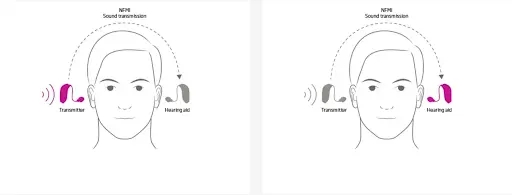
A standard hearing aid can’t help an ear with little or no usable hearing. CROS and BiCROS systems work around that. A small transmitter on your deaf ear picks up sound and sends it wirelessly to a receiver or hearing aid on your better ear. If a CROS or BiCROS system doesn’t work, bone-anchored hearing devices or cochlear implants are options but require a surgical procedure.
In binaural hearing, your brain and ears process sound from both ears at the same time, making it louder and clearer. When you have unilateral hearing loss, also known as single-sided deafness (SSD), or hearing loss in one ear, sounds on one side can seem to disappear. It gets harder to tell where a voice is coming from or follow a conversation in a busy room. Single-sided hearing loss often comes on suddenly. Sudden sensorineural hearing loss strikes between one and six people per 5,000 every year, according to the National Institute on Deafness and Other Communication Disorders (NIDCD), and it frequently affects only one ear.
Compare Our Top Hearing Aid Picks
| Company | Best for | Device type | CROS options | Availability |
|---|---|---|---|---|
| Signia | Variety of styles | RIC, CIC, Earbud style | 4 models | With a prescription |
| Phonak | Bluetooth calls and streaming | RIC | 1 model | With a prescription |
| Oticon | Streaming without missing a conversation | RIC | 3 models | With a prescription |
How We Chose the Best Hearing Aids for Single-Sided Hearing Loss
We started with the 32 hearing aid brands in our best hearing aid companies guide, which included device testing and conversations with four audiologists. For this guide, we narrowed the list to manufacturers that make CROS or BiCROS systems, since those are the hearing aids built for single-sided hearing loss. We checked each brand’s current lineup, compatibility, battery life, and streaming claims against the manufacturer’s website. We also looked at how many styles each brand offers and whether it supports BiCROS for people with hearing loss in their better ear.
Hearing Aids for Single-Sided Hearing Loss Reviews
Signia Hearing Aids Review
Great Mobile Apps
|
- Battery life: Not specified
- BiCROS available: Yes
- Bluetooth streaming: Yes
- Rechargeable: Yes
Why we chose it
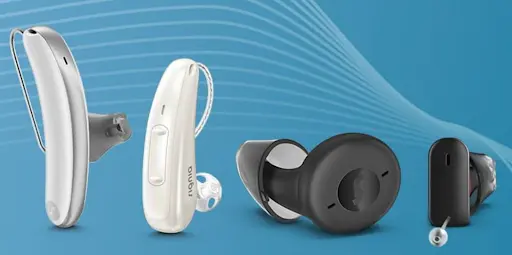
Signia’s CROS IX line includes four transmitter styles on its current Integrated Xperience (IX) platform. Pure Charge&Go IX has a classic receiver-in-canal (RIC) shape. Styletto IX is slimmer and more fashion-forward, and Active IX looks like an earbud. Silk Charge&Go IX sits inside the ear canal. Signia calls it the world’s only ready-to-wear rechargeable CROS completely-in-canal (CIC) hearing aid. Each style can be set up as a CROS or BiCROS system, so you can choose based on look and comfort.
Pros
- Four CROS styles, including an in-canal option
- Supports both CROS and BiCROS
- Rechargeable with app control on iPhone and Android
Cons
- Signia doesn’t list battery life for its CROS models
- Streaming isn’t listed for its in-canal Silk style.
CROS system details
Signia uses what it calls skewed directionality, a microphone setting. The transmitter’s microphones focus toward your deaf side to help you understand speech coming from that direction. The devices charge wirelessly and connect to the Signia app. Active IX also handles hands-free calls and streaming.
For more information, read our full Signia review.
Phonak Hearing Aids Review
Broad Product Line
|
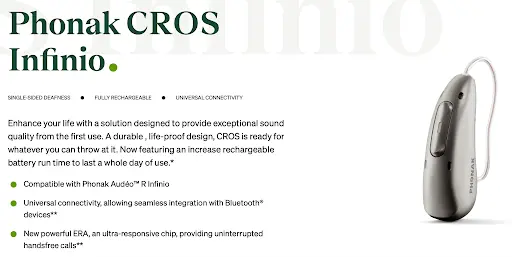
- Battery life: 16+ hours
- BiCROS available: Yes
- Bluetooth streaming: Yes
- Rechargeable: Yes
Why we chose it
Phonak’s current hearing aid platform is Infinio. Its CROS Infinio transmitter pairs with the Audéo Infinio, Phonak’s rechargeable RIC hearing aid, on your better ear. Phonak designed it for people with hearing loss on one side that a regular hearing aid can’t help, whatever the hearing level in the other ear. That means it can work as a CROS or BiCROS system. The standout is universal Bluetooth, which connects to iPhones, Android phones, and other devices for hands-free calls and streaming.
Pros
- Hands-free calls with most Bluetooth phones
- Works with Phonak’s Roger wireless microphones
- Rechargeable battery lasts a full day
Cons
- Pairs only with Phonak’s Audéo Infinio RIC hearing aid
- Roger microphones are a separate purchase
CROS system details
Phonak says CROS Infinio has four times more wireless transmission power for a steadier connection, and calls and streaming reach twice the distance. If you struggle in noisy restaurants or meetings, Phonak’s Roger microphones can send a speaker’s voice to your hearing aids from up to 80 feet away.
For more information, read our full Phonak review.
Oticon Review
Innovative Products
|
- Battery life: Not specified
- BiCROS available: Yes
- Bluetooth streaming: Yes
- Rechargeable: Yes, on CROS RE and CROS PX
Why we chose it
Oticon’s newest hearing aid family is Reveal, which Oticon calls the world’s first hearing aid powered by a Dual AI system. Oticon sells three CROS transmitters. CROS RE is the newest, and it works with Reveal and other recent Oticon hearing aids. CROS PX is also rechargeable, and the original Oticon CROS uses a disposable battery. Oticon says its CROS can be fitted as a CROS or BiCROS system.
Pros
- Stream audio and hear your deaf side at the same time
- Rechargeable and disposable battery options
- Nine color choices on CROS RE
Cons
- Battery life is not listed for CROS models
- Oticon doesn’t say which hearing aids work with each CROS model
- Rechargeable CROS models come only in a miniRITE (RIC) style
CROS system details
Oticon’s TwinLink technology runs two wireless technology systems at once. One sends sound from your deaf ear to your better ear, and the other handles streaming from your phone or TV. Oticon reports a 50% average improvement in awareness of speech around you while streaming.
For more information, read our full Oticon review.
Hearing Aids for Single-Sided Deafness Buyer’s Guide
Choosing a solution for single-sided hearing loss starts with how much hearing you have in each ear. From there, you can compare device types, features, and costs with a hearing care provider.
Key insights
- CROS and BiCROS hearing aids send sound from your poorer ear to your better ear without surgery.
- CROS systems and bone-anchored devices don’t restore your sense of where sounds come from. Cochlear implants can improve it.
- Original Medicare doesn’t cover hearing aids, but Part B can cover bone-anchored implants and cochlear implants for eligible adults.
Types of Hearing Aid Companies for Single-Sided Deafness
There are a few types of hearing aids that help with one-sided hearing loss. For the purposes of this guide, the focus is on those systems that don’t require surgery.
CROS and BiCROS System Manufacturers
Hearing aid manufacturers like Signia, Phonak, and Oticon sell CROS and BiCROS systems through hearing care providers. There’s no surgery involved. These devices use contralateral routing to pick up sound from your deaf ear and move it to your better-hearing ear. You pay for the devices and fitting, the same as with a regular prescription hearing aid.
Bone-Anchored Hearing System Makers
Bone-anchored systems are bone-conduction devices that send sound through your skull to the inner ear on your hearing side. Most require minor surgery to place a small implant behind the ear, and a sound processor attaches to it. Costs include both the device and the surgery.
Cochlear Implant Manufacturers and Surgical Providers
A cochlear implant is surgically placed in the deaf ear and directly stimulates the hearing nerve. The FDA approved cochlear implants for single-sided deafness in 2019. It’s the only option that gives the deaf ear its own hearing back, which can help you tell where sounds come from. It also involves the most surgery and costs the most.
What to Look For in the Best Hearing Aids for Single-Sided Deafness
Shopping for single-sided hearing loss is different from buying a standard pair of hearing aids. A regular hearing aid makes sound louder in an ear that can still use it. When one ear has little or no usable hearing, the goal shifts to getting sound from that side to your good ear.
If you aren’t sure what level of hearing loss requires a hearing aid, an audiologist can test your hearing in each ear to show your level of hearing loss and which type of device fits you. An ear, nose, and throat (ENT) doctor checks for medical causes that need treatment first and can discuss surgical options.
Ease of Use
CROS and BiCROS systems are the easiest hearing aids to start with for single-sided hearing loss. Your hearing care professional fits both devices and pairs the transmitter with your hearing aid during your appointment. You don’t have to do any setup yourself.
Expect an adjustment period while your brain gets used to hearing on your deaf side through your good ear. Plan on a few follow-up visits so your hearing care professional can fine-tune the settings. Make sure you’re aware of the trial period before you buy.
Features and Specs
Most CROS and BiCROS systems share the same core features, but how each brand handles them varies. Compare these features with your provider when choosing a system.
- Wireless transmission: Every CROS system sends sound wirelessly from the transmitter to the hearing aid on your better ear. Some brands use a separate short-range link for this, called near-field magnetic induction (NFMI), so Bluetooth streaming isn’t interrupted. Oticon’s TwinLink works this way.
- Bluetooth streaming: Lets you take calls and stream music or TV to your better ear. Check that the CROS hearing aids you choose support it.
- Rechargeable batteries: Most current CROS transmitters are rechargeable. Among our picks, Phonak is the only brand that publishes a battery rating for its CROS system, at more than 16 hours per charge.
- App control: Lets you change volume and programs from your phone.
- Directional microphones and feedback management: Help you follow speech in noise and cut down on whistling. Signia, for example, focuses its transmitter’s microphones toward your deaf side.
- BiCROS support: You’ll need this if your better-hearing ear also has hearing loss.
Eligibility Requirements
Start with a hearing test that measures how well each ear hears and how well you understand speech.
CROS is for when one ear doesn’t benefit from a regular hearing aid, and you have normal hearing in the other ear. BiCROS is for when your better ear also has mild to moderate hearing loss. If that loss is significant, you might need hearing aids for severe hearing loss.
Cochlear implants have stricter requirements. Candidates need profound hearing loss in one ear and normal or mildly reduced hearing in the other. For implants from MED-EL, a major cochlear implant maker, FDA approval also requires at least one month of trying a hearing aid, CROS, or other device without any benefit.
Before you choose a hearing aid, you should have a medical exam to rule out underlying causes of hearing loss. Sudden hearing loss from something like a head trauma is a medical emergency, and it’s most often treated with corticosteroids. When sudden loss affects only one ear, doctors should rule out tumors on the hearing nerve. An ENT doctor may order an MRI to check for an acoustic neuroma. Conditions like Ménière’s disease also need a diagnosis before you choose a device.
Hearing Aids For Single-Sided Deafness Costs and Pricing
Hearing aids for single-sided hearing loss typically range from a few thousand dollars to $100,000, depending on device type, insurance or Medicare coverage, and whether a surgical procedure is required.
CROS and BiCROS systems cost the least because there’s no surgery. None of our picks publish prices. As with other prescription hearing aids, the price depends on your provider and technology level and usually includes your fitting and follow-up visits. Prescription hearing aids cost $4,000 to $12,000.
Surgical options cost far more because the price includes the procedure. A bone-anchored implant averages about $11,600 for a design with a post through the skin and about $13,900 for a magnet-based design, according to CareCredit. Cochlear implants cost $50,000 to $100,000 for the device, surgery, and rehabilitation, according to Duke Head and Neck Surgery.
Original Medicare doesn’t cover hearing aids, and this includes CROS hearing systems. It does treat bone-anchored implants and cochlear implants as prosthetic devices, so Part B can cover them for eligible adults. You’d typically pay 20% after the Part B deductible. Some Medicare Advantage plans offer hearing aid benefits, and most private insurers help cover cochlear implants.
Limitations of Hearing Aids for Single-Sided Hearing Loss
CROS and BiCROS systems don’t restore hearing in your deaf ear. They move sound to your good ear, so you still may not be able to tell where a sound is coming from. In a noisy room, background noise from your deaf side also gets sent to your good ear.
Bone-anchored systems carry surgical risks, and skin problems around the implant are the most common. Cochlear implants involve the most surgery and cost, plus ongoing programming visits and hearing rehabilitation.
Pros and Cons of Hearing Aids for Single-Sided Deafness
For most people newly diagnosed with single-sided hearing loss, a CROS or BiCROS system is the least invasive place to start. It brings back awareness of sound on your deaf side without surgery. Surgical options can do more for some people, but they cost more and carry more risk.
| Pros | Cons |
|---|---|
| Hear sounds on your deaf side | Doesn’t help you determine sound localization |
| CROS and BiCROS don’t require surgery | You wear a device on both ears |
| Group conversations can be easier to follow | Noise from your deaf side transfers to your better ear |
| Bluetooth and streaming are on many CROS systems | CROS are not covered by original Medicare |
| BiCROS also treats hearing loss in your better ear | Surgical options like bone-anchored and cochlear implants cost a lot more |
Frequently Asked Questions (FAQs) About Hearing Aids for Single-Sided Hearing Loss
It depends on your hearing in each ear. For most people, a CROS hearing aid is the first thing to try, or a BiCROS if your better ear also has hearing loss. Our picks are Signia, Phonak, and Oticon, which all make CROS and BiCROS systems.
For many people, yes. A CROS lets you hear sounds and voices on your deaf side, which helps in conversations and group settings. It won’t restore your sense of where sounds come from, so a trial period is the best way to see if it works for you.
A CROS system has two parts. A transmitter on your deaf ear picks up sound and sends it wirelessly to a receiver or hearing aid on your better ear. With BiCROS, the device on your better ear also amplifies sound to treat hearing loss in that ear.
Causes of single-sided hearing loss include sudden sensorineural hearing loss, Ménière’s disease, acoustic neuromas, head trauma, and infections. See a doctor right away if you suddenly lose hearing in one ear.
It can be, depending on the law. Social Security’s hearing loss listing is based on the hearing in your better ear, so single-sided loss usually won’t meet it on its own. Under the Americans with Disabilities Act, a hearing impairment counts if it substantially limits your hearing, judged without the help of a hearing aid.
Concluding Thoughts on Hearing Aids for Single-Sided Hearing Loss
CROS and BiCROS are the most affordable and easiest place to start when it comes to the best hearing aids for single-sided deafness. They move sound from your deaf ear to your better ear. If a CROS system doesn’t work, then you would need to discuss surgical options like a bone-anchored system or cochlear implant. To start the process, have a hearing test done by a hearing care professional and get checked out by an ENT to rule out a medical condition. Once you understand the device you need, compare features such as style, battery life, and streaming options.