
Retirement Living takes an unbiased approach to our reviews. We may earn money when you click a partner link. Learn More
Does a Stair Lift Increase Home Value?
Understand how a stairlift affects resale value, buyer demand, and whether it makes sense for aging in place.


Updated:
AT A GLANCE:
- A stairlift usually has a neutral effect on home value since it does not raise resale value or significantly reduce it for most buyers.
- It can be valuable for buyers with mobility needs, but it does not appeal to the majority who prioritize layout, space, and design.
- Its main benefit is improving safety and accessibility for people aging in place rather than increasing financial return at resale.
A stairlift usually does not increase home value, but it also does not lower it in most cases. It serves a specific need rather than adding broad appeal to potential buyers.
This article explains how a stairlift affects resale value, buyer interest, and whether it makes sense for aging in place.
How a Stairlift Affects Home Value
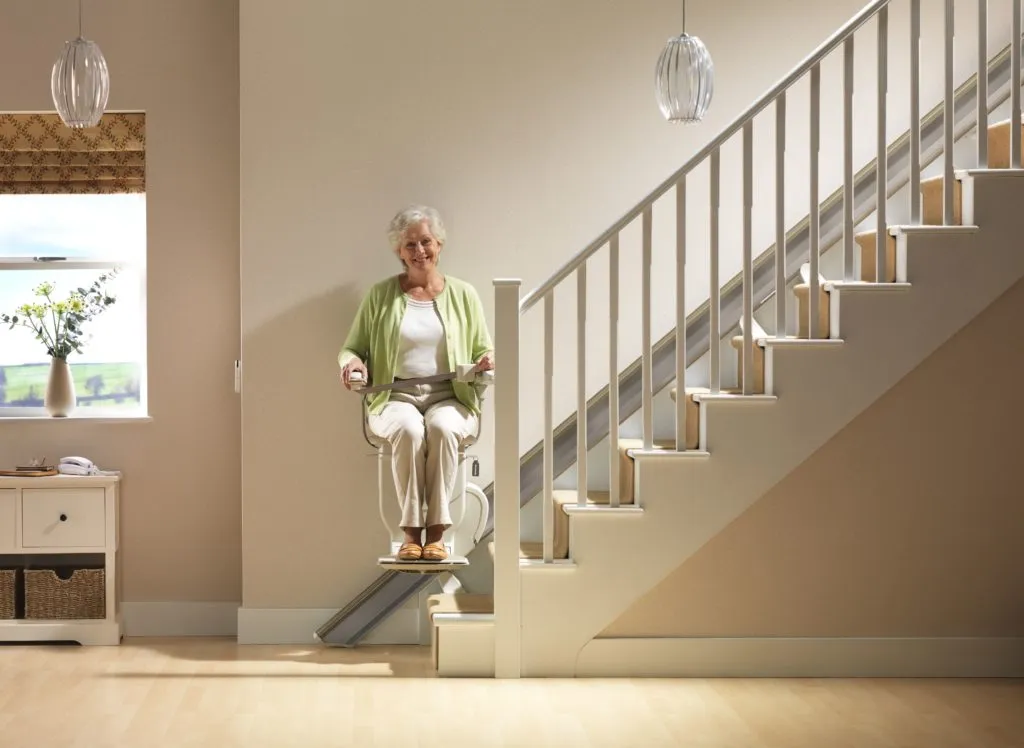
A stairlift helps people with mobility issues move between floors. It does not act as a standard home upgrade that raises property value.
Most potential buyers do not need a stairlift. Many buyers focus on layout, space, and overall home design. A stairlift does not improve these factors. Some buyers may view it as a sign of limited mobility use. That can reduce broad appeal in the real estate market.
At the same time, a stairlift does not damage the value of your home. You can remove it without major changes to the structure. Stairlift installation uses tracks mounted to the stairs, not the walls. Removal leaves minimal marks and does not affect the home’s layout.
Buyers who need accessibility features may see added value. This includes older adults, caregivers, or anyone planning aging in place. For these buyers, the stairlift improves functionality and daily living.
In most cases, the impact stays neutral. The stairlift supports mobility needs but does not increase resale value for the average buyer.
To compare top stairlift companies side by side, visit our best stair lifts guide and review pricing, features, and installation options before you decide.
When a Stairlift Can Be Valuable to Buyers
A stairlift becomes useful when a buyer has mobility issues and needs safe access between floors. It supports daily movement in a multi-level home and reduces fall risk during routine use. Older adults who plan aging in place can use a stairlift to access the full living space without changing the home’s layout.
Families who support a loved one with limited mobility may also value this feature. It helps caregivers manage daily routines with less physical effort and supports safer movement inside the home. In houses with steep or narrow stairs, a stairlift improves functionality without major home modifications. In these situations, the value comes from safer access and consistent use.
Top Stairlift Brands
If you are considering a stairlift, compare leading providers based on cost, features, and support. These companies offer a range of options for different mobility needs and home layouts.
| Brand | Best For | Starting Cost | Key Features | Warranty |
|---|---|---|---|---|
| Acorn Stairlifts | Fast installation | $3,200 | FastTrack® system, direct installation, compact design | 1-year |
| Bruno | High-quality builds | $4,000 | Made in USA, strong dealer network, safety features | 2-year to lifetime |
| Stannah | Custom options | $3,400 | Perch seat, narrow stair fit, rental options | 2-year to lifetime |
| Handicare | Compact design | $3,100 | Slim rail, foldable seats, emergency stop switch | 2-year to lifetime |
What Are the Disadvantages of Stairlifts?
A stairlift can create practical challenges in daily use, especially in homes with limited space or shared stair access.
Here are the main drawbacks to consider:
- It takes up space on the staircase, which can limit how others use the stairs
- It can interrupt the flow of the living space, especially if not folded after use
- It remains visible and may not match the home’s interior design
- It serves a specific purpose, so people without mobility issues may not use it
Stairlifts vs. Home Elevators and Other Upgrades
A stairlift provides a cost-effective mobility solution. It installs on existing stairs and requires minimal changes to the home’s layout. Installation is quick, and most systems use standard power. Stairlifts focus on functionality for people with limited mobility and do not typically increase resale value.
A home elevator or residential elevator requires construction and space planning. It integrates into the home design and functions as a long-term upgrade. These systems can increase property value because they appeal to a broader range of buyers.
Other accessibility upgrades, such as wheelchair ramps, grab bars, and step-free entries, can also add value. These changes improve home accessibility and fit more naturally into the home’s layout, which appeals to a wider range of potential buyers.
Cost vs. Value: Is a Stairlift Worth It?
A stairlift cost depends on the type and your home’s layout. Straight stairlifts usually cost between $2,000 and $5,000, and renting stairlift options may also be available depending on your needs. Curved stairlifts often range from $7,000 to $15,000 or more due to custom tracks and installation.
You are paying for safety and daily function. Most stairlifts include seat belts, swivel seats, and simple controls. These features support safe use for people with limited mobility.
A stairlift can be worth it if you plan to stay in your own home. It allows full access to all floors without major renovations. It also reduces fall risk and supports independent movement.
The value comes from use, not resale. If mobility challenges affect daily life, a stairlift offers a practical and cost-effective solution.
Should You Remove a Stairlift Before Selling?
In most cases, you should remove a stairlift before listing your home. This helps you appeal to a wider group of potential buyers. Many buyers prefer a standard staircase without added equipment.
Removal is simple and does not require major repairs. The track attaches to the stairs, not the walls. After removal, you may only need minor touch-ups on the steps.
You may choose to keep the stairlift if you expect buyers with mobility needs. Some buyers look for move-in-ready accessibility features. However, this is a smaller segment of the market.
If you are unsure, remove the stairlift and keep it stored. You can offer it as an option during negotiations if a buyer wants it.
Does a Stair Lift Increase Home Value?: FAQs
A stairlift may qualify as a medical expense deduction if a doctor prescribes it for a specific condition. The IRS may allow this under home modifications for medical care. You can only deduct the portion that exceeds any increase in your home’s value.
Yes, you can sell a house with a stairlift. It may limit some buyers who do not need it, but it can attract buyers with mobility needs. Many sellers remove it before listing, but you can also include it as part of the sale.
Some home improvements increase property value, but not all. Accessibility upgrades like wheelchair ramps, grab bars, and step-free entries can add value because they improve access for more buyers. Stairlifts improve function but usually do not increase resale value for most buyers.
Help us improve our guides! If you’ve recently installed a stairlift or have experience using one in your home, we’d love to hear from you. Share your insights with us at [email protected]. Your personal details will stay completely confidential.