
Retirement Living takes an unbiased approach to our reviews. We may earn money when you click a partner link. Learn More
OTC vs. Prescription Hearing Aids: What’s the Difference?
Compare cost, fit, and support, so you pick the hearing aid that fits your life.


Updated:
At a glance:
- OTC hearing aids often run $200 to $2,000 per pair, while prescription hearing aids cost $2,000 to $7,000.
- OTC devices are self-fitting, but prescription hearing aids need a hearing test and professional programming.
- OTC hearing aids are built for mild to moderate hearing loss, not severe or profound hearing loss.
- Prescription hearing aids include audiologist visits and follow-up care, while OTC support happens through an app or a customer service line.
- Most brands offer a return window between 30 and 100 days.
- Original Medicare does not cover hearing aids, though some Medicare Advantage plans offer partial benefits.
OTC vs. prescription hearing aids differ in the level of support you want. OTC hearing aids skip the hearing test and audiologist visit. Prescription hearing aids come with professional fitting and follow-up care. Your choice depends on the severity of your hearing loss, your budget, and how comfortable you are managing the technology yourself.
What Are OTC Hearing Aids?
OTC hearing aids are FDA-regulated devices you can buy without a prescription, a medical exam, or a hearing test. The FDA created this category in 2022 for adults with mild-to-moderate hearing loss.
You set them up yourself through a smartphone app, adjusting volume control and sound profiles as you go. Some brands, like Audicus, offer optional remote support from a hearing care professional if you want extra guidance.
Most OTC hearing aids ship within days, and you can return them under the brand’s standard return policy if they aren’t a fit.
What Are Prescription Hearing Aids?
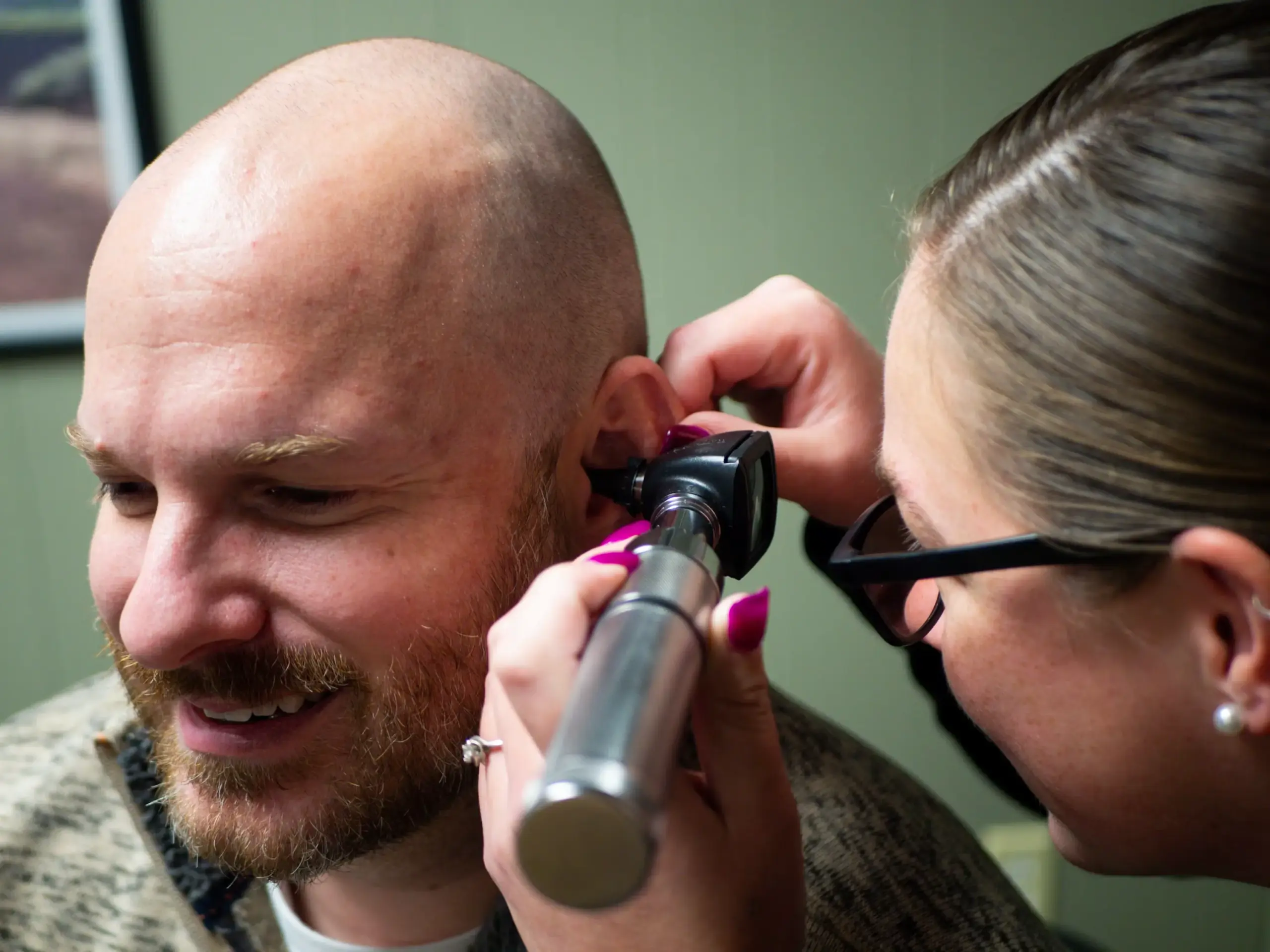
Prescription hearing aids require a hearing test and a fitting with an audiologist. The audiologist reviews your results, checks your ear canal for earwax buildup, and recommends devices suited to your specific hearing loss.
Your provider programs the hearing aids to your audiogram, then schedules follow-up visits to fine-tune the fit. This custom-fit process matters most for people with severe hearing loss, since general-purpose amplification often isn’t enough.
Prescription options include behind-the-ear, in-the-ear, and receiver-in-canal styles, and most come bundled with a warranty and ongoing care.
How Much Do OTC and Prescription Hearing Aids Cost?
If you’re watching your budget, over-the-counter hearing aids are the friendlier option. You can find entry-level pairs for under $300, and even the fancier ones rarely cross $2,000.
Prescription hearing aids cost around $2,000 to $7,000 per pair. This price includes your hearing evaluation, the fitting appointment, and a year or more of follow-up visits with an audiologist.
Some retailers, like warehouse clubs, sell prescription-grade devices for less by cutting out that service bundle. So always ask exactly what’s included before you make a purchase.
Which Type Works Best for Your Hearing Loss?
Your degree of hearing loss should drive this decision more than price. OTC hearing aids are built and regulated for adults with mild to moderate hearing loss. They’re not designed for severe or profound hearing loss, single-sided deafness, or hearing loss tied to a medical condition.
If your hearing loss is sudden, uneven between ears, or affects your balance, see an audiologist before buying anything. A hearing evaluation can catch underlying issues that a self-fitting device won’t address. But if your hearing loss is mild and stable, an OTC device is a reasonable and far more affordable starting point.
How Much Support Do You Get After You Buy?
Prescription hearing aids come with built-in follow-up care. Your audiologist adjusts the programming as your hearing changes and helps troubleshoot fit issues, feedback, or tinnitus-masking settings.
With OTC hearing aids, that work falls on you. You’ll manage volume control and sound settings through an app, and most brands offer phone or chat support if something isn’t working.
A few, like Audicus, blend the two models by pairing OTC pricing with optional professional support. If you’d rather have hands-on help adjusting your devices, a prescription is the better fit, especially if you’re still learning how hearing aids work day to day.
Does Insurance Cover OTC or Prescription Hearing Aids?
Don’t count on insurance to cover the cost for either type of hearing aid. Original Medicare excludes hearing aids and hearing exams entirely, whether you get them OTC or by prescription.
Some Medicare Advantage plans include a hearing benefit, but coverage amounts and vendor networks vary widely by plan. Private insurance is just as inconsistent.
Many buyers turn to FSA or HSA funds instead, and several brands offer financing or subscription plans to spread out the cost. So check your specific plan before assuming either way.
How to Decide Between OTC and Prescription Hearing Aids
Get a hearing evaluation first, even if you plan to buy OTC. Knowing your degree of hearing loss tells you whether you’re a good candidate for self-fitting devices or need professional programming.
From there, weigh your budget against the level of hands-on support you want. Over-the-counter hearing aids save money and get you hearing help fast. Prescription hearing aids cost more but include the professional care that severe hearing loss often requires.
Top Hearing Aid Brands Compared
Here’s how some of the best hearing aid companies stack up across OTC and prescription options.
| Brand | Type | Best For |
|---|---|---|
| Eargo | OTC | Discreet, in-canal design with no prescription needed |
| ELEHEAR | OTC | Budget-friendly pricing with app-based sound control |
| Audicus | OTC, with audiologist support available | Buyers who want remote professional guidance |
| Jabra Enhance | OTC | Bluetooth streaming and virtual consultations |
| Oticon | Prescription | Complex or profound hearing loss |
| Starkey | Prescription | AI sound processing and wellness tracking features |
Frequently Asked Questions (FAQs) About OTC vs. Prescription Hearing Aids
Yes. Many people start with OTC hearing aids and move to prescription devices if their hearing loss progresses or they want more customization.
For mild to moderate hearing loss, many perform well. Prescription hearing aids still offer more precise programming and better sound quality for complex or severe hearing loss.
No, but taking one is still smart. A hearing test confirms your degree of hearing loss and whether OTC hearing aids are appropriate for your situation.
Some include basic masking sounds, but prescription hearing aids offer more advanced, audiologist-programmed tinnitus therapy.
Help us improve our guides! If you’ve recently compared OTC and prescription hearing aids, we’d love to hear from you. Share your experience with us at [email protected]. Your personal details will stay completely confidential.