
Retirement Living takes an unbiased approach to our reviews. We may earn money when you click a partner link. Learn More
Best Hearing Aids to Reduce Background Noise of 2026
Top OTC and prescription picks for clearer speech in noisy settings.


Updated:
Our top picks for the best hearing aids to reduce background noise include Eargo, Audicus, and ELEHEAR. We compared noise reduction processing, directional microphone systems, automatic environment detection, and pricing to help you find the right fit for your hearing needs.

4.7
Eargo hearing aids treat mild to moderate hearing loss. Consumers can buy breathable, rechargeable hearing aids online. No hearing test or prescription is needed. Eargo provides unlimited phone support from licensed hearing professionals.
- Innovative Products
- Expedited process
- 2 hearing aid models available
4.7
Audicus offers affordable RIC hearing aids. Customers receive free lifetime audiology support, fully customized hearing aids, and a 100-day risk-free trial.
- Fully customized hearing aids starting at $35/mo
- Lifetime audiology support
- 45 Day Risk-Free Trial
4.5
ELEHEAR offers affordable OTC hearing aids available for purchase online. The three offerings are rechargeable with app-based sound customization and AI noise reduction. ELEHEAR provides remote support and a risk-free trial period.
- Great Battery Life
- Rechargeable, app-controlled models
- AI noise reduction
Jabra Enhance offers online tools that begin with a virtual consultation. This helps you find the right hearing aid for your needs. After receiving them, the company provides support as needed. Jabra Enhance offers a great choice for those seeking affordable hearing aids. You don’t need to visit an office to get them.
- Trained audiology care team support
- 100-day free trial
- 3-year warranty
Phonak is an award-winning leader in hearing aid technology. The company offers six lines of hearing devices, each with a variety of models. Phonak produces crisp, natural sound that adjusts to your environment.
- Broad Product Line
- Has an extended wear option
- Models for all types of hearing loss
4.4
Oticon is a tech leader. Its high-quality products are pricey but seen as top-notch.
- Innovative Products
- Various styles of hearing aids
- Mobile application
Starkey is a U.S. manufacturer. The devices blend advanced AI sound processing with health and wellness tracking features. Its current lineup features different styles for customization and comes with the My Starkey app for adjusting the hearing aids.
- Great variety available
- Health and wellness tracking features
- Large, well-known hearing aid manufacturer

4.6
Lexie Hearing aids are affordable and offer easy access to customer service. The company sells directly to consumers. This allows for lower costs. You can also choose Lexie Hearing subscription payment plans.
- Great Technology
- 45-day free trial
- Affordable subscription available
Hearing aids for background noise use advanced sound processing to separate speech from competing sounds. Modern options use automatic scene detection and directional microphone systems to reduce noise without manual adjustments.
This guide compares the best hearing aids for background noise and covers costs, technology features, and the difference between prescription and OTC options.
If you want to explore all hearing aid options beyond noise reduction, read our best hearing aid companies guide.
Best Hearing Aids to Reduce Background Noise at a Glance
| Brand | Best For | Price Range | Style Options |
|---|---|---|---|
| Eargo | Discreet in-canal design | $1,650 – $2,699/pair | CIC |
| Audicus | Affordable OTC performance | $699 – $1,799/pair | RIC, CIC |
| ELEHEAR | Budget-friendly AI noise reduction | $399 – $599/pair | RIC |
| Jabra Enhance | OTC with remote support | $1,195 – $1,955/pair | RIC |
| Phonak | Automatic environment switching | From $2,600/pair | RIC, BTE, ITE, IIC |
| Oticon | Speech clarity in noise | Contact for pricing | RIC, BTE, ITE, CIC |
| Starkey | AI-powered processing | Contact for pricing | RIC, BTE, ITE, IIC, CIC |
| Lexie Hearing | Affordable self-fitting OTC | $299 – $899/pair | RIC, earbud |
How We Chose the Best Hearing Aids to Reduce Background Noise
We evaluated hearing aid brands based on their noise reduction technology and real-world performance in loud environments. We focused on brands available across the U.S. that serve a range of hearing loss levels and budgets.
We compared each brand based on factors that matter most for background noise performance:
- Noise reduction and speech enhancement technology
- Directional microphone systems and ability to isolate speech
- Automatic environment detection and program switching
- App controls for real-time noise adjustment
- Battery life and rechargeability
- Price range and availability across prescription and OTC options
- Warranty coverage and customer support
We also considered whether each brand offers remote fine-tuning and ongoing professional support options.
Hearing Aids to Reduce Background Noise Reviews
Eargo Review
Innovative Products
|
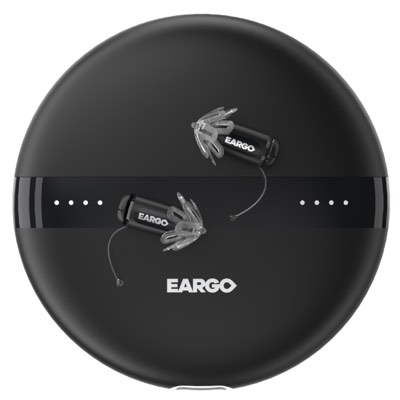
Eargo designs hearing aids for people who want near-invisible wear with solid noise filtering. Their Eargo 8 model sits fully inside the ear canal and uses Smart Sound Adjust technology to automatically detect and adapt to noisy environments
Eargo aids are sold direct-to-consumer online with licensed hearing professional support included. They suit mild-to-moderate high-frequency hearing loss.
Key Features
- Nearly invisible in-canal design
- Smart Sound Adjust detects and adapts to noisy environments
- Soft silicone trumpet tips provide a comfortable, secure canal fit
- Remote professional support included with purchase
- Rechargeable via portable charging case
Pricing and Warranty
- Price range: $1,650 to $2,699 per pair
- Sold directly online
- Two-year warranty included
Pros
- Most discreet design of any brand reviewed
- Remote professional support included at no extra cost
- No office visit required
Cons
- Not suitable for moderate-to-severe hearing loss
- Limited Bluetooth streaming on most models
- Canal fit may not suit all ear shapes
For more information, read our full Eargo review.
Audicus Review
Fully customized hearing aids starting at $35/mo
|
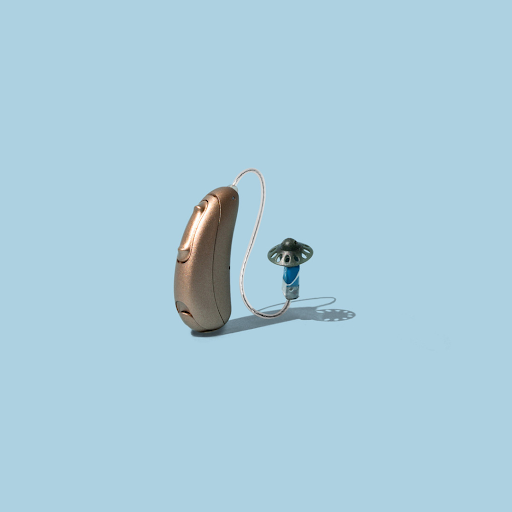
Audicus offers direct-to-consumer hearing aids with noise reduction features at a lower price than most prescription brands. Their Spirit and Omni models include background noise filtering, directional microphone systems, and Bluetooth streaming. Audicus pairs each customer with a hearing care specialist for remote setup and ongoing support. Their aids are suited to mild to moderate hearing loss.
Key Features
- Directional microphones reduce background noise
- Bluetooth streaming from phones and TVs
- Remote setup and support from Audicus hearing specialists
- Rechargeable and disposable battery options available
- Available in RIC and CIC styles.
Pricing and Warranty
- Price range: $699 to $1,799 per pair
- Sold directly online
- Two-year warranty included with upfront purchase.
Pros
- Lower price than most brands with comparable noise features
- Remote hearing specialist support included
- No in-person audiologist visit required
Cons
- Not suitable for severe hearing loss
- Fewer advanced processing features than premium prescription brands
- Limited style options compared to full-service providers
For more information, read our full Audicus review.
ELEHEAR Review
Great Battery Life
|
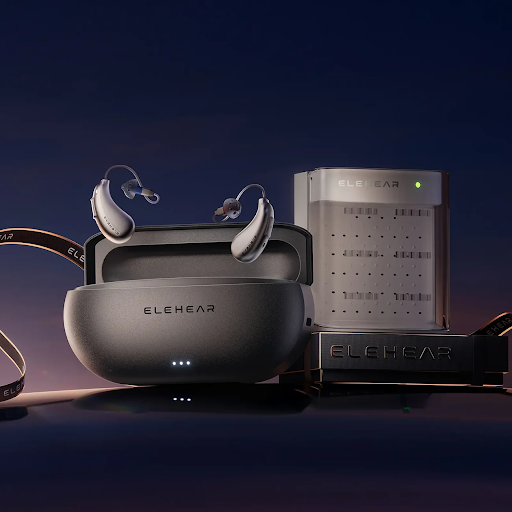
ELEHEAR offers OTC hearing aids with AI-driven noise reduction at one of the lowest price points reviewed. Their ELEHEAR Beyond Pro model uses an AI chip to filter background noise and enhance speech in real time. ELEHEAR aids connect to an app for manual adjustments and include remote support from hearing professionals. They target adults with mild to moderate hearing loss.
Key Features
- AI chip filters background noise and enhances speech
- App-based controls for manual sound adjustments
- Directional microphone system included
- Bluetooth connectivity for streaming from compatible devices
- Rechargeable design with carrying case
Pricing and Warranty
- Price range: $399 to $599 per pair
- Sold directly online
- One-year warranty included
Pros
- Lowest price of any brand reviewed with AI noise processing
- App controls give users manual adjustment options
- No prescription or audiologist visit required
Cons
- Not suitable for moderate-to-severe or severe hearing loss
- Newer brand with less long-term track record than established names
- AI processing less advanced than premium prescription options
For more information, read our full ELEHEAR review.
Jabra Enhance Hearing Aids Review
Trained audiology care team support
|
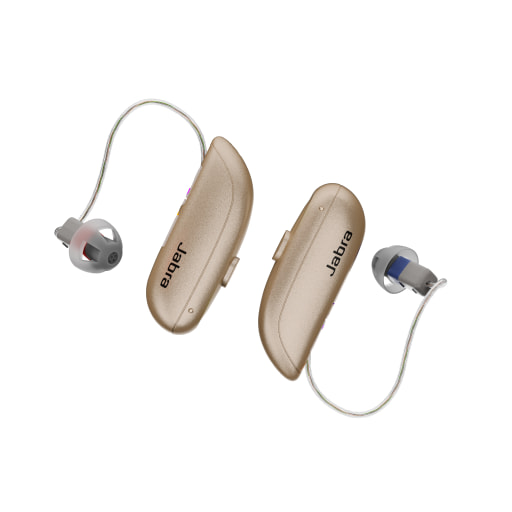
Jabra Enhance is one of the most established OTC hearing aid options for people with mild to moderate hearing loss. Their Select lineup offers automatic background noise reduction, directional microphones, and Bluetooth connectivity. Jabra Enhance aids are sold online and through select retailers, with optional remote support from licensed hearing professionals available at checkout.
Key Features
- Automatic background noise reduction across three program modes
- Directional microphone system focuses on speech
- Bluetooth connectivity for streaming from phones and TVs
- Optional remote support from a licensed hearing professional
- Rechargeable with up to 30 hours of battery life
Pricing and Warranty
- Price range: $1,195 to $1,995 per pair
- Sold directly online
- Three-year warranty with loss-and-damage protection included
Pros
- Strong noise filtering at a mid-range OTC price
- Optional professional support available at purchase
- Rechargeable with reliable battery life
Cons
- Receiver-in-canal style only; no custom fit options
- Less processing power than premium prescription aids
- Not suitable for moderate-to-severe hearing loss
For more information, read our full Jabra Enhance review.
Phonak Hearing Aids Review
Broad Product Line
|
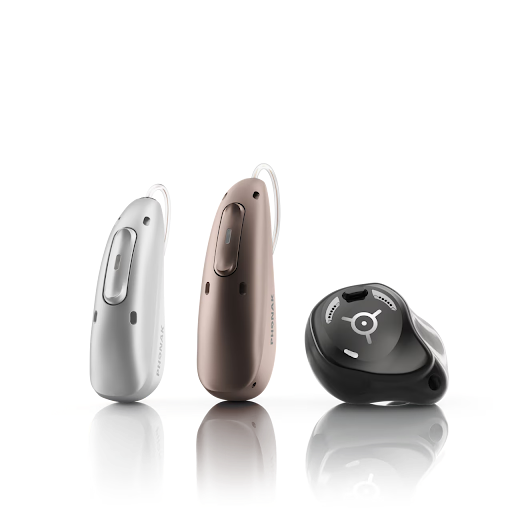
Phonak hearing aids are among the most widely recommended prescription options for hearing in noise. Their AutoSense OS technology detects your listening environment and automatically adjusts settings. The Audéo Lumity and Audéo Infinio lines lead the lineup for noise-heavy settings. Phonak aids are available through audiologists and hearing specialists nationwide.
Key Features
- AutoSense OS automatically adapts to your listening environment
- StereoZoom 2.0 focuses on a single voice in loud settings
- Bluetooth connectivity for streaming from phones, TVs, and accessories
- Available in rechargeable and disposable battery styles
- Available in receiver-in-canal, behind-the-ear, and ITE styles
Pricing and Warranty
- From $2,600 per pair; prices vary by model and provider
- Warranty terms vary by retailer
Pros
- AutoSense OS removes the need to switch programs manually
- Strong clinical evidence for speech clarity in noise
- Wide range of styles and technology levels
Cons
- Prescription only; requires an audiologist visit
- Higher-tier models carry a significant price premium
For more information, read our full Phonak review.
Oticon Review
Innovative Products
|
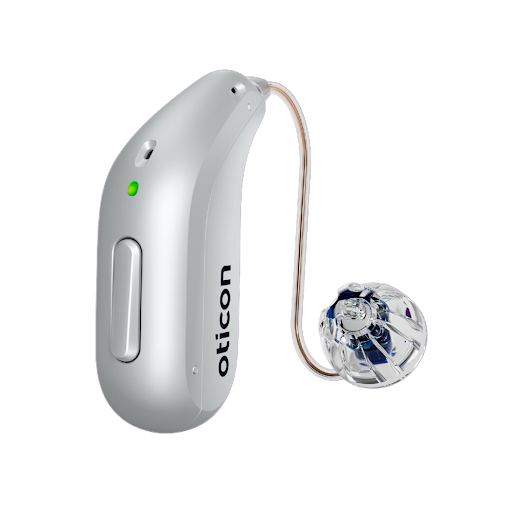
Oticon’s BrainHearing technology gives your brain access to a full sound scene while reducing the effort needed to follow speech. The Oticon Intent and Oticon Zeal use deep neural network processing to separate speech from noise at the source. Oticon aids are available through licensed hearing care professionals across the U.S.
Key Features
- Deep neural network processes 12 million real-life sounds
- MoreSound Intelligence balances speech and background noise
- 360-degree sound scene access with reduced listening fatigue
- Bluetooth connectivity and app-based controls
- Available in receiver-in-canal, behind-the-ear, and custom styles
Pricing and Warranty
- Prices vary by model and provider
- Warranty terms vary by retailer
Pros
- Deep neural network processing delivers strong real-world noise reduction
- Reduces listening fatigue in loud settings
- Strong clinical research backing
Cons
- Prescription only; requires a hearing professional
- Full benefits require top-tier technology level
For more information, read our full Oticon review.
Starkey Hearing Aids Review
Great variety available
|
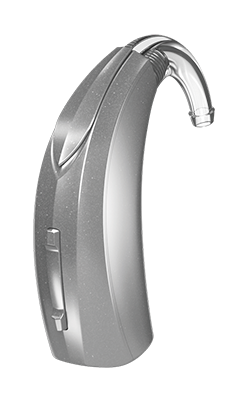
Starkey is the only major American-owned hearing aid brand. Their Genesis AI platform uses artificial intelligence and edge processing to reduce background noise and sharpen speech in real time. The Genesis AI line offers directional microphones, automatic environment detection, and fall detection on select models. Starkey aids are available through audiologists and hearing clinics nationwide.
Key Features
- Genesis AI uses artificial intelligence to reduce noise in real time
- Directional microphones isolate speech from surrounding sound
- Automatic environment detection with program switching
- Fall detection and health tracking on select models
- Available in receiver-in-canal, behind-the-ear, ITE, and invisible hearing aid styles
Pricing and Warranty
- Prices vary by provider and technology level
- Warranty terms vary by retailer
Pros
- Most comprehensive health-monitoring features of any brand reviewed
- Invisible hearing aid option for discreet wear
- Made in the U.S.
Cons
- Prescription only
- Feature complexity may feel overwhelming for some users
For more information, read our full Starkey review.
Lexie Hearing Review
Great Technology
|
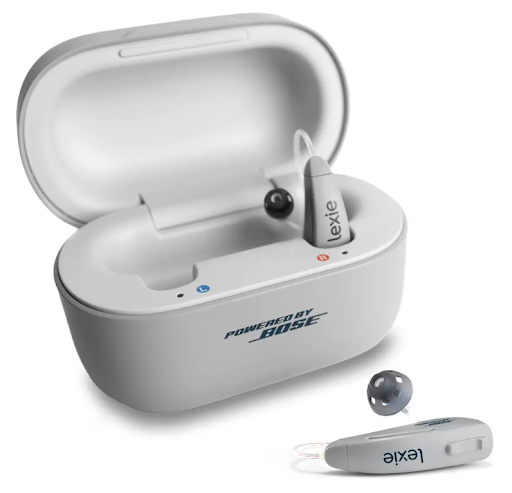
Lexie offers self-fitting OTC hearing aids at low prices for adults with mild to moderate hearing loss. Their Lexie B2 Plus model reduces background noise and feedback, minimizing competing sounds and whistling. Lexie aids are available online and in stores that sell healthcare devices. A monthly subscription plan spreads the cost and makes them easier to afford.
Key Features
- Background noise reduction and feedback cancellation on all models
- Lexie B2 Plus streams phone calls from iPhones and select Android devices
- App-based controls for adjusting sound, monitoring battery, and saving favorite settings
- Monthly subscription plan available to spread costs
- Remote support via the Lexie app and care team
Pricing and Warranty
- Price range: $299 to $899 per pair
- Available online and in select retail stores
- One-year warranty included on all models; optional extended protection plan available for up to 24 months.
Pros
- Low entry price with flexible subscription payment option
- App controls let tech-savvy users customize settings
- Available in stores without an audiologist visit
Cons
- Not suitable for moderate-to-severe or severe hearing loss
- Bluetooth streaming limited on some Android devices
- App-dependent adjustments may not suit users who prefer manual controls
For more information, read our full Lexie Hearing review.
What Makes a Hearing Aid Good for Background Noise?
Several features determine how well a hearing aid performs in noisy environments.
- Directional microphones focus on sound in front of you and reduce what comes from the sides and behind. This improves the signal-to-noise ratio your brain receives and cuts listening fatigue in loud settings like restaurants or crowded rooms.
- Digital noise reduction works alongside directional microphones to identify non-speech sounds and automatically reduce their volume. Better processors separate a voice from background noise with greater accuracy.
- Automatic environment detection builds on both by shifting your hearing aid into the right program for your setting without manual switching. Most modern aids cycle through profiles for quiet rooms, restaurants, and outdoor spaces on their own.
- Remote microphones provide an extra layer of support in very loud environments. A conversation partner wears a small clip-on microphone that streams their voice directly to your hearing aids, cutting through noise that even the best directional microphones struggle to cut through. Remote microphones are among the most practical assistive listening devices available for people with hearing loss.
- Telecoil is worth looking for if you spend time in theaters, churches, or airports. It picks up sound directly from hearing loop systems installed in those venues, bypassing background noise entirely.
- Auracast works on a similar principle but uses a newer Bluetooth broadcast standard. Compatible hearing aids can connect directly to public audio systems, like waiting room TVs or transit announcements, for a cleaner signal.
Noise-Canceling vs. Noise-Reducing Hearing Aids
These terms are often used interchangeably, but they mean different things.
- Noise-canceling technology, common in headphones, actively generates a counter-signal to block out sound.
- Noise-canceling hearing aids use digital noise reduction to identify and lower unwanted background sounds while preserving speech.
The goal is to improve the signal-to-noise ratio, so speech is easier to follow. When shopping, look for digital noise-reduction and directional-microphone ratings rather than noise-canceling claims. These are the features that drive real-world performance.
Prescription vs. Over-the-Counter Hearing Aids for Background Noise
The FDA cleared over-the-counter hearing aids for adults with mild to moderate hearing loss in 2022. OTC hearing aids like Eargo, Audicus, ELEHEAR, and Jabra Enhance offer background noise reduction at lower costs without a prescription.
Prescription hearing aids from audiologists offer more precise fitting, stronger processing power, and access to professional fine-tuning. A key part of that process is real ear measurements, where a provider measures how sound reaches your eardrum to confirm the fit is accurate for your ear canal. This step is not available with OTC aids and makes a meaningful difference in performance.
If background noise is a significant challenge, a licensed audiologist can order an audiogram to identify your specific hearing loss pattern and program your aids for the environments where you struggle most. Understanding the difference between hearing aid types can also help you narrow down which style suits your level of hearing loss.
Invisible and Discreet Hearing Aid Styles for Noise
Receiver-in-Canal
Receiver-in-canal (RIC) styles are the most common option for background noise reduction. The receiver sits in the ear canal while the processor sits behind the ear, allowing for larger directional microphones and more processing power.
Behind-the-Ear
Behind-the-ear (BTE) styles carry the full processor above the ear and suit a wider range of hearing loss levels, including more severe loss.
Completely-in-Canal
CIC (completely-in-canal) and invisible hearing aid styles sit deeper in the canal for a more discreet look. They work well for mild to moderate hearing loss but have less room for directional microphone arrays, which can limit noise performance in very loud settings.
How Much Do Hearing Aids for Background Noise Cost?
OTC hearing aids with background noise reduction run from $299 to $1,995 per pair. Prescription hearing aids with advanced noise processing start at $2,600 per pair and can go significantly higher depending on the brand, technology level, and provider. The cost of hearing aids varies by type, technology level, and whether you go with a prescription or OTC option.
Age-related hearing loss affects roughly one in three adults over 65, making it one of the most common conditions in retirement. Many people delay treatment because of cost, but OTC hearing aids have made entry-level noise reduction more accessible than before.
Most standard Medicare plans do not cover hearing aids, though some Medicare Advantage plans offer partial benefits.
Frequently Asked Questions (FAQs) About Hearing Aids That Reduce Background Noise
Receiver-in-canal styles with directional microphones and automatic environment detection perform best in noisy settings. Phonak hearing aids and Oticon consistently rate highest for speech-in-noise performance in independent testing.
Noise-canceling hearing aids use digital noise reduction to lower unwanted background sounds. They do not block sound the way noise-canceling headphones do. The goal is to improve speech clarity by raising the signal-to-noise ratio reaching your ears.
Not necessarily. OTC hearing aids from brands like Eargo and Jabra Enhance handle mild to moderate background noise well. For significant difficulty hearing in noise or for moderate-to-severe hearing loss, a prescription hearing aid fitted by an audiologist using real-ear measurements delivers better results.
An audiogram is a hearing test that maps your hearing loss across different frequencies. Audiologists use it to program prescription hearing aids for your specific loss pattern. OTC aids do not require a hearing test, but getting an audiogram before purchasing any hearing aid helps you choose the right technology level.
Directional microphones detect where sound is coming from and reduce volume on sounds arriving from behind or beside you. This improves the signal-to-noise ratio your brain processes, reducing listening fatigue in loud settings.
It is one of the most reported symptoms of hearing loss. Age-related hearing loss affects roughly one in three adults over 65, and difficulty in noisy environments is often the first noticeable sign.
The Oticon Intent and Oticon Zeal are prescription hearing aid models in Oticon’s current lineup. Both use deep neural network processing to separate speech from background noise. The Intent targets active adults, while the Zeal targetsis designed for younger users with hearing loss.
The ELEHEAR Beyond Pro is ELEHEAR’s flagship OTC model. It uses an AI chip for real-time background noise reduction and includes Bluetooth connectivity for streaming and app-based adjustments.
Concluding Thoughts on Hearing Aids to Reduce Background Noise
Finding the right hearing aid for background noise is more straightforward than many people expect. With modern OTC and prescription options offering automatic noise reduction, directional microphones, and app-based controls, there are strong choices at every budget level.
The key steps are identifying your level of hearing loss, deciding how much professional support you want, and matching those needs to the right technology level and price range. If background noise is your primary challenge, prioritize directional microphones and automatic environment detection over other features.